Arsenal's Martinelli Drama: Truth Behind the Headlines
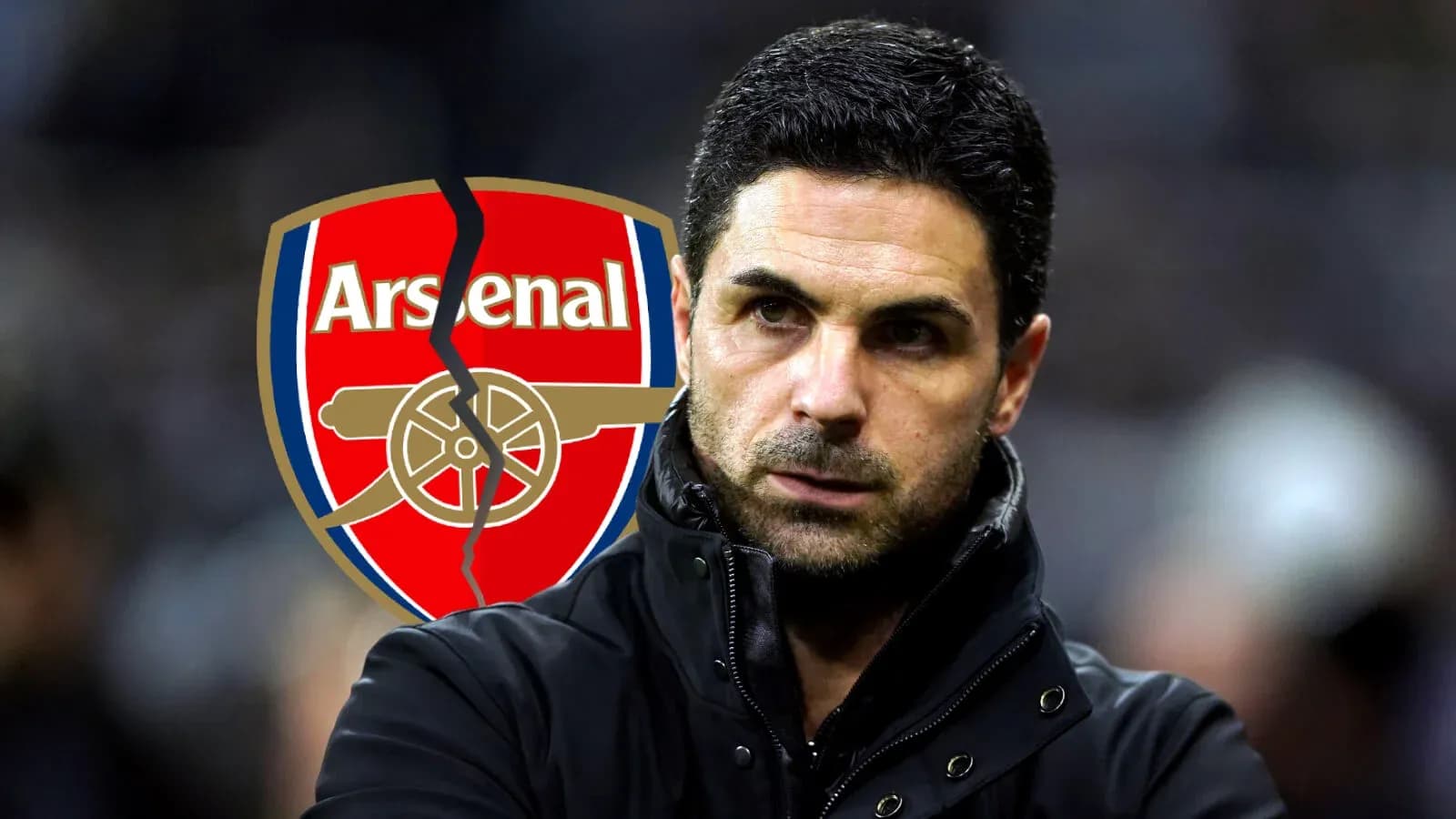
The story sounded explosive: Arsenal’s dressing room turning on Mikel Arteta, senior players “unhappy” and “siding with Gabriel Martinelli” over his looming exit. A fractured camp, a manager under fire, a fan favourite frozen out.
Except that’s not what’s actually happening.
The headlines came thick and heavy. The Daily Mirror website claimed “Gabriel Martinelli has Arsenal stars on his side after being pushed out by Mikel Arteta.” The Daily Star echoed it. Goal.com went harder still: “Arsenal squad ‘unhappy’ with Mikel Arteta as Gabriel Martinelli nears £40m Al-Hilal transfer.”
All three pointed back to the same place: ESPN Brasil. And when you strip it down, the supposed civil war rests on a single short paragraph, translated and recycled:
“At the start of this season, the Brazilian wasn’t even included in Arsenal’s matchday squad and didn’t even receive a medal for winning the English Super Cup after beating Manchester City 3-0, something that even caused some discomfort among other players in the team.”
That’s it. One observation about “some discomfort” among teammates, turned into a full-blown mutiny in the English headlines. Twelve throwaway words at the end of a sentence have been inflated into a squad uprising.
Of course there’s sympathy. Martinelli has been at Arsenal for seven years. He’s popular, he’s part of the furniture, and he’s clearly on his way out. It would be far stranger if Gabriel Magalhaes or Declan Rice were delighted to see him frozen out of squads and stripped of a medal.
The real debate around Martinelli isn’t about the dressing room anyway. It’s about the price.
The Mirror’s John Cross asked the question many Arsenal fans have been wrestling with: why is Gabriel Martinelli going for £50m when Tottenham are committing £85m for Savinho?
“Why on earth have they not been able to get better value on Martinelli? If Savinho goes to Tottenham in an £85m deal, why is Martinelli cheaper? The £50m price just does not seem enough.”
On the surface, it jars. A Brazil international, still only 23, proven in a title-winning side, available for £50m in a market where wide forwards are being traded like rare art. But context matters.
Martinelli finished last season with one goal and four assists in the league. For the champions, that’s not the sort of “underlying numbers” you hang a £90m valuation on. His contract situation doesn’t help either: a year left, plus an option for another 12 months, which hands the buying club some leverage. And unlike the Savinho deal, this isn’t part of a web of interconnected, deliberately skewed fees like the Omar Marmoush move.
Within that framework, £50m starts to look less like a giveaway and more like a realistic figure. Clubs like Chelsea and Manchester City have spent years building a machine for extracting maximum value from squad players. Arsenal are still catching up in that department.
There’s also the comparison being made in some quarters with Kenan Yildiz. One line claimed Martinelli’s numbers “measure up against the likes of Yildiz.” That falls apart quickly. Yildiz is four years younger and just delivered ten Serie A goals and seven assists. Martinelli’s output has stalled. The question practically answers itself:
“Martinelli has pace, is dangerous but has he really kicked on in the past two seasons?”
No. And that’s why the fee is where it is.
While the Martinelli narrative was being stretched to breaking point, another Arsenal story was doing the rounds: a supposed £130m push for Julian Alvarez, with Mikel Arteta setting “one condition” for the deal.
The Mirror framed it as a bold move, a big-money plan with a key demand from the manager. The detail? Arteta “will demand assurances the Argentina star wants to move to Arsenal.”
So the “one condition” is that a £130m target actually wants to join. That’s not a condition. That’s the absolute minimum any club checks before wiring nine figures.
The noise isn’t limited to north London. In the north-east, new Newcastle head coach Matthias Jaissle found himself under scrutiny after a late penalty denied his side a win against Liverpool. Ian Ladyman in the Daily Mail took aim at the German’s post-match complaints about referee Stuart Attwell.
Jaissle blamed the official for the late spot-kick, but Ladyman pointed to Lewis Hall’s clear contact on Victor Munoz and then turned the spotlight back on the dugout. The foul came in time added on for a late Newcastle substitution: Yoane Wissa off, Fabian Schar on, deep into stoppage time.
To Ladyman, it looked like a classic time-wasting change. Attwell added 30 seconds, Munoz attacked Hall, penalty given. Under new guidelines, players have ten seconds to leave the pitch or risk a booking, making the old “drag your heels and waste a minute” substitution almost redundant.
But there’s another, more obvious reading. Newcastle were leading. A forward came off, a defender came on. Managers have been making that kind of defensive switch for decades, not just to kill time but to protect a lead. You can question the timing, the risk, the execution. To treat it purely as a time-wasting ploy ignores the tactical logic staring everyone in the face.
Back in Manchester, the spin machine has been working overtime. “Manchester United’s transfer plan has paid off with £45million boost,” claimed the Manchester Evening News, pointing to the pursuit of Carlos Baleba.
The argument runs like this: last summer, Baleba would have cost around £115m. This summer, United are closing in at £70m. On paper, that’s a £45m “saving.”
What it doesn’t mention is the cost of waiting. United have opened the season without that midfield upgrade, lost to promoted Hull on the opening day, and watched Youri Tielemans struggle to cover the ground they desperately need in the middle. Calling that a “transfer plan” feels generous.
It also ignores the fact that United’s supposed strategy over the past year has veered between Elliot Anderson, Mateus Fernandes and possibly Sandro Tonali before circling back to Baleba. That isn’t a masterplan unfolding. It’s a scramble, dressed up as design.
And that, in the end, is the thread running through all of this. From Martinelli’s “unhappy” teammates to Arteta’s “one condition,” from Jaissle’s “time-wasting” change to United’s “£45m boost,” the stories are being shaped to fit the headline, not the other way round.
The real questions are sharper, and much less dramatic. Can Arsenal turn Martinelli’s sale into the next step of their squad evolution? Will Arteta’s ruthlessness be judged by results or by sentiment? And when the window closes, who will be left claiming they always had a plan – and who will be exposed by the table?