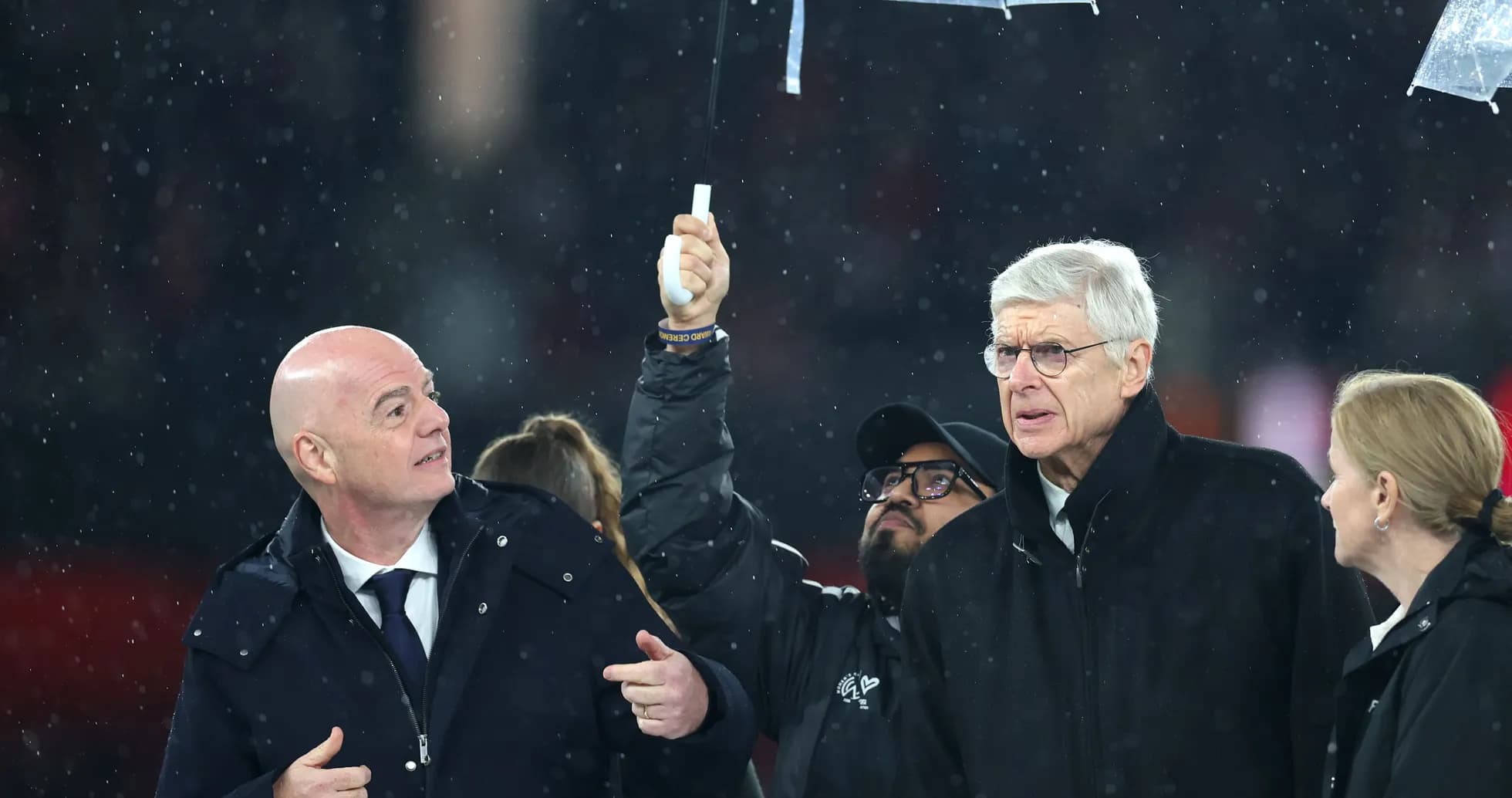
Arsène Wenger Considers FIFA Presidential Run Against Infantino
Arsène Wenger is standing on the edge of the biggest touchline of his life.
The former Arsenal manager, the man who reshaped English football from a dugout in north London, is now weighing up a move that could upend the global game: a run for the FIFA presidency against Gianni Infantino.
For weeks, senior powerbrokers across Europe have been nudging, lobbying, almost pleading with the 77-year-old to step forward. Now, at last, he is giving it serious thought. The timing is no coincidence. Infantino is reeling from a furious backlash over his failed attempt to sell commercial stakes in the World Cup to private investors, a plan that detonated inside FIFA and far beyond.
In the corridors of UEFA, they sense an opening.
Europe’s bet on a 77-year-old game-changer
Wenger’s age is the obvious counterargument. How long could he realistically lead the world game? Some of his backers are already thinking differently. Several told BBC Sport they would happily see him win, steady the ship, and then step aside before the end of a four-year term, using his presidency as a bridge to a new era at FIFA rather than a long reign.
It would be a transitional presidency, not a dynasty. A caretaker with clout.
Infantino, though, is no lame duck. He still enjoys entrenched support in South America, Africa and Asia, and he recently claimed the backing of the “overwhelming majority” of the football world. Those blocs have carried him through stormy waters before. They may do so again.
But that calculation changes if Wenger enters the race. The Frenchman is not a protest candidate. He is FIFA’s own chief of global football development, a figure with credibility in boardrooms and dressing rooms alike, and a recognisable face from Cairo to Caracas.
UEFA, which has led the resistance to Infantino’s leadership, would be firmly in his corner.
In Africa, the dynamic is especially delicate. Infantino has just secured the public support of all 54 member associations there, helped by promises to increase funding. Yet Wenger’s legacy on the continent runs deep. He championed African players during his Arsenal years, giving careers to talents who became heroes back home. That history still carries weight.
A straight choice between the incumbent president and the man who once opened Europe’s doors to African stars would test loyalties in ways FIFA has not seen for years.
Deadline approaching, field taking shape
The clock is ticking. Candidates have until 18 November to declare their intention to stand against Infantino in next year’s March election. The race is no longer theoretical.
Ramon Vega, the former Tottenham defender, went first, announcing his candidacy in October. Kozo Tashima, honorary president of the Japan Football Association, has also signalled he will run. Both are serious football figures, but neither brings the political gravity or global recognition that Wenger would instantly inject into the contest.
With Wenger, the election shifts from procedural to seismic.
Inside FIFA, the governing body has tried to calm nerves over the World Cup stake-sale fiasco. This month, it promised to make “key documents” on Infantino’s abandoned plan available to council members. There is a catch. Anyone wanting to see them must travel to Zurich, where access is controlled by “strict protocols”.
Transparency, but only on FIFA’s terms.
The “strikers’ project” and a president under pressure
The controversy has not gone away. Last month, UEFA set a deadline of 2 November for FIFA to reveal the full details of the contentious “FIFA Forward” (FFE) proposal and to explain how the idea was put together and pushed forward.
That demand followed a tense council meeting at which Infantino apologised for the scrapped club-sale scheme, sometimes dubbed the “strikers’ project”. He did not, however, spell out who drafted it or how it reached the table. Instead, he told council members to submit questions in writing.
Into that storm stepped Wenger – or rather, he stepped away from it.
Known for his loyalty to Infantino since joining FIFA, Wenger moved to distance himself from the project as the fallout grew. He made it clear he had played no part in the plan.
“I was not involved in this strategic plan, and I first learned of the project through media reports,” he said at the time.
Then came the line that caught the eye of those dreaming of a challenge to the president.
“The decision to withdraw the project was absolutely necessary and indisputable, because I firmly believe in an independent FIFA that serves our sport with commitment, transparency and integrity.”
For Infantino’s critics, that sounded less like a routine clarification and more like the early sketch of a manifesto.
A controversial architect with global reach
Wenger is no stranger to controversy in his FIFA role. His push for a World Cup every two years triggered uproar across Europe and South America. His drive for a “clear” offside law has sparked fierce debate among coaches and analysts.
He has not tried to be universally popular. He has tried to be bold.
That same boldness helped him build a global presence that few football administrators can match. His advocacy for expanding the World Cup to 48 teams earned him goodwill in regions long shut out of the tournament’s main stage, particularly in Africa. There, his name is attached not just to ideas in meeting rooms, but to memories of players who made it in Europe because he believed in them.
Infantino has spent years consolidating his base with promises, programmes and funding guarantees. Wenger, should he run, would arrive with something different: a lifetime of football capital and the trust of people who feel he improved the sport, not just governed it.
For now, those close to him insist he has not decided. They also say he still views Infantino as favourite to secure a fourth and final term.
But elections are not won on paper. They are won in moments when the mood shifts, when a familiar figure suddenly looks like an alternative, not a loyal lieutenant.
Arsène Wenger has spent decades changing how football is played. The question now is whether he is ready to try to change how it is run.