AS Roma vs Inter: Tactical Insights from a 2–2 Draw
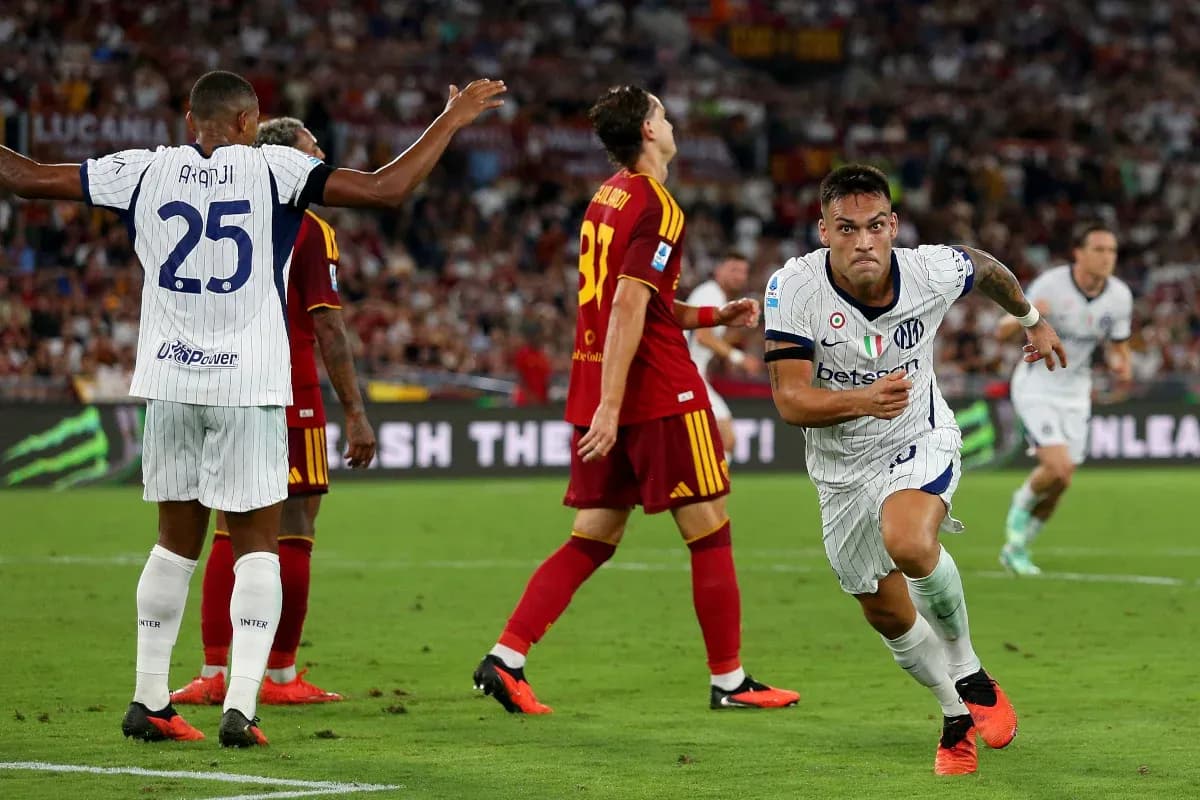
The Stadio Olimpico had the feel of a title rehearsal rather than a mere “Regular Season - 5” clash. League leaders AS Roma and second-placed Inter arrived level on 13 points, separated only by goal difference and nuance. Over five matches, Roma’s overall record of 14 goals for and 3 against (a goal difference of +11) had been built on control and structure; Inter’s 15 scored and 8 conceded (goal difference +7) hinted at a more open, risk‑embracing machine. The 2–2 draw that followed, after Roma’s 2–0 half-time lead evaporated, felt like a tactical argument that never quite reached a definitive verdict.
I. The Big Picture – Two systems, one knife-edge
On paper, this was a meeting of mirrored back-threes, but the details mattered. Roma’s 3-4-2-1 under Piero Gasperini Gian has become their default (used in 4 of 5 league matches), and the XI reflected that identity: M. Svilar behind a trio of G. Mancini, L. Balerdi and Mario Hermoso, with a hard-running midfield band of four – N. Molina and Wesley Franca wide, B. Cristante and M. Kone inside. Ahead of them, the creative axis of P. Dybala and M. Soule floated behind the league’s most ruthless finisher so far, D. Malen.
Inter, under Cristian Chivu, leaned into a 3-1-4-2 variant – a natural evolution from their frequently used 3-5-2. J. Martinez started in goal, protected by Y. Bisseck, M. Akanji and A. Bastoni. In front, P. Zielinski operated as the single pivot, with an aggressive four across midfield: F. Dimarco, C. Jones, N. Barella and A. Diouf. Up front, the familiar partnership of L. Martinez and M. Thuram promised vertical threat and chaos between the lines.
Heading into this game, Roma’s season profile was that of a disciplined frontrunner. Overall they averaged 2.8 goals scored per match and only 0.6 conceded, with a perfect defensive record on their travels and just 3 goals allowed at home. Inter, by contrast, were more volatile: overall they averaged 3.0 goals for and 1.6 against, with a free-scoring home record (4.0 goals per home match) and a more measured 1.5 away. The clash at the Olimpico was always likely to hinge on whether Roma’s structure could suffocate Inter’s chaos, or whether Inter’s intensity would drag the leaders into a more open exchange.
II. Tactical voids – Absences and disciplinary shadows
Both sides entered with notable absentees that subtly reshaped their tactical options. Roma were without M. Bah, ruled out with a knee injury. While not a headline name, his absence tightened Gasperini’s rotation options in the defensive and wing-back lanes, placing a heavier physical and tactical load on Wesley Franca and Molina to sustain width and pressing intensity for the full 90.
Inter’s list was more star‑studded. H. Calhanoglu, the usual metronome and set-piece specialist, missed out with a muscle injury, robbing Chivu of his primary tempo-setter and long-range threat. D. Spence and J. Stones were also unavailable, reducing flexibility in the back line and on the right flank. That context made the selection of Zielinski as the lone pivot even more significant: Inter were asking a creative midfielder to anchor transitions against one of the league’s most lethal counter-attacking sides.
Disciplinary trends also cast a long shadow. Roma’s yellow card distribution this season shows a pronounced late-game spike, with 37.50% of their bookings coming between 61-75 minutes and a further 25.00% from 76-90. Inter, meanwhile, lean into aggression earlier in the second half: fully 50.00% of their yellow cards arrive between 46-60 minutes. In a match of such fine margins, those windows mattered; both coaches knew that the period just after half-time would be a pressure point, and the final half-hour a test of Roma’s composure.
III. Key Matchups – Hunter vs Shield, Engine Room vs Engine Room
The headline duel was always going to be D. Malen versus Inter’s back three. Malen arrived as Serie A’s most efficient finisher: 6 goals in 5 appearances, from 16 shots (10 on target), backed by a 7.86 average rating. His blend of depth runs and tight-space dribbling (15 attempts, 10 successful) perfectly complements Dybala’s creative gravity. Inter’s task fell primarily to M. Akanji, not just a stopper but a technically elite organiser, with 309 completed passes at 94% accuracy and 9 tackles plus 2 blocked shots already this season. Containing Malen was as much about managing the spaces Dybala and Soule open between the lines as it was about winning individual duels.
On the other side, Roma had to solve the Lautaro Martinez–M. Thuram tandem. Lautaro entered with 4 goals from 4 appearances, a 7.58 rating and the capacity to both drop and attack the box. Thuram, with 2 goals and 2 assists, is the chaos agent: 32 duels contested, 19 won, and 3 successful dribbles from 4 attempts underline his physical dominance. Here, Hermoso’s season form was critical. The Spaniard has been one of Serie A’s standout defenders, with 13 tackles, 16 interceptions and 2 blocked shots, plus 304 passes at 87% accuracy. His timing in stepping out of the line to meet Thuram, without exposing the space behind for Lautaro, was central to Roma’s first-half control.
In the engine room, the duel between creators and disruptors framed the narrative. For Roma, Dybala is the undisputed conductor: 4 assists in 5 games, 23 key passes and 237 total passes at 84% accuracy. Around him, Soule’s 2 goals, 1 assist and 166 passes at 85% make him a secondary playmaker who can also attack the box. Inter’s counterweight came from A. Diouf and N. Barella. Diouf, with 3 assists, 13 key passes and 91% passing accuracy, has quietly become Inter’s vertical connector, while Barella’s box-to-box presence supports both pressing and ball progression. The battle between Dybala’s pockets of space and Diouf’s capacity to break Roma’s lines with forward passes shaped the ebb and flow, particularly as Inter chased the game after the break.
IV. Statistical Prognosis – A draw that flatters neither defence
From a seasonal lens, Roma’s defensive numbers suggested they should have been able to close the game out. Overall they had kept 3 clean sheets in 5 matches and failed to score in none. Inter, by contrast, had only 1 clean sheet, and their away record of 1.0 goal conceded per match hinted at vulnerability when forced to defend space rather than dominate the ball.
Yet the 2–2 final score, after Roma’s 2–0 half-time advantage, underlined why both sides are still incomplete contenders rather than finished products. Roma’s tendency to accumulate cards late in matches correlates with phases where their intensity drops and they defend deeper; Inter’s surge after the interval fits their season-long pattern of second-half aggression, reflected in that 50.00% yellow-card spike between 46-60 minutes. In tactical terms, Inter’s risk-taking finally broke through Roma’s structure, while Roma’s inability to reassert control through Dybala and Cristante once the tempo rose cost them two points.
If we project forward using these trends, the underlying metrics still tilt slightly Roma’s way over a full campaign: a more balanced goal profile (2.7 scored and 1.0 conceded at home, 3.0 scored and 0.0 conceded away) and a defensive base that, on most days, will not surrender a two-goal lead. Inter’s higher volatility – 4.0 goals scored but 2.0 conceded at home, and a more modest 1.5 scored and 1.0 conceded away – suggests more chaotic scorelines.
As a tactical snapshot, though, this match felt like a warning to both. Roma learned that even a structurally elite side can be dragged into chaos if it cannot manage momentum after the break. Inter were reminded that their attacking brilliance, powered by Lautaro, Thuram and Diouf, still rides on a knife-edge of defensive exposure. The draw keeps the title race delicately poised – and ensures that the reverse fixture will be framed not just as a rematch, but as a chance for one of these heavyweights to finally impose its identity over 90 unbroken minutes.