Premier League and Championship: Navigating the Three-Week Break
The Premier League has fallen quiet. So has the Championship. But this time, the silence will linger.
For the first time, England’s top two tiers have stopped for three weeks rather than the familiar two as the season’s first international break stretches out. The calendar has been reshaped: the four fixtures that used to be split across September and October now sit inside one extended window.
On paper, club football actually gains a week back across the season. In reality, managers and players face something else entirely – a long, awkward pause that needs careful handling.
Three weeks is a lifetime for elite athletes with no competitive game. So how are clubs filling the gap?
Brentford: a week off, a reset, then a secret run-out
At Brentford, the training ground is a quieter place than usual.
The bulk of the first-team squad are away on international duty. Around a dozen players remain, among them Callum Wilson and Igor Thiago, plus five returning from injury. The Bees also have a slightly longer pause than most, having played Chelsea on the Friday before the break.
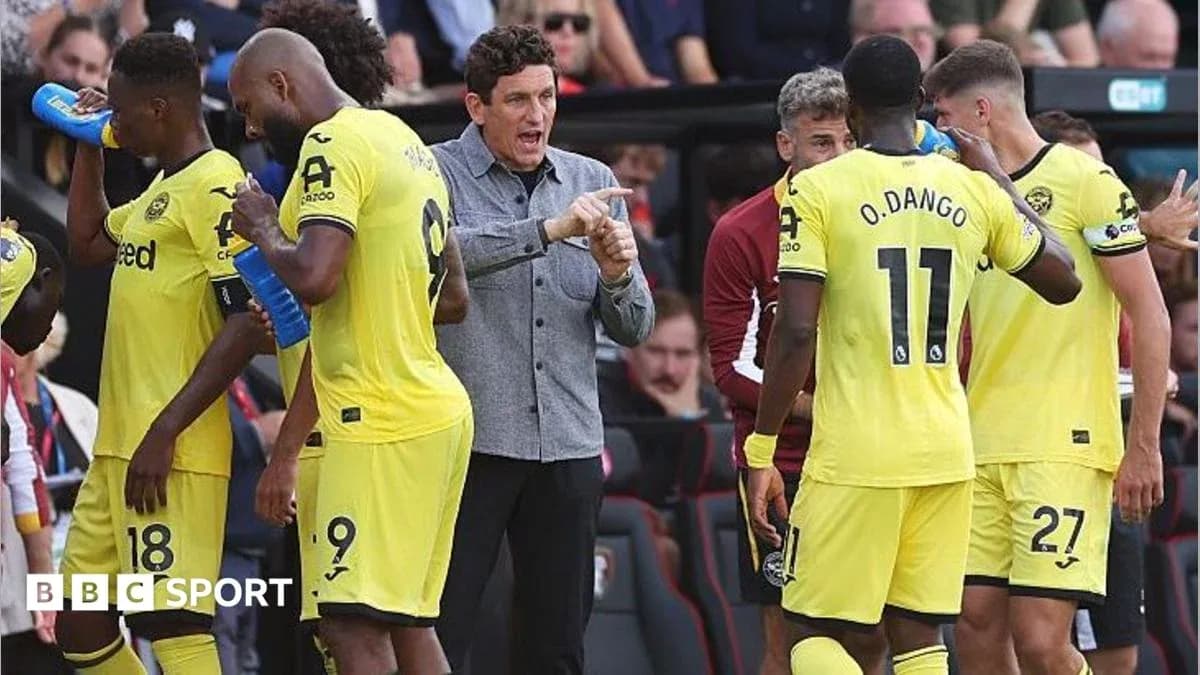
Keith Andrews has opted for a simple early message: breathe.
He has handed his first-team players a week off, with tailored individual programmes to follow. There are no strict bans on leaving the country, but long-haul trips are unlikely to get the green light. Rest, yes. Jet lag, no.
The squad will regroup on Saturday, 26 September, when the real work starts again. Training ramps up, and on the weekend of 3 October they will play a behind-closed-doors friendly against another English club.
That game could be a key checkpoint. It offers potential minutes for defenders Nathan Collins and Sepp van den Berg as they edge back towards full fitness, with under-21 players expected to flesh out the rest of the squad.
The second international break will be a different story entirely. Brentford play Brighton on Sunday, 8 November and then Everton on Saturday, 21 November. With fixtures wrapped around the window, there will be less room for experimental planning. Players might get the odd day off, but the rhythm will be closer to normal: training, recovery, tactical prep, straight into the Toffees game. No friendly. No extended reset. Just the usual grind.
Liverpool: ticking over with City looming
Liverpool will not have the numbers to do much more than keep things sharp.
With so many internationals away, Andoni Iraola is left with a small core group at the AXA Training Centre. They will train, then be granted a few days off, but there is no grand camp or overseas trip on the agenda.
The challenge for Iraola is timing. He expects to have “no more than three days probably to prepare” for the visit of Manchester City on 11 October once his full squad returns.
So this break is less a three-week block and more a split-screen: lighter work with the stay-behinds now, then a frantic tactical cram session when the stars fly back from around the world, just in time for the champions.
Aston Villa: Emery goes back to Sevilla
Aston Villa’s break has a very different feel. It has a destination, a story, and a trophy – of sorts.
Unai Emery will return to Sevilla, the club where he won three consecutive Europa League titles, as Villa travel to Spain for the 15th edition of the Antonio Puerta Trophy on Friday, 2 October.
The match carries a weight that goes beyond fitness. It honours Antonio Puerta, the Sevilla wing-back who died aged 22 on 28 August 2007 after suffering multiple cardiac arrests during a La Liga game against Getafe.
For Emery, it is a return to familiar streets and familiar stands. For Villa, it is a high-level friendly in a competitive setting, a chance to keep rhythm and pay tribute in a stadium that knows him well.
Championship clubs: chance to heal and to work
Drop down a division and the picture changes. The Championship does not empty out in quite the same way when international squads are named.
Many clubs lose only a handful of players. Blackburn Rovers, for instance, have just four call-ups. For Tony Mowbray, that turns this three-week window into an opportunity rather than a headache.
Rovers have been hit hard by injuries in the opening weeks, with more than 10 players ruled out at one stage. The break offers breathing space to reintegrate some of them properly. Gady Beyuku and Moussa Baradji have already made recent comebacks; others, like Scott Wharton, are edging closer.
After their trip to Portsmouth on Saturday, Blackburn headed back to Lancashire and into a more controlled environment: days on the training ground, fewer matches, more detail.
The schedule reflects that balance. Mowbray, who returned to the club in the summer, finally has time to work with his squad without the constant churn of league and Carabao Cup fixtures. Shape, structure, patterns of play – all the things managers crave time for in August – can now be drilled.
But this is not a three-week boot camp. Players will get space to switch off. Mowbray plans to give them a few days off at the end of the first week, with some, like Yuri Ribeiro, free to head back to Portugal if they choose.
The rhythm then repeats. Training in the first half of week two, a short break over the weekend, then into week three and a more familiar pre-match build-up before Cardiff come to town.
Blackburn are also searching for a Premier League or League One opponent for a behind-closed-doors friendly. That game will be vital for those returning from injury, offering controlled minutes, and it keeps the rest of the squad sharp.
When the shorter, two-week break arrives in November, the plan will be tweaked again. Players may still get a brief spell off, but practice matches are more likely to be internal, mixing senior pros and under-21s rather than relying on outside opposition.
League One: threadbare schedule, Trophy to the rescue
League One lives in a different reality. The division keeps playing through international breaks unless a club has three call-ups that meet the EFL’s criteria and trigger a postponement.
The result this time? A decimated fixture list. Only four of the 12 scheduled league games survive on each of the two weekends.
Plenty of clubs saw this coming and moved early. Many have plugged the gaps by scheduling Football League Trophy ties during the three-week spell. Rotations are standard in that competition, so even if league matches are called off, Trophy games go ahead with mixed line-ups.
Twelve clubs will play twice in the Trophy during this period, 10 more will play once. That activity keeps squads moving, even as the league calendar stutters.
That left just Leyton Orient and Reading flirting with the prospect of a completely empty schedule. Both have only had one league game postponed, which means they will not face the full three-week blackout that might have left them training without any competitive action at all.
This break was designed to tidy the calendar, to compress disruption into one block and hand club football a week back later in the season. The real test comes when players return: who used the pause to heal and sharpen, and who drifts back into the grind undercooked?
When the league restarts, the table will look the same. The teams might not.