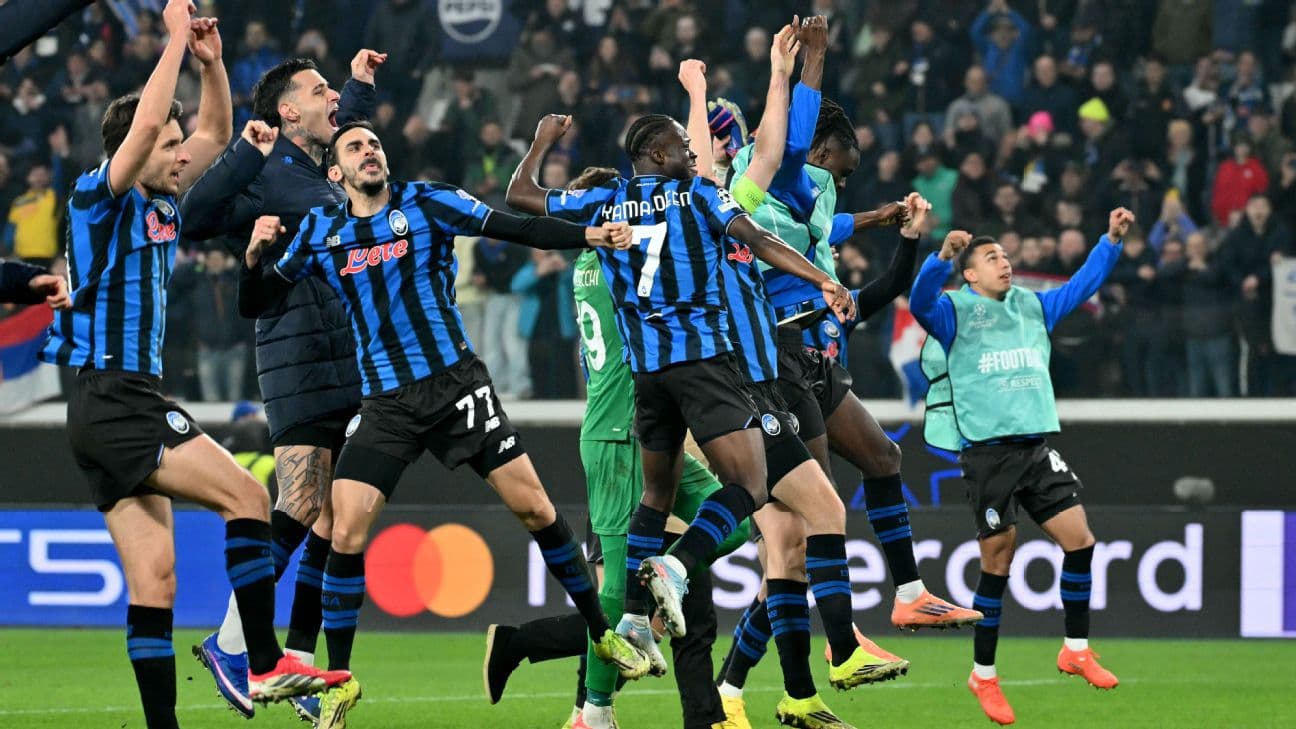
Atalanta Dominates Borussia Dortmund in 4–1 UEFA Champions League Victory
Atalanta produced a ruthless 4–1 dismantling of Borussia Dortmund at the New Balance Arena in Bergamo in this UEFA Champions League Round of 32 tie, taking a commanding advantage into the second leg. Raffaele Palladino’s side raced into a 2–0 half-time lead and never relinquished control of the scoreline, despite conceding possession for long spells. Goals from Gianluca Scamacca, Davide Zappacosta, Mario Pašalić and a late Lazar Samardžić penalty overwhelmed Niko Kovač’s visitors, who finished with nine men after a chaotic night of indiscipline that leaves their European campaign on a knife edge.
First Half Analysis
The tone of the evening was set even before kick-off. In a remarkable flashpoint, Dortmund defender Nico Schlotterbeck was shown a red card for argument at -5', leaving Kovač’s side to face the entire contest with ten men. Atalanta immediately capitalised on the numerical superiority.
On 5', Gianluca Scamacca struck the opener, giving the hosts the perfect start and validating Palladino’s aggressive 3-4-2-1 setup. With the extra player, Atalanta were able to push wing-backs high and pin Dortmund’s midfield, even though the visitors still sought to keep the ball when they could.
Dortmund’s frustration began to bubble. Ramy Bensebaini went into the book for a foul on 13', a sign of the strain on the German side’s makeshift back line. Atalanta kept probing and were rewarded again right on the stroke of half-time: Davide Zappacosta made it 2–0 at 45', a psychologically crushing moment for Dortmund, who trudged into the interval two goals and one man down.
Second Half & Tactical Shifts
Kovač tried to reset the tone after the break, but discipline again faltered. Emre Can was booked for a foul on 53', further limiting Dortmund’s ability to contest duels aggressively in midfield. Atalanta, by contrast, continued to combine control of the scoreline with well-timed surges forward.
On 57', the tie seemed to tilt decisively. Mario Pašalić added Atalanta’s third, finishing after a move in which Marten de Roon provided the assist. At 3–0 down and still a man short, Dortmund needed structural change. On 60', Kovač made a double substitution: Julian Brandt went off for Carney Chukwuemeka, and Maximilian Beier made way for Fábio Silva, a like-for-like attacking tweak aimed at injecting fresh energy up front.
Fábio Silva was soon in the referee’s notebook for argument on 69', underlining Dortmund’s ongoing frustration. A minute later, Kovač reshaped his flanks, withdrawing Julian Ryerson for Yan Couto and Jobe Bellingham for Karim Adeyemi at 70'. Palladino responded on 72' with his own pair of changes: Sead Kolašinac was replaced by defender Honest Ahanor, while goal-scorer Scamacca made way for forward Nikola Krstović, a logical rotation with the tie seemingly under control.
Dortmund briefly revived hope on 75', when Adeyemi, fresh from the bench, pulled a goal back, assisted by Chukwuemeka. Palladino then tightened his back line further, sending on Berat Djimsiti for Giorgio Scalvini at 77'. Later, at 85', he introduced Kamaldeen Sulemana for Nicola Zalewski, adding fresh legs in the forward line.
Stoppage time descended into chaos for Dortmund. A VAR check at 90+6' confirmed a penalty for Atalanta after an incident involving Krstović. Then, at 90+7', Bensebaini received a second yellow for a foul, immediately followed by a red card, leaving Dortmund with nine men. Samardžić had already struck a penalty goal at 90', rounding off a 4–1 statement win that reflected Atalanta’s composure and Dortmund’s unraveling discipline.
Statistical Deep Dive
Despite the lopsided scoreline, Dortmund actually controlled 56% of the ball to Atalanta’s 44% and completed more passes (515 to 394) with marginally better accuracy (80% vs 78%). Yet possession did not translate into control of the scoreboard. Reduced to ten men from the outset, Dortmund circulated the ball but struggled to penetrate consistently.
Atalanta were far more incisive. They produced 14 total shots to Dortmund’s 7, with 8 on target compared to 4 for the visitors. Their expected_goals of 2.49 underlines how well they created and converted chances, turning quality opportunities into four goals. Dortmund’s xG of 0.93 highlights a limited attacking threat, even with Adeyemi’s consolation strike.
The foul count (17 by Atalanta, 10 by Dortmund) suggests a combative contest, but it was Dortmund who paid the heavier disciplinary price: four yellow cards and two reds, including Schlotterbeck’s early dismissal and Bensebaini’s late sending-off. Atalanta, by contrast, collected just one booking, for Isak Hien at 70', managing their aggression far more effectively.
Standings & Implications
This result reinforces Atalanta’s upward trajectory. They entered the tie ranked 15th in the competition table with 13 points, a neutral goal difference (10 scored, 10 conceded) and strong recent form (LLWWW). Adding a 4–1 victory here pushes their goal difference firmly into positive territory and strengthens their status as genuine contenders in the knockout rounds.
Dortmund, 17th in the overall standings with 11 points and a +2 goal difference before this match, now see that margin eroded and their form line (LLDWL) worsening. Conceding four away goals and finishing with nine men leaves them facing a daunting second leg and raises serious questions about their defensive resilience and discipline at this stage of the competition.