Atalanta vs Borussia Dortmund: Tactical Analysis of the Strategic Battle
This was a classic case of control of the ball versus control of the space. Borussia Dortmund saw more of the ball, registering 56% possession and completing 414 of 515 passes (80%). Yet Atalanta, with only 44% possession and fewer total passes (394, at 78% accuracy), dictated the terms without the ball. Palladino’s 3-4-2-1 was set up to spring quickly once possession was won, accepting longer Dortmund spells on the ball but funnelling them into low‑value zones. The early numerical advantage after Dortmund’s pre‑kickoff red card only reinforced Atalanta’s plan to be vertical and direct rather than circulate endlessly.
Offensive Efficiency
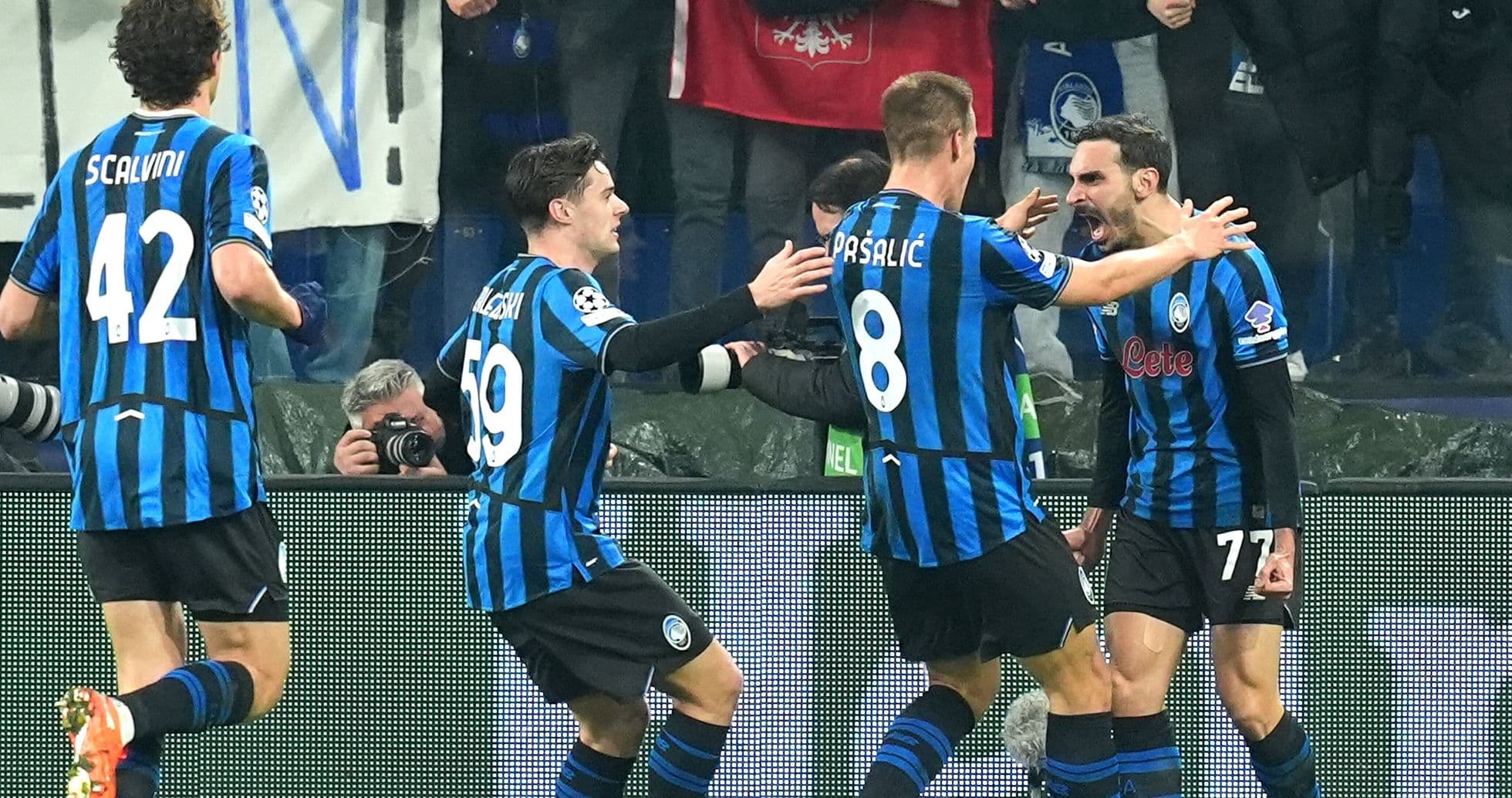
Atalanta’s attacking blueprint was built on volume and territory rather than sterile circulation. They produced 14 total shots to Dortmund’s 7, effectively doubling their opponent’s output. Crucially, 12 of those 14 attempts came from inside the box, showing that their 3-4-2-1 consistently broke into high‑probability areas rather than settling for speculative efforts; Dortmund had 7 shots, all from inside the box, but far fewer entries there. Atalanta hit the target 8 times, forcing 4 saves and generating 2.49 expected goals, a figure that aligns closely with a multi‑goal performance and underlines sustained chance creation.
Set‑pieces and wide overloads also played a role: Atalanta earned 5 corners to Dortmund’s solitary one, evidence of sustained pressure and repeated final‑third entries. With only 8 shots on target from 14 attempts, they were neither hyper‑ruthless nor wasteful; rather, they married steady volume with decent conversion. Dortmund, by contrast, managed just 4 shots on target from 7 attempts and a modest 0.93 expected goals. Their higher possession did not translate into penetration, illustrating a pattern of sterile domination where structured Atalanta blocks and transitions consistently disrupted Niko Kovac’s attacking rhythm.
Defensive Discipline & Intensity
Atalanta’s out‑of‑possession strategy was aggressive and disruptive. Their 17 fouls, compared to Dortmund’s 10, point to a deliberate willingness to break up play and prevent Dortmund from accelerating through midfield. Yet they maintained relative card discipline, receiving only 1 yellow card. Dortmund, chasing the game and often late into duels, collected 3 yellows and finished with 2 reds, reflecting growing frustration and structural stress.
In goal, Marco Carnesecchi needed only 3 saves, indicating that Atalanta’s back three and screen limited Dortmund to few clear looks despite their possession. Dortmund’s Gregor Kobel, by contrast, made 4 saves but faced 8 shots on target, a workload that underlines how exposed his side became, especially as they pushed and lost defensive control.
Atalanta’s compact, foul‑heavy defensive block and direct, box‑focused attacking (14 shots, 12 in the area, 2.49 xG) comfortably outperformed Dortmund’s higher but sterile 56% possession. Efficiency, territorial pressure, and superior game management trumped ball retention.