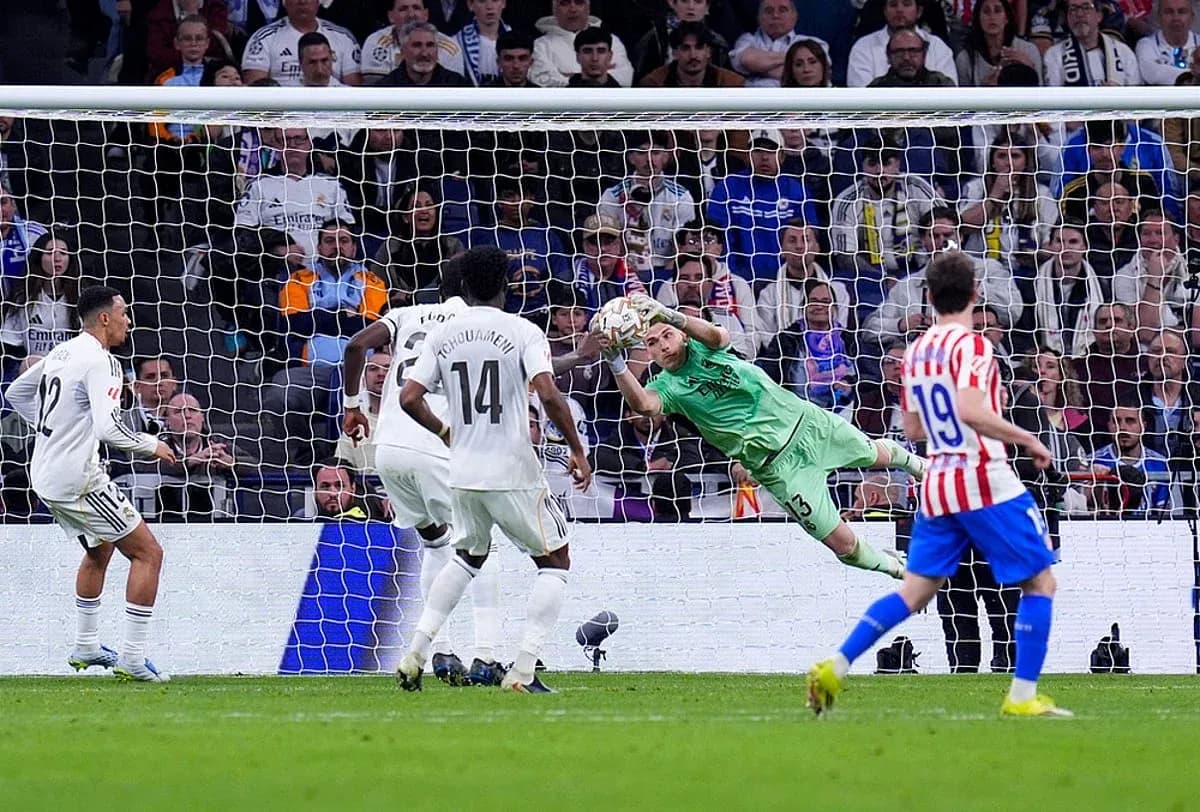
Atletico Madrid Edges Osasuna 2-1 in La Liga Clash
The night at Estadio El Sadar ended with the scoreboard reading Osasuna 1–2 Atletico Madrid, but the story of this Regular Season – 36 clash in La Liga ran much deeper than the numbers. In a season where Osasuna have lived off their home fire and Atletico have wrestled with inconsistency on their travels, this fixture distilled both teams’ identities into ninety tense minutes.
Heading into this game, Osasuna sat 12th on 42 points, their campaign defined by a stark split between fortress and fragility. At home they had been robust: 9 wins from 18, scoring 30 and conceding 22, an average of 1.7 goals for and 1.2 against at El Sadar. On their travels, by contrast, they had only 2 away wins in 18. Overall, their goal difference of -4 (43 scored, 47 conceded) underlined a side that competes but rarely dominates.
Atletico arrived in Pamplona in 4th place with 66 points, clinging to the Champions League places through a blend of home supremacy and away volatility. Overall they had 20 wins from 36 and a goal difference of 21 (60 for, 39 against), powered by a fearsome record at the Metropolitano but tempered by an away record of 6 wins, 5 draws and 7 defeats. On their travels they averaged 1.2 goals scored and 1.2 conceded, a far more mortal version of Diego Simeone’s team.
I. The Big Picture: Shapes and Seasonal DNA
The tactical tableau was clear from the first whistle. Alessio Lisci stayed loyal to Osasuna’s most-used structure, a 4-2-3-1 that has been deployed 21 times this season. Aitor Fernandez stood behind a back four of V. Rosier, Alejandro Catena, F. Boyomo and J. Galan. In front, Jon Moncayola and Lucas Torro formed the double pivot, with R. Garcia, M. Gomez and R. Moro supporting lone striker Ante Budimir.
Simeone answered with Atletico’s signature 4-4-2, the formation they have used in 24 league matches. J. Musso started in goal, shielded by a back line of M. Llorente, M. Pubill, D. Hancko and M. Ruggeri. The midfield four of T. Almada, R. Mendoza, Koke and O. Vargas provided a mix of control and verticality, with Antoine Griezmann and A. Lookman as the front two.
The match narrative reflected the table. Atletico, with a total scoring rate of 1.7 goals per game and only 1.1 conceded, carried a more polished edge. Osasuna, averaging 1.2 goals for and 1.3 against overall, needed El Sadar’s intensity to bridge the gap – and for long spells, the 4-2-3-1’s compactness did exactly that.
II. Tactical Voids: Absences and Discipline
Both coaches had to navigate significant absences that shaped the squads before a ball was kicked. For Osasuna, S. Herrera was suspended with a red card, while V. Munoz missed out through a muscle injury. The loss of Herrera in particular reduced Lisci’s options for midfield rotation and late-game energy, placing heavier responsibility on Moncayola and Torro to manage transitions and tempo.
Atletico’s absentee list was even longer and more structurally damaging. J. Alvarez (ankle injury), A. Baena (suspension for yellow cards), P. Barrios (muscle injury), J. Cardoso (contusion), J. M. Gimenez (injury), N. Gonzalez (muscle injury), N. Molina (muscle injury) and G. Simeone (hip injury) all missed the trip. That stripped Simeone of a natural right-back in Molina, a senior centre-back in Gimenez, and a key creative runner in G. Simeone, who has supplied 6 assists this season. The result was a back four relying on versatility (Llorente) and a midfield where Koke’s orchestration had to compensate for the missing variety.
Disciplinary profiles also framed the risk landscape. Osasuna are a card-heavy side: their yellow-card timing data shows a late-game surge, with 20.45% of their yellows arriving between 76–90 minutes and another 18.18% between 61–75. Their red cards are clustered too, with 28.57% each in the 31–45, 76–90 and 91–105 ranges. Atletico, while more controlled, still spread their yellows across the middle phases, with 21.05% between 31–45 and 18.42% from 46–60. In a tight match, that meant the final quarter was always likely to become a psychological test as much as a tactical one.
III. Key Matchups: Hunter vs Shield, Engine Room
The headline duel was always going to be Ante Budimir against Atletico’s defensive structure. Budimir, sitting 3rd in the league scoring charts with 17 goals from 35 appearances, is the archetypal penalty-box hunter. He had taken 84 shots with 39 on target, and his aerial presence and duels – 357 contested, 167 won – make him a constant problem for centre-backs. His penalty record, however, carried a note of jeopardy: he had scored 6 spot-kicks but also missed 2, meaning any penalty award would not be automatic salvation.
Against him, Atletico’s overall defensive record – 39 goals conceded in 36 matches, only 1.1 per game – spoke of structure and habit more than individual brilliance, especially with Gimenez absent. D. Hancko and M. Pubill had to cope not just with Budimir’s movement but with the supply lines from wide and the half-spaces, where R. Moro and M. Gomez tried to drag Atletico’s back four out of its comfort zone.
In midfield, the “engine room” duel pitted Moncayola and Torro against Koke and R. Mendoza. Moncayola’s season has been defined by relentless work: 34 appearances, 2889 minutes, 50 tackles, 6 blocks and 20 interceptions, plus 4 assists and 37 key passes. He is Osasuna’s metronome and disruptor rolled into one, but his 9 yellow cards underline how fine the line is that he walks. Beside him, Torro’s screening was essential in front of Catena, whose season has been a blend of leadership and risk. Catena has blocked 32 shots and made 33 interceptions, but his 11 yellow cards and 1 red confirm that he defends on the edge.
Koke, by contrast, offered Atletico calm and angles. With so many creative absentees, his role as the first receiver from the back line was crucial in beating Osasuna’s first press line in the 4-2-3-1. R. Mendoza’s presence alongside him added legs and vertical pressure, allowing Atletico to switch quickly from compactness to incision, especially once they had a lead to protect.
IV. Statistical Prognosis and Tactical Verdict
Following this result, the numbers feel almost pre-written. Atletico’s superior attacking average – 2.1 goals per game at home and 1.2 away – translated into the two goals they found in Pamplona, while their defensive baseline of 1.2 conceded on their travels aligned almost perfectly with the single strike they allowed Osasuna. For the hosts, the pattern was equally consistent: a home average of 1.7 goals for and 1.2 against suggested they would be competitive but vulnerable to a side with Atletico’s cutting edge.
From a tactical perspective, the clash of systems played out as expected. Osasuna’s 4-2-3-1 offered structure, zones and a clear focal point in Budimir, but against a 4-4-2 drilled to close the centre and force play wide, they needed near-perfect execution in the final third. Atletico, even with a depleted squad, leaned on collective habits: compact lines, fast breaks through Griezmann and Lookman, and Koke’s ability to slow or accelerate the game as required.
In xG terms, the profile of the match would likely show Atletico carving fewer but higher-quality chances, consistent with a team that has failed to score only 5 times in 36 league outings and has 13 clean sheets overall. Osasuna, who have failed to score 11 times this season – all 11 of those blanks coming away from home – are usually more incisive at El Sadar, but here they ran into a defensive unit comfortable suffering without the ball.
The tactical verdict is that this was less an upset of the numbers and more their logical extension. Osasuna’s season-long balance of bravery and defensive risk, embodied by figures like Catena and Moncayola, kept them in the contest. Atletico’s higher ceiling, even stripped of several key names, ultimately told. In a league table that rarely lies, a 12th-placed side with a -4 goal difference pushing but falling to a 4th-placed team with a +21 goal difference feels exactly like the story this 1–2 at El Sadar was always destined to tell.