Atletico Madrid's Tactical Efficiency Against Club Brugge
Club Brugge saw more of the ball, but Atletico Madrid controlled the game. The Belgians posted 55% possession and completed 556 passes at 87% accuracy, suggesting a patient, circulation-heavy approach, especially through their 4-1-4-1 structure. Atletico, with 45% possession and 464 passes (84% accuracy), accepted longer spells without the ball, focusing on compactness and verticality from their 4-4-2.
The 1–1 half-time score reflected a relatively balanced first phase, with Brugge’s possession not translating into territorial dominance. Atletico’s plan was clearly to control space rather than the ball, staying organized, then breaking quickly into the box. As the game wore on, their transitions and direct attacks increasingly stretched Brugge’s structure, turning a controlled contest into a one-sided scoreline.
Offensive Efficiency
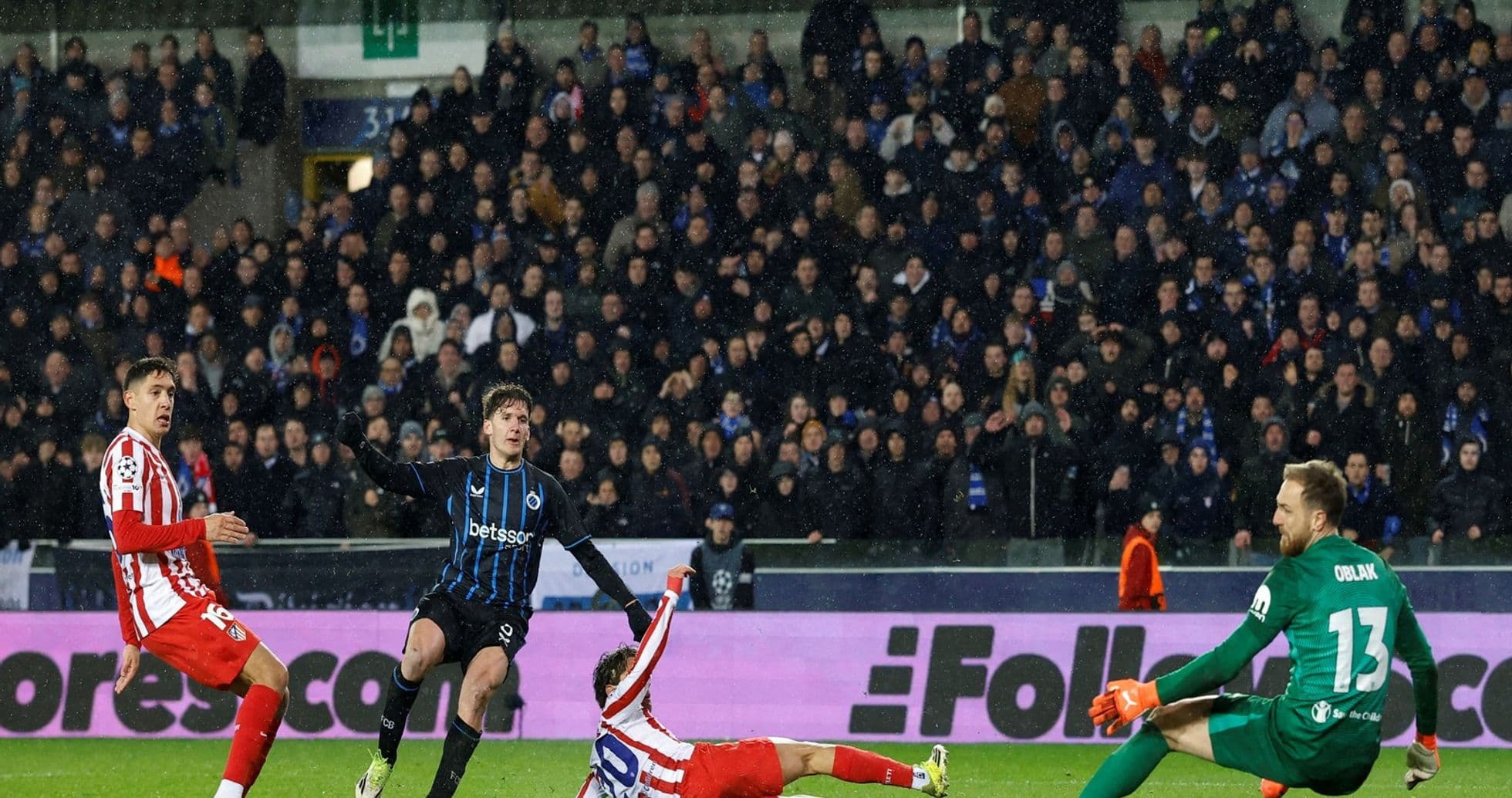
Despite having less possession, Atletico produced the clearer, more penalty-box-oriented threat. They recorded 14 total shots to Brugge’s 11, but crucially 10 of those Atletico efforts came from inside the box, compared to Brugge’s 5. That inside-box bias, aligned with an xG of 2.32, underpinned a 4–1 scoreline that speaks to ruthless exploitation of high-value chances.
Brugge’s shot profile tells a different story. With 11 shots, they were not toothless, but 6 of those came from outside the box, reflecting difficulty in breaking Atletico’s compact block. Their xG of 1.81 shows they did craft some decent opportunities, yet they lacked the same frequency of close-range looks and failed to convert pressure into scoreboard impact.
Set pieces underline this contrast. Brugge earned 7 corners to Atletico’s 2, another sign of territorial advantage and sustained attacking phases. However, Atletico turned fewer attacking situations into more goals, supported by 5 shots on target from 14 attempts and a game plan built around vertical runs and box occupation rather than volume of possession. The Spanish side’s offensive approach was not about constant waves, but about ensuring that when they did attack, they arrived with numbers and clarity in the final third.
Defensive Discipline & Intensity
Atletico’s defensive work was notable for control rather than aggression. They committed only 5 fouls and received 1 yellow card, indicating a disciplined block that relied on positioning more than constant tackling. Brugge, with 8 fouls and 2 yellows, were slightly more reactive, especially as they chased the game in the second half.
Goalkeeping data shows neither side was bailed out by extraordinary shot-stopping. Atletico’s keeper made 5 saves, Brugge’s just 1, which aligns with the pattern of Atletico generating fewer but more decisive on-target attempts. Both teams had 4 blocked shots, suggesting committed defending in both boxes, but Atletico’s structure better limited clear central entries, pushing Brugge into more speculative efforts from distance.
The low overall foul count (13 combined) points to a match defined more by tactical organization than by physical disruption, with Atletico’s compactness and timing in duels key to springing their attacks.
Atletico Madrid’s efficiency and box-focused attacking trumped Club Brugge’s superior possession and set-piece volume. With 45% of the ball but more shots, more efforts in the box, and a higher xG, Atletico’s compact structure and ruthless transitions dismantled Brugge’s more sterile territorial control.