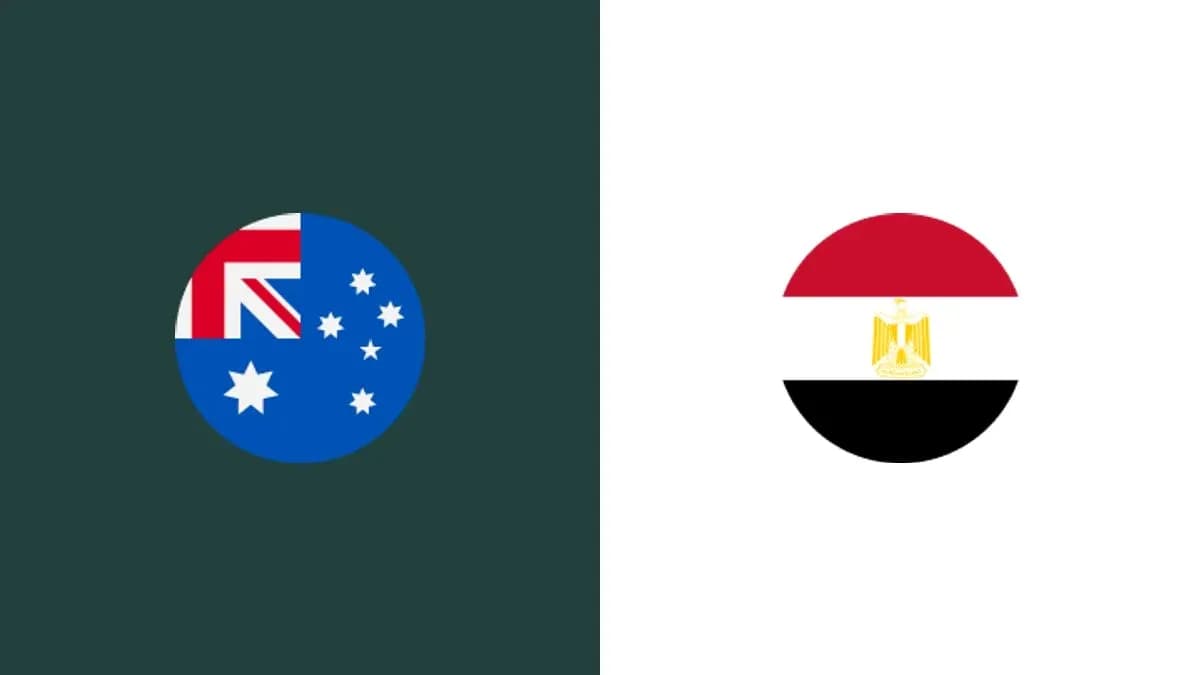
Australia vs Egypt: A Historic Knockout Clash in Texas
On a hot Texas evening at Dallas Stadium, two nations used to watching others make history now stand on the brink of writing their own.
Australia arrive with a familiar edge: stubborn, disciplined, hard to move. Egypt land with something rarer in their World Cup story – momentum, belief, and an unbeaten record that has turned a long‑suffering giant into one of the tournament’s most intriguing threats.
One game. One ticket to the Round of 16. One milestone each has never truly owned.
Socceroos chase a first knockout win
Tony Popovic has built exactly the kind of Australia side you expect him to build. Organised. Gritty. Unapologetically pragmatic.
They survived a rugged Group D, finishing second on the back of defensive control rather than attacking flair. A 2-0 defeat to hosts United States threatened to derail them early, but the response said plenty about their character: a suffocating 0-0 against Paraguay and a decisive 2-0 win over Turkey to punch their ticket to the knockouts.
Two goals in three games. It’s not pretty, but it’s effective.
Popovic’s team shape has been their anchor. Whether he locks into a back three or stiffens into a flat four, Harry Souttar is the towering reference point, with young Alessandro Circati growing into the tournament alongside him. In front of them, the midfield graft of Jackson Irvine and Aiden O’Neill has given Australia a platform, if not a cutting edge.
The question now is whether that platform can finally support something more. Australia have never won a World Cup knockout match. This group has the chance to kick through that ceiling.
They will have to do it without experience in the final third. Mathew Leckie and Jacob Italiano are out of the tournament, stripping the squad of depth and versatility in attack. The responsibility swings sharply onto teenage livewire Nestory Irankunda and creative talent Cristian Volpato, with Connor Metcalfe asked to link the lines and break from midfield.
Popovic knows what his side are: compact, resilient, dangerous when the game breaks open. The plan is clear – keep it tight, then strike.
Egypt’s fairytale steps into the spotlight
Across the halfway line stands a team whose story has already shifted the narrative of a nation.
Egypt, under Hossam Hassan, have finally stepped out of the shadows of past disappointments. Group G saw them go toe-to-toe with heavyweight opposition and refuse to blink: a 1-1 draw with Belgium, a commanding 3-1 win over New Zealand – their first-ever World Cup victory – and a 1-1 grind against Iran to close out an unbeaten group campaign.
They finished second, but their football has carried the swagger of a side that believes it belongs here.
The numbers back it up. Egypt have averaged over four shots on target per game, their attack varied and inventive. Omar Marmoush has led the line with authority, drifting into pockets, spinning into space, and dragging defenders into places they don’t want to go. The wide rotations, especially down the left, have given opponents constant headaches.
Yet everything, as always, bends around one name.
Mohamed Salah’s hamstring strain, suffered in that draw with Iran, hangs over this tie like a storm cloud. His minutes, his intensity, even his presence on the teamsheet remain under medical scrutiny. For Egypt, it’s not just about his goals. It’s the gravity he carries. Defenders drop five yards deeper, midfields slide across, spaces open for others.
If he’s limited, the creative burden shifts squarely onto Marmoush and the supporting cast – Ahmed Sayed "Zizo", Emam Ashour, Mostafa Ziko – to maintain the same level of incision without the comfort blanket of their captain at full tilt.
Hassan’s team, though, have already shown they can function as a unit rather than a one-man show. That belief will be tested to its limit in Arlington.
Where the game will be won: wings and breaks
Strip away the storylines and the match tilts on a tactical knife edge.
Egypt want the ball. They want territory. They want to overload the flanks, especially the left, where Marmoush and the full-back – likely Karim Hafez – can combine, rotate inside, and drag Australia’s back line into uncomfortable angles. Those tight passing triangles around the box are designed to prise open low blocks and force split-second decisions from centre-backs.
Australia will try to refuse those angles. Their defensive block will sit deep, narrow, and disciplined, daring Egypt to cross or shoot from distance rather than slice through the seams. Every lapse, every yard of space conceded between the lines, risks a quick combination and a shot at Patrick Beach’s goal.
When the ball turns over, the picture flips.
This is where Irankunda becomes central to the story. Still a teenager, but already playing like a man who relishes chaos, he offers raw pace and direct running that can turn a clearance into a chance in seconds. Australia’s vertical transitions – Beach to Souttar, into midfield, then out quickly to the flanks – are designed to catch Egypt with their full-backs high and their structure stretched.
If Egypt’s midfield screen, likely Marwan Attia and Mahmoud Saber, can’t smother those counters early, the Pharaohs will be walking a tightrope between dominance and disaster.
Concentration and composure under the lights
The margins here are mental as much as tactical.
Australia cannot afford a single lapse in their own half. Marmoush drifting into the channel, a late Salah arrival at the back post, a loose clearance dropping to Zizo on the edge – these are the moments that decide knockout ties. Popovic’s side have lived on their defensive discipline; now it must be flawless.
Egypt face a different kind of test. They are no longer the underdog sneaking up on the elite. They are expected to have the ball, expected to make the play, expected to break down a side that will happily sit in and wait. Impatience is the trap. Commit too many bodies forward, and Irankunda and Volpato will find the grass behind them.
One team must hold their nerve without the ball. The other must keep theirs with it.
Probable lineups and key figures
The likely Australia XI, based on their group-stage structure, shapes up as:
Beach; Circati, Souttar, Herrington; Bos, O'Neill, Irvine, Behich; Volpato, Irankunda, Metcalfe.
That spine – Beach, Souttar, Irvine – is the foundation. Around it, Popovic will demand energy and discipline from his wing-backs Jordan Bos and Aziz Behich, and a moment of quality from Volpato between the lines.
Egypt’s expected setup mirrors their group-stage balance:
Shobeir; Hany, Ibrahim, Rabia, Hafez; Ateya, Saber; Ziko, Salah, Ashour; Marmoush.
Mostafa Shobeir has grown into the tournament in goal, with Yasser Ibrahim and Rami Rabia providing experience at centre-back. The creative pulse runs through Ziko and Ashour, but all eyes will drift, again, to Salah – whether he starts, comes from the bench, or watches on, his status will frame the evening.
Form lines and old scars
Both sides arrive with similar recent records: one win, two draws, two defeats in their last five.
Australia’s run has been defined by narrow margins. A 1-0 loss to Mexico and a 1-1 draw with Switzerland in pre-tournament friendlies set the tone. At the World Cup, the 2-0 win over Turkey, the 2-0 defeat to the United States, and the goalless stalemate with Paraguay underline a team that rarely gets blown away but rarely runs away with games either. Four scored, four conceded across those five matches tells its own story.
Egypt’s path has been slightly more expansive. A 2-1 loss to Brazil and 1-0 win over Russia in friendlies showcased both their vulnerability and their threat. The World Cup has sharpened them: 1-1 Belgium, 3-1 New Zealand, 1-1 Iran. Five goals scored, four conceded. Enough to suggest they can open teams up, but not enough to suggest they’re watertight at the back.
History, such as it exists between these two, leans Egypt’s way. The only recorded meeting came in a 2010 friendly, a 3-0 win for the Pharaohs. Sixteen years on, different players, different stakes, same imbalance in the record books.
A night that can change everything
Australia finished second in Group D. Egypt did the same in Group G. On paper, it’s a meeting of equals.
It won’t feel like that under the lights.
For the Socceroos, this is a chance to finally turn decades of admirable effort into a defining knockout win. For Egypt, it’s an opportunity to stretch a breakthrough tournament into something far bigger – to prove that their first modern-era progression from the group is not a one-off, but a new baseline.
Kick-off comes at 18:00 GMT, 14:00 EST, in the heart of North America’s football showpiece. One side will walk off having broken new ground. The other will be left wondering how long it will be before a chance like this comes around again.