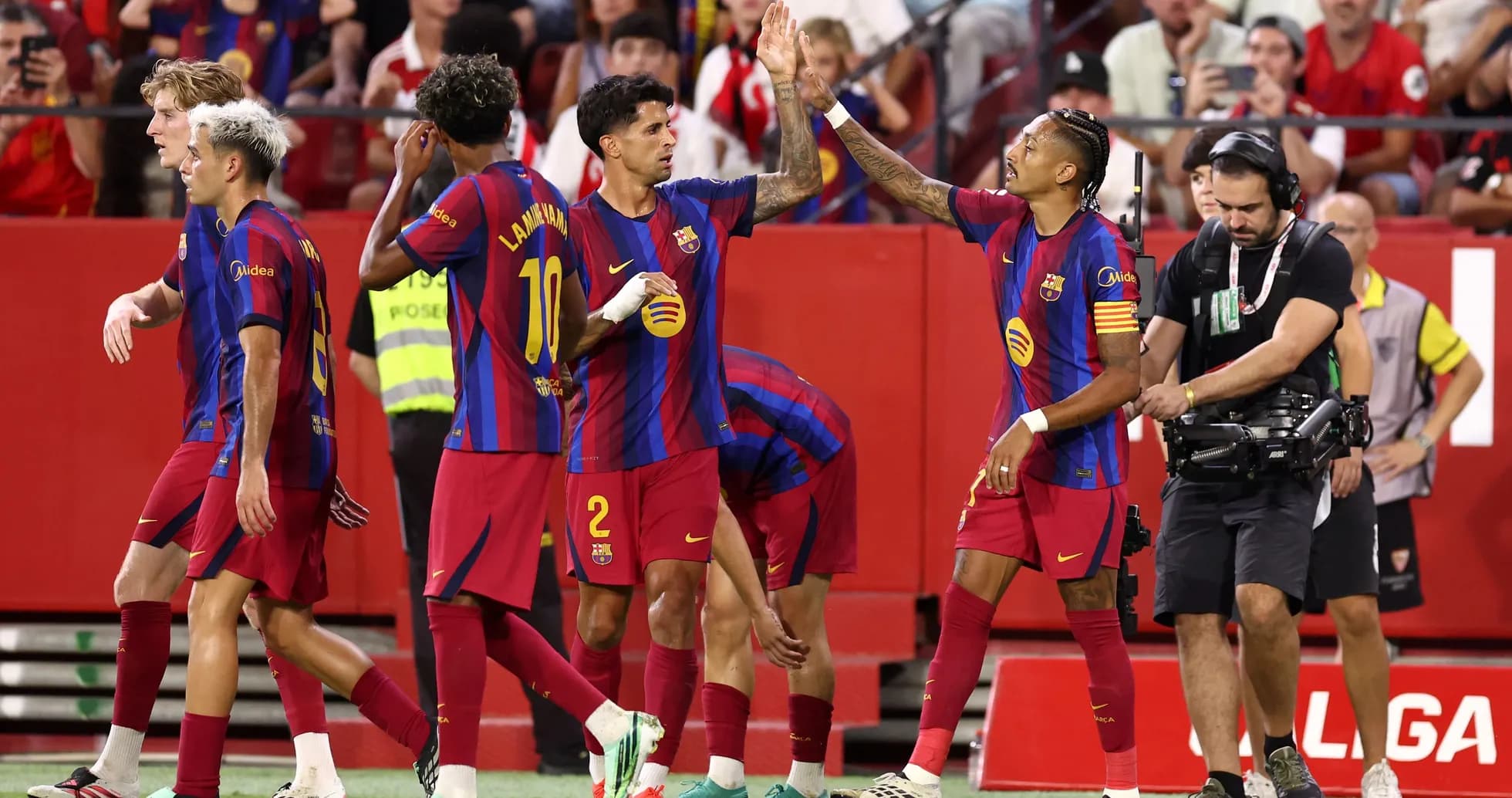
Barcelona's International Break Anxiety: Raphinha's Risk and Club Concerns
Hansi Flick feels it in the pit of his stomach every time the calendar flips to an international break.
“I feel anxious when the players leave, but I trust the national team coaches and I try to stay positive,” the Barcelona boss admitted days ago. The break has now arrived, and the tension inside the club has only sharpened.
Seventeen Barcelona players have scattered across the globe to join their national teams. It was supposed to be 18, but Andreas Christensen’s left thigh injury has kept him in Barcelona and out of Denmark’s squad. One fewer suitcase at the airport, one fewer heart in the mouth. Just.
The club insists there is no fear. Yet the mood is clear: anxiety, not calm. The squad is in peak physical condition after a strong start under Flick, and that is exactly what worries them. These games, the travel, the time zones — especially the long-haul flights to South America — all feel like an open invitation to trouble.
Raphinha is the prime example. And the biggest concern.
Spain-heavy, world-spanning risk
Barcelona’s dressing room has emptied in waves. Seven players have joined Luis de la Fuente’s Spain squad: Pau Cubarsí, Eric García, Rodri, Pedri, Fermín, Dani Olmo and Lamine Yamal. They will cross paths with a familiar face when they meet Croatia — goalkeeper Dominik Livaković, another Barça player on international duty.
The youth ranks are also exposed. Xavi Espart and Marc Bernal step up with Spain’s under-21s for Euro 2027 qualifying, a triple-header against Finland, San Marino and Romania. Three games, three chances for minutes, three more entries on the club’s worry list.
The calls keep coming. Adyemi has returned to the Germany setup for matches against Serbia and Greece. João Cancelo links up with Portugal. Gordon reports for England. Jules Koundé joins France. Hamza Abdelkarim travels with Egypt. Bisseck goes with Belgium’s under-21s.
Each name represents a flight, a training session, a challenge for the medical staff once they come back. The games themselves are one thing. The journeys are another.
Raphinha, the form of his life – and the biggest fear
Inside the club, the sharpest anxiety is reserved for one man. Raphinha.
He is Barcelona’s most in-form player, with 14 goals in eight matches. Flick has built large parts of his attacking plan around the Brazilian, whose confidence and rhythm are peaking. Now he disappears across the Atlantic with Brazil, into a schedule that will demand long flights, high intensity and little rest.
The history is what really bites. Raphinha has come back injured from international duty before. So have Lamine Yamal, Gavi and Frenkie de Jong. The pattern is impossible to ignore.
The most painful example is still fresh. During the last World Cup, Raphinha suffered pain in the tendons of his right knee. A few months earlier, in March, he had already been forced out of a Brazil–France friendly in the United States with an injury in the same area. He was dropped from the squad and sent straight back to Barcelona, then missed five weeks.
Last season, a string of niggles and muscle problems repeatedly broke his rhythm. Just as he looked ready to explode, something pulled him back. Flick and the club believe they are finally seeing the version of Raphinha they always wanted: decisive, ruthless, consistent. Losing him now, even briefly, would hit harder than ever.
And it is not just the tackles or sprints that worry them. The long-haul flights, the jet lag, the disrupted sleep — they all pile onto the players’ bodies. Fatigue does not make headlines, but it makes injuries.
Laporta versus the calendar
Inside the club’s offices, the frustration has turned into a political stance. At the general assembly on Saturday, president Joan Laporta did not hide his anger at the international window or the calendar that created it.
“This break affects the rhythm of our preparations. It harms us greatly,” he told the members. He spoke of his intention to talk to international football bodies, to demand a rethink of the calendar and the number of competitions.
“There are many competitions, the Conference League and the Nations League ... the schedule is extremely crowded,” Laporta said.
Barcelona know they cannot stop their players from answering their countries’ calls. They know prestige, pride and careers are built in these games. But as Flick watches 17 key pieces of his squad board planes and disappear into another fortnight of risk, one question hangs over the club’s season:
How many of them will come back exactly as they left?