Barcelona Prepares for Sevilla Match Without Joan Garcia
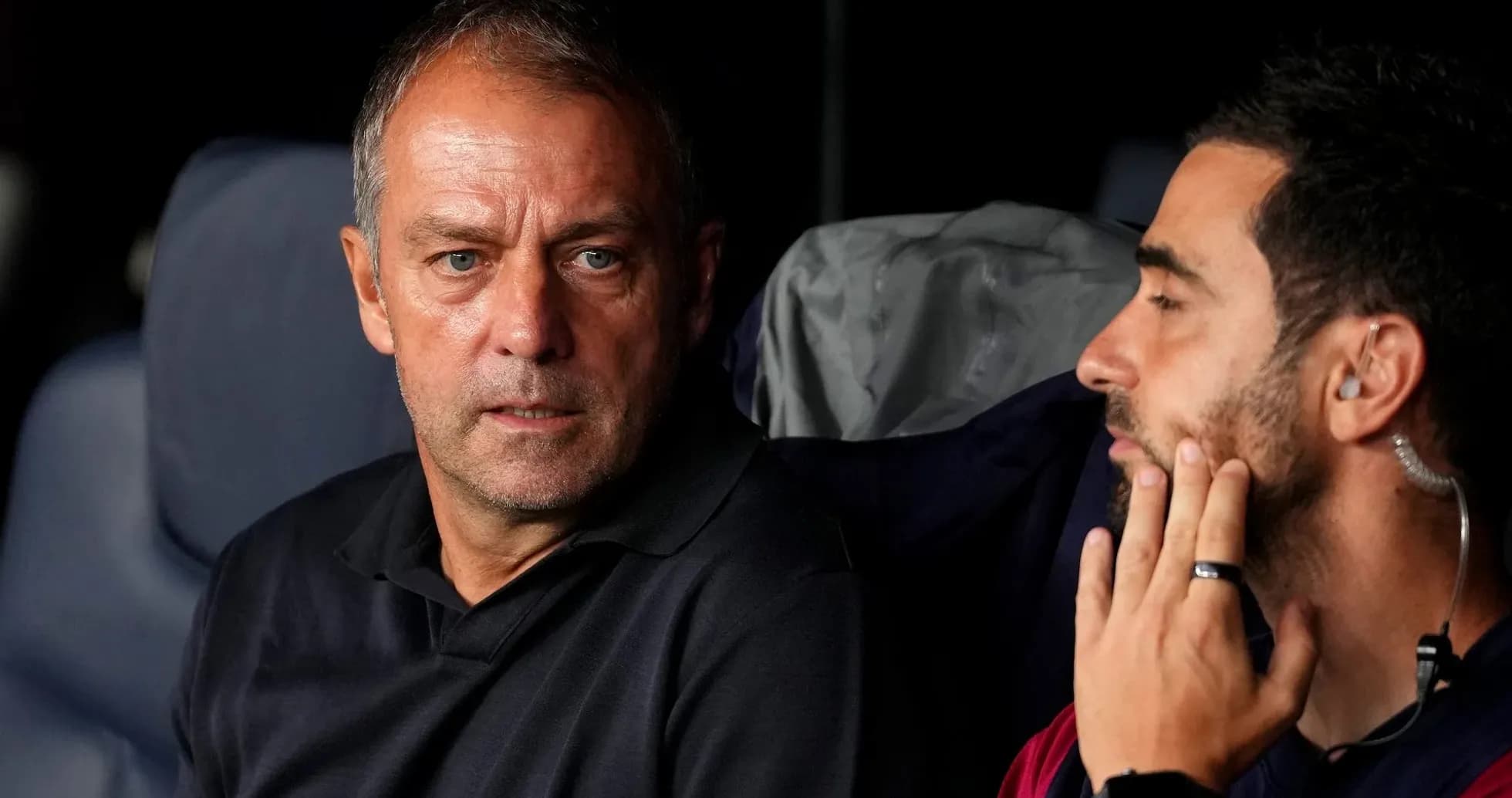
Hansi Flick will travel to Sevilla without Joan Garcia, and he made sure everyone knew it was a conscious choice, not a crisis.
The goalkeeper felt a knee problem against Racing Santander and, after tests, Barcelona’s staff decided to pull him out of the trip to the Ramon Sanchez-Pizjuan.
“We always make decisions together,” Flick said. “When the doctors told us what was wrong with him – it’s not very serious, but he needs to rest – we decided he should rest.”
That leaves a straight fight: Wojciech Szczesny or Dominik Livakovic.
Flick smiled, but he gave nothing away.
“You’ll have to wait until tomorrow.”
Szczesny’s credit in the bank, Livakovic’s rising stock
On paper, Szczesny starts a step ahead. He was a pillar of last season’s La Liga title, a veteran who dragged Barcelona through tight games and tense finishes.
Flick did not hide that.
“We won La Liga with Szczesny; it was largely thanks to him. For us, he’s a fabulous goalkeeper with a wealth of experience.”
Yet he made sure Livakovic’s name carried weight too.
“I think it’s very important to have quality. I think that, with [Dominik] Livakovic, we also have a top-class goalkeeper – that’s just the way it is.”
The debate sharpened after Szczesny’s costly mistake against Racing. Cameras caught a long conversation between coach and keeper at full-time. Flick insisted that chapter is closed.
“I’ve already told him that we all make mistakes. He made a mistake and he’s aware of it; it won’t happen again.”
From there, Flick widened the lens. He spoke about “Tek”, about philosophy, about adaptation. Livakovic has just had minutes, he reminded everyone, and is still tuning in to what Barcelona want from the position.
“He can play, he’s ready to play, and that’s what we have to consider. But we always look out for what’s best for the team, not for one player.”
The message was clear: reputation counts, but no one is untouchable.
A different Barcelona returns to a painful venue
Barcelona go back to a ground that stung them last season. They lost at Sevilla, and the performance raised questions about their direction.
Flick believes those days are gone.
“I have to say, first of all, that I think we’re now at a different level to where we were last year. But every match starts at 0–0 and Sevilla, especially at home, are playing very well.”
He knows exactly what awaits: aggressive, man-to-man defending, high pressure, a crowd that feeds off chaos. To survive that, he wants his side to be brave with the ball and ruthless in their structure.
“They defend man-to-man and will try to press in those situations. For us, it will be important to play with confidence and move the ball out wide.”
The tactical message is simple. The emotional one is sharper: Barcelona may feel stronger, but nothing is guaranteed in that stadium.
Managing the grind: minutes, muscles, and recovery
Behind the scenes, another battle is running. The calendar.
Barcelona are entering a heavy stretch of fixtures, and Flick kept circling back to one theme: recovery.
“We’re working on that every day. Recovery is a very important part of it and we’re managing our workload very well. And that’s what we need to keep doing. For me, that’s the key.
“We’ve got a lot of matches coming up and we need to keep recovery in mind.”
That naturally drags the conversation towards rotation. Gabriel Jesus sits at the heart of that debate. Rested against Racing, he could return in Sevilla, but Flick again refused to pin himself down.
“We’ll see, but we have to keep making changes to manage each player’s minutes.
“As for whether he’ll start, it was important for him to rest against Racing. For now, that’s all I can say.”
It was another hint that no one, not even the big names, is safe from the rotation wheel.
Adeyemi’s spark and the dressing-room pulse
If the schedule is a concern, Karim Adeyemi has at least injected some electricity into Barcelona’s recent games.
Flick’s eyes light up when he talks about the forward.
“He’s very quick, but I don’t know if he’s the quickest player I’ve ever coached. Alphonso Davies is similar. But he’s a good lad, a good person, and he has a lot of respect for the dressing room.
“Everyone loves him dearly. His performances make things easier.”
Then came a line that sounded like a coach nailing his colours to a player.
“I’m really glad he chose us. I’ll put my trust in him and I’m 100% behind Karim. We’ll see more matches like the one on Wednesday.”
Adeyemi is not just a sprinter on the wing. He is becoming a reference point in a dressing room Flick still considers a work in progress.
“I think it’s not just my job, but that of the entire coaching staff. We work together, with positive energy.”
The German did not pretend everything is perfect.
“To be honest, I’m not entirely happy with this at the moment because we’re only just starting the process and there’s room for improvement.
“But right now I’m not 100 per cent satisfied because we always demand a lot and we need to improve things.”
The bar has been set high. The coach is reminding his players of it at every turn.
Raphinha, the pressing captain in a number nine’s shirt
One of Flick’s most striking tweaks has been Raphinha’s role. Nominally the number nine, practically the first defender.
“If you look at the last two seasons, we always started the press with the ‘number 9’. And he has that hunger, that drive and that attitude to start the press exactly as we need him to.
“Not only is he excellent in attack, but he’s also excellent in defence. He’s the one who starts the press. As captain, he leads the way and the rest follow him.”
In a stadium like the Ramon Sanchez-Pizjuan, where games can tilt in a single frantic spell, that pressing trigger from the front could decide whether Barcelona leave with a statement win or another uncomfortable inquest.