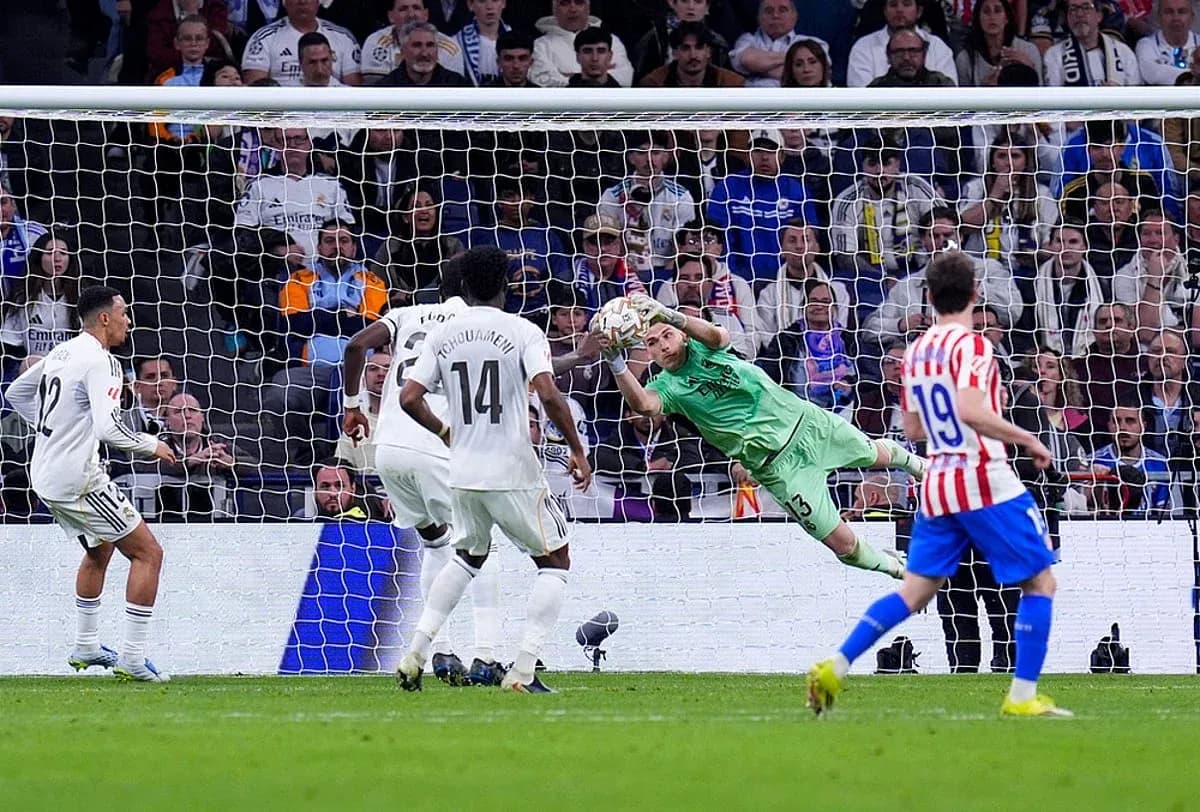
Barcelona Dismantles Racing Santander 7–2 in La Liga Showdown
The Camp Nou floodlights framed a statement night in La Liga, as Barcelona dismantled Racing Santander 7–2 in Regular Season - 6, a result that felt less like a contest and more like a live demonstration of why the league leaders are setting a new attacking standard.
Heading into this game, Barcelona were already top of the table with 18 points from 6 wins in 6, boasting a remarkable overall goal difference of +22 (28 scored, 6 conceded). At home, they had been ruthless: 3 wins from 3, 14 goals for and 4 against, averaging 4.7 goals per match on their own turf. Racing Santander arrived as a paradoxical mid-table side in 10th: strong at home but fragile on their travels, with 7 points overall and a negative overall goal difference of -5 (11 for, 16 against). Away from home, they had lost all 3 matches, scoring 4 and conceding 11, an away average of 1.3 goals for and 3.7 against.
I. The Big Picture – Flick’s Blueprint in Full Colour
Hansi Flick rolled out his preferred 4-3-3 again, and this time it looked like a finished product. J. Garcia anchored the side in goal, shielded by a back four of J. Cancelo, G. Martin, A. Christensen and E. Garcia. Ahead of them, a fluid midfield three of Rodri, Pedri and Dani Olmo controlled both tempo and territory, while the front line of Lamine Yamal, Raphinha and K. Adeyemi stretched Racing to breaking point.
Racing Santander’s Jose Lopez countered with a 4-1-3-2, a shape that, on paper, offered central protection through M. Prati in front of the back four of A. Martin, F. Gonzalez, Pedro Felipe and Manu Hernando. Ahead of them, S. Canales, M. Gueye and I. Sainz-Maza were tasked with linking to the front pair of A. Villalibre and J. Arana. In practice, that single pivot was swallowed by Barcelona’s positional play.
The half-time score of 4–1 told the story: Barcelona’s structure allowed them to create wave after wave of high-quality chances, while Racing’s attempt to defend higher up the pitch simply opened lanes for diagonal balls into the channels. By full time, 7–2 reflected not only a tactical mismatch but the gulf in confidence between a side with six straight wins and one still learning to live in the top flight’s harsher environments.
II. Tactical Voids – Absences and Discipline
Both coaches had to navigate significant absences. Barcelona were without R. Bardghji and F. de Jong, both sidelined by knee injuries. De Jong’s absence in particular could have threatened Barcelona’s control zones, but Rodri’s presence as the single pivot effectively absorbed that creative and structural responsibility. His positioning allowed Pedri and Dani Olmo to play higher between the lines, turning what might have been a void into a strength.
Racing Santander were hit harder. André Almeida, suspended due to a red card, removed a combative midfield option who could have shared the workload with Prati. The injuries to S. Eriksson (shoulder) and another A. Martin (knee) further limited Lopez’s options, especially in terms of rotation and late-game adjustments. The A. Martin who started at left-back here was a different player, and his exposure in wide areas underlined just how thin Racing were in defensive depth.
Disciplinary trends added another layer. Barcelona, heading into this game, had shown a tendency to pick up yellow cards mainly between 46–60 minutes (62.50% of their yellows), often when pressing aggressively after the break. Racing, by contrast, spread their cautions more evenly across the first 75 minutes, but crucially had already seen a red card in the 76–90 range this season. That late-game volatility mirrored their broader pattern: no clean sheets overall, and a propensity to unravel when chasing matches.
III. Key Matchups – Hunter vs Shield, Engine Room Battles
The headline duel was always going to be Barcelona’s frontline against Racing’s fragile away defence. Raphinha arrived as La Liga’s top scorer with 9 goals and 3 assists in 6 appearances, averaging over two shots on target per match and converting with ruthless efficiency. On the opposite flank, Lamine Yamal had 7 goals and 2 assists, but more importantly, 44 attempted dribbles with 25 successful – a constant one-on-one threat.
Against that, Racing’s away record was alarming: 11 goals conceded on their travels from just 3 matches. Their biggest away defeat before this night was already 7–2, and Barcelona’s biggest home win of the season was also 7–2, a symmetry that felt ominous even before kick-off. The “Hunter vs Shield” contest was less a duel than a siege: Cancelo and G. Martin pushed high, pinning Racing’s full-backs, while Raphinha and Lamine repeatedly attacked the half-spaces between full-back and centre-back.
In midfield, the “Engine Room” battle pitted Rodri, Pedri and Dani Olmo against Prati and the advanced Racing trio. Rodri’s metronomic passing and defensive positioning allowed Barcelona to compress the pitch, while Pedri’s ability to receive on the half-turn between lines forced Racing’s midfield to constantly retreat. Dani Olmo, who had already supplied 3 assists this season with a 94% passing accuracy, floated into pockets behind Prati, dragging the single pivot out of zone and opening corridors for Adeyemi’s diagonal runs.
Racing’s attacking hope lay in M. Zabiri, one of the league’s standout forwards this season with 6 goals from limited minutes and a shot profile of 9 attempts with 8 on target. Even from the bench, his presence loomed as a potential game-changer. Yet his aggressive style – 11 fouls committed and 3 yellow cards – mirrored Racing’s broader risk profile: dangerous going forward, but always a step away from disciplinary trouble.
IV. Statistical Prognosis – Why a Rout Felt Inevitable
Barcelona’s season numbers framed this 7–2 not as an outlier but as an extension of a trend. Overall, they averaged 4.7 goals per match both home and away, while conceding just 1.0 overall (1.3 at home, 0.7 away). They had 3 clean sheets in total and had yet to fail to score in any league outing. Even from the spot, they had 5 penalties overall, scoring 4 and missing 1; the missed penalty underlined that their attacking dominance was not inflated by perfect conversion from the spot, but by open-play superiority.
Racing Santander, by contrast, carried warning signs in every defensive metric. Overall, they conceded 2.7 goals per match, and on their travels that rose to 3.7. They had no clean sheets, and had already experienced a 7–2 away defeat before this fixture. Offensively, their 1.8 goals per match overall and 1.3 away suggested they could score, but not at a rate that could compensate for their defensive leaks.
Layer in the psychological component of standings: Barcelona, rank 1, perfect record, Champions League trajectory; Racing, rank 10, away form of three straight defeats. When a side with Barcelona’s attacking volume meets a defence with Racing’s away fragility, the underlying xG story tends to be lopsided even before the first whistle.
Following this result, Barcelona’s attacking aura only intensifies. The 4-3-3 has crystallised around the brilliance of Raphinha and Lamine Yamal, supported by a deep creative cast that includes Adeyemi, Dani Olmo, Pedri, Fermín and A. Gordon from the bench. Racing Santander, meanwhile, leave Camp Nou with a harsh but clear lesson: in this league, a mid-table attack cannot paper over an away defence this porous. To change their season’s trajectory, the shield must harden long before the hunter steps onto the pitch.