Barcelona Dominates Rayo Vallecano 5-2: A Tactical Preview
On a warm late‑summer night at Camp Nou, Barcelona did more than beat Rayo Vallecano 5‑2; they announced the shape of their new season. This was not a tactical preview in the traditional sense but a live demonstration of where these squads are headed in La Liga’s early weeks.
I. The Big Picture – Two 4‑2‑3‑1s, Worlds Apart
Both sides lined up in a 4‑2‑3‑1, but the symmetry ended on the tactics board. Barcelona, under Hansi Flick, came into the fixture top of La Liga, with 9 points from 3 matches and a goal difference of 10, built on 12 goals scored and only 2 conceded overall. At Camp Nou, they had already produced 7 goals and conceded 2 across 2 home games, an attacking average of 3.5 goals at home and 5.0 on their travels, an almost absurdly aggressive profile for a side still bedding in a new coach.
Rayo Vallecano, by contrast, arrived in Barcelona in 18th place, with just 1 point from 3 matches and a goal difference of -4, scoring 4 and conceding 8 overall. On their travels, they had lost both away matches, scoring 3 but conceding 7, an away average of 1.5 goals for and 3.5 against that already hinted at trouble against an elite attack.
The 5‑2 final scoreline, after a 2‑1 half‑time lead for Barcelona, confirmed the table’s logic. Flick’s side played with the confidence of a group that knows it can overwhelm opponents; Benat San Jose’s Rayo showed flashes of threat but were ultimately stretched beyond their limits.
II. Tactical Voids – Injuries and What They Forced
Barcelona’s dominance came despite a conspicuous absence list. Gavi and Frenkie de Jong, both missing with knee injuries, stripped Flick of two of his most complete midfielders. R. Bardghji was also out with a knee problem, while D. Livakovic was listed as inactive and M. Casado was omitted by coach’s decision. On paper, that should have destabilised the core. In practice, it simply accelerated the elevation of others.
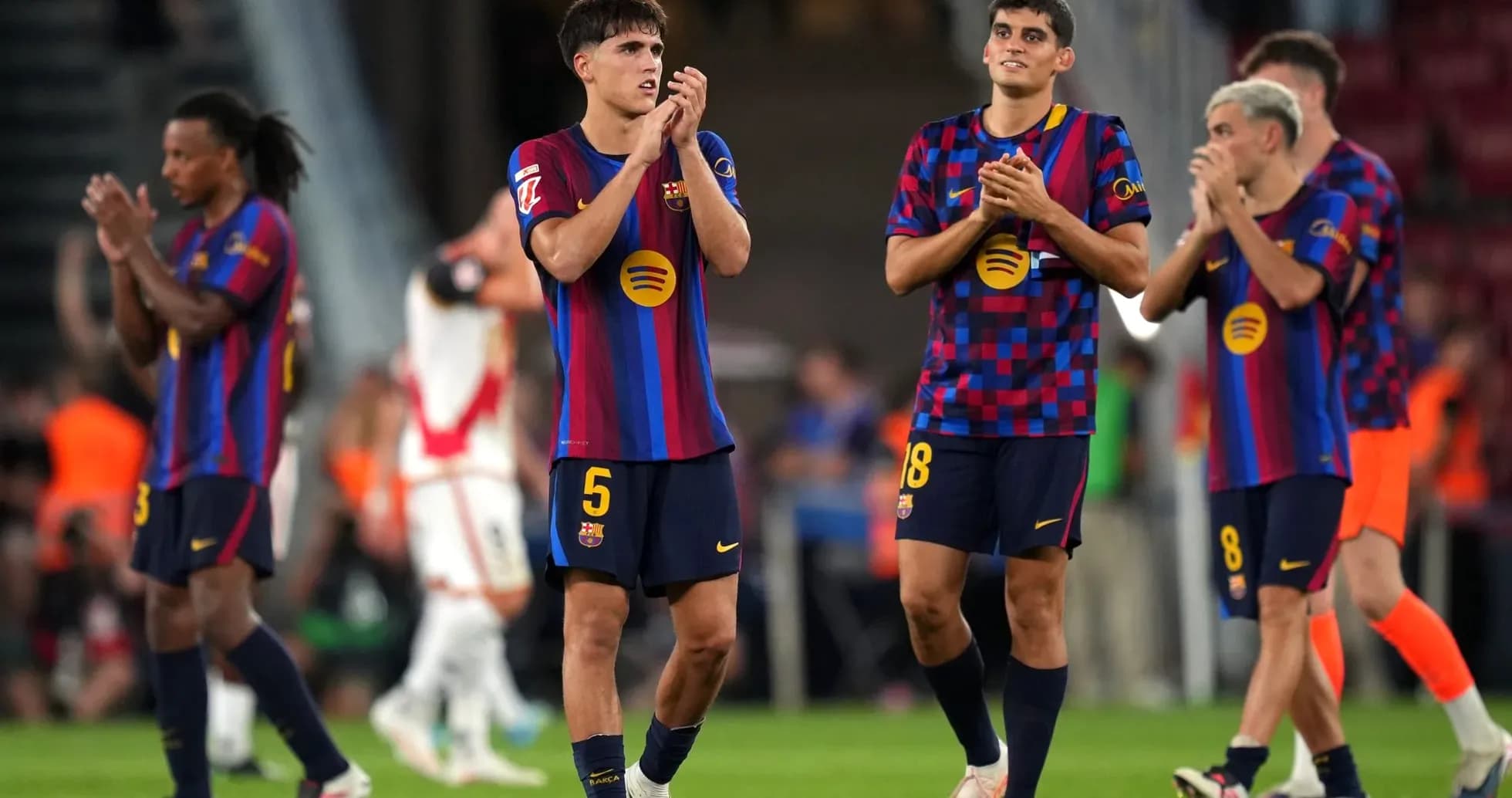
Marc Bernal and Pedri formed the double pivot in front of a back four of X. Espart, Andreas Christensen, P. Cubarsi and Jules Kounde. Without De Jong’s press‑resistance and Gavi’s chaos energy, Barcelona leaned into structure: Bernal as the metronome, Pedri as the connector, and the attacking line given licence to roam.
Rayo’s absences were equally telling. A. Batalla, M. Kumbulla, Luiz Felipe and I. Palazon all missed out through various injuries. Deprived of defensive depth and one of their most inventive attackers in Palazon, Rayo’s 4‑2‑3‑1 had to lean heavily on O. Valentin and G. Bouare in midfield, with U. Lopez and A. Garcia tasked with linking to Sergio Camello up top. The thinness of their defensive rotation showed as Barcelona repeatedly found space between and around F. Lejeune and P. Ciss in central defence.
Disciplinary trends this season underline the risk profile each team carries. Barcelona’s yellow cards have so far come early – their only recorded booking in the league arriving in the 16‑30 minute window – suggesting an aggressive start that then settles into control. Rayo’s bookings, by contrast, skew heavily late: 3 yellows between 61‑75 minutes, 2 between 76‑90, and another in added time. It speaks of a side chasing games, arriving late into duels as fatigue and scoreboard pressure mount – precisely the script that unfolded in Barcelona.
III. Key Matchups – Hunter vs Shield, and the Engine Room
Hunter vs Shield
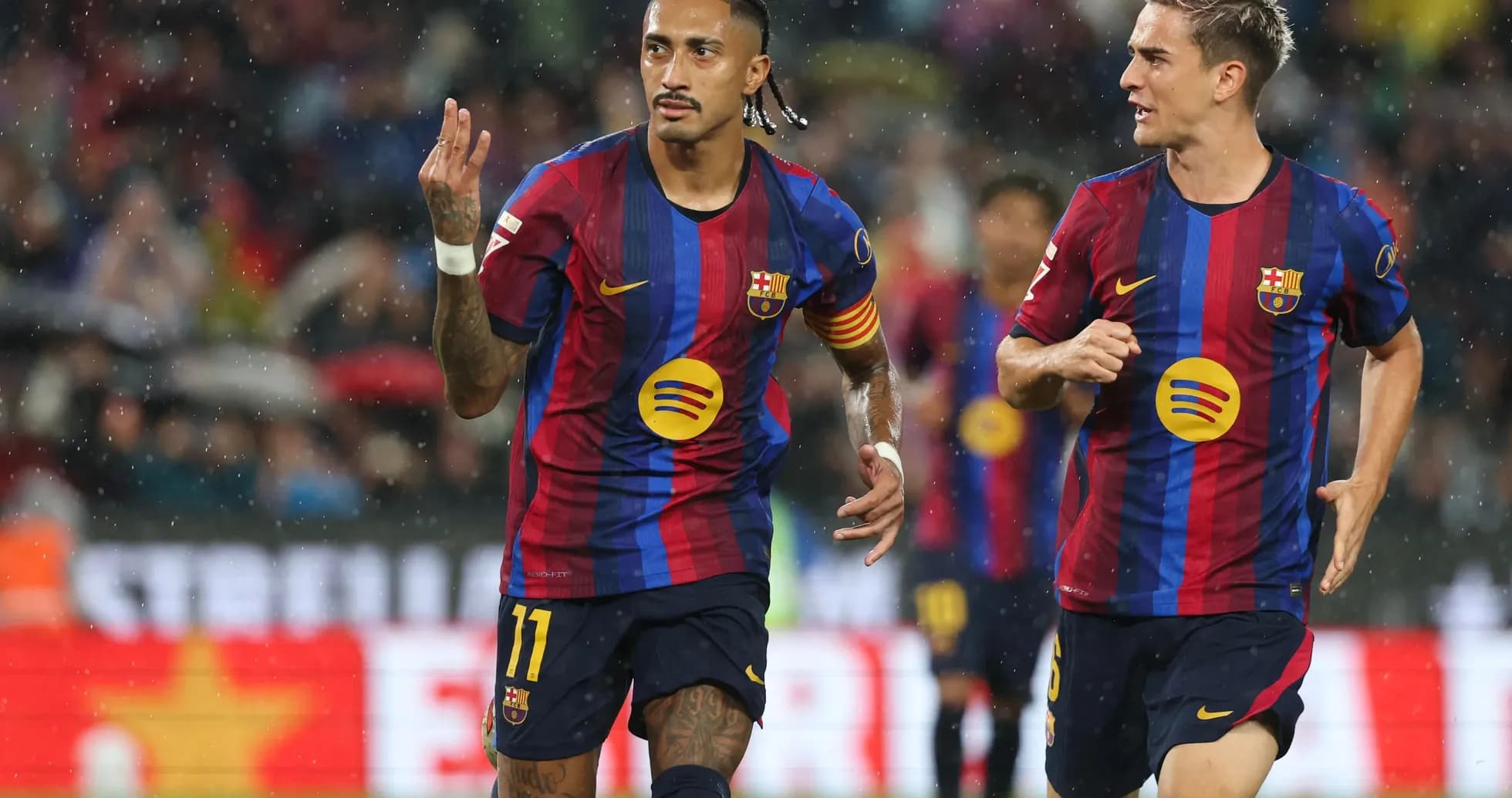
Raphinha entered the fixture as La Liga’s most devastating finisher, with 5 goals and 1 assist in 3 appearances, converting 7 of 8 shots on target and carrying a stellar rating of 9.03. With Barcelona averaging 4.0 goals overall per match, his individual form mirrors the team’s collective ferocity.
Against him stood a Rayo defence that had already conceded 8 goals overall, including 7 on their travels. The away numbers were damning: 3.5 goals conceded per away match, no clean sheets, and their heaviest defeat a 5‑2 scoreline – exactly what they would suffer again at Camp Nou. The “hunter vs shield” duel was brutally one‑sided; Raphinha, supported by the creative swarm behind him, repeatedly isolated Rayo’s full‑backs and centre‑backs, forcing them to defend facing their own goal.
The Engine Room
In midfield, the contrast was more nuanced. For Barcelona, Lamine Yamal, D. Olmo and Anthony Gordon operated as the three behind Raphinha, with Pedri and Bernal anchoring. Lamine Yamal’s league numbers – 2 goals, 13 key passes and 11 successful dribbles from 18 attempts – show a player who not only breaks lines with the ball but also dictates where the game is played. Gordon, leading the league in assists with 3, and X. Espart, already on 2 assists from full‑back, give Barcelona width that is both creative and industrious.
Rayo’s answer came through U. Lopez and A. Garcia. Lopez, as the central fulcrum, tried to knit together transitions, while A. Garcia, with 1 goal, 1 assist, 4 tackles and 2 interceptions this season, offers both vertical running and defensive graft. Yet the structural problem remained: Rayo’s double pivot of Valentin and Bouare had to constantly shuffle across to plug gaps left by advanced full‑backs and wingers, leaving lanes for Pedri and Olmo to receive between the lines.
Sergio Camello, Rayo’s primary threat, justified his top‑scorer status for the club with 3 goals in 3 league appearances and 4 shots on target from 5 attempts. His movement between Barcelona’s centre‑backs and into the channels ensured that Rayo always carried a puncher’s chance, reflected in their 2 goals on the night. But with no clean sheet all season and 5 goals conceded in their biggest away loss, the balance was never sustainable.
IV. Statistical Prognosis – Where These Sides Go From Here
Following this result, the season’s early patterns harden into identity. Barcelona’s overall goal difference of 10 (12 scored, 2 conceded) is not an anomaly; it is the logical outcome of a side that averages 4.0 goals per game and has yet to fail to score. Their penalty record – 1 taken, 1 scored, 0 missed – adds another layer of ruthlessness in decisive moments.
Rayo’s numbers, by contrast, sketch the outline of a relegation battle. With 4 goals scored and 8 conceded overall, no wins, no clean sheets, and a defensive unit that leaks 3.5 goals per match on their travels, they are structurally exposed against any high‑tempo side. Their late‑game yellow‑card surge between 61 and 90 minutes underlines a team often defending in emergency mode rather than in a compact block.
Tactically, Barcelona’s 4‑2‑3‑1 now looks like their default weapon: a double pivot that stabilises, full‑backs like X. Espart who contribute directly to chance creation, and an attacking quartet where Raphinha is the finisher, Lamine Yamal the line‑breaker, and Gordon the space interpreter. Even without Gavi and De Jong, the squad depth – with options like Fermín and K. Adeyemi waiting from the bench – suggests that Flick can rotate without losing intensity.
For Rayo, the path forward is narrower but clear. The spine of D. Cardenas, Lejeune, Valentin, Lopez and Camello is strong enough to compete, and A. Garcia’s dual threat on the flank is genuine. But San Jose must tighten the distances between lines, protect his centre‑backs more aggressively away from home, and reduce the frantic, late‑game defending that is currently reflected in both cards and goals conceded.
At Camp Nou, the gulf between the league leaders and a side in the relegation places was laid bare. Barcelona’s squad looks built for a Champions League chase; Rayo’s, for a season of survival where every away point will feel like a minor miracle.