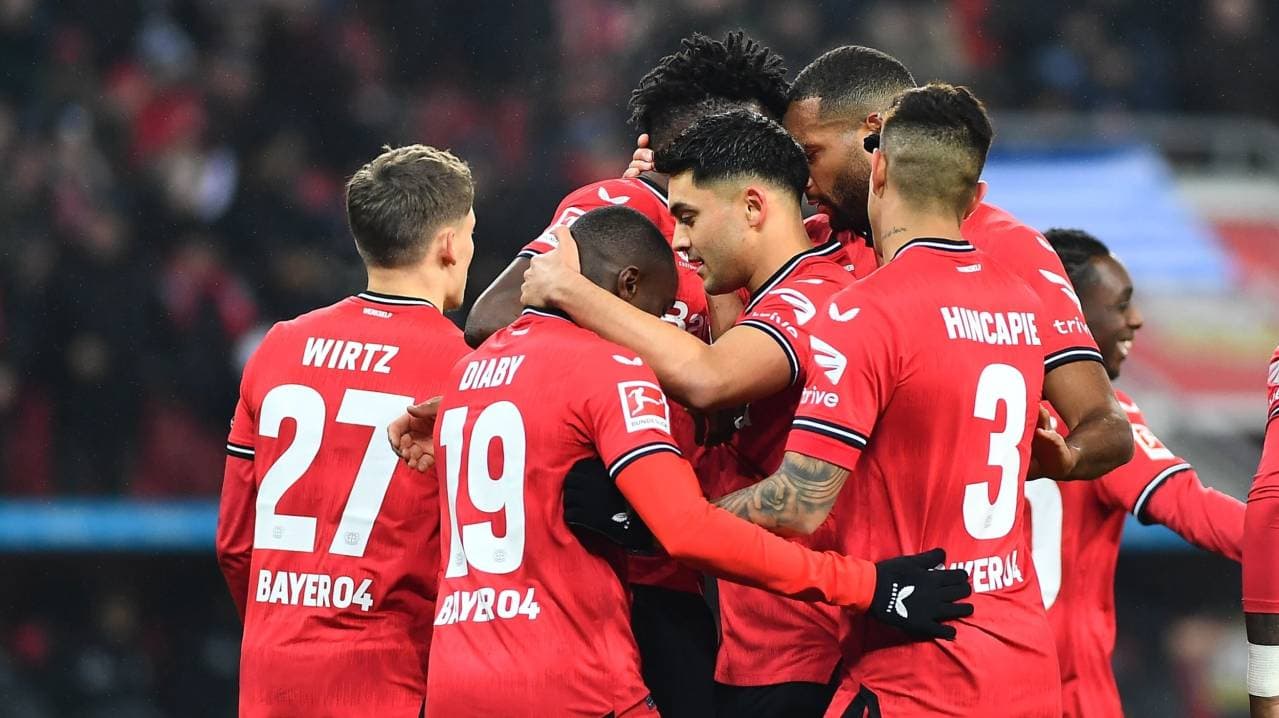
Bayer Leverkusen’s Strategic Victory Over Olympiakos
Bayer Leverkusen’s 2–0 win in Piraeus was built on territorial control and structured possession rather than sheer volume of attacks. With 58% of the ball and 591 total passes at 84% accuracy, the German side dictated the rhythm, circulating in their 3-4-2-1 to move Olympiakos Piraeus’ 4-2-3-1 block from side to side. Olympiakos, on 42% possession and 414 passes at 79%, accepted longer phases without the ball, looking to spring forward through Ayoub El Kaabi and the line of three behind him. The hosts occasionally controlled the emotional tempo – especially around the disallowed Mehdi Taremi goal before half-time – but Leverkusen controlled the space, pinning Olympiakos deeper as the game progressed.
Offensive Efficiency
The offensive story is one of contrast between volume and quality. Olympiakos registered more total shots (13 to Leverkusen’s 8) and a high number of blocked efforts (6), suggesting many of their attacks ended in crowded, low-quality attempts from the edge of the box. That is reinforced by 9 of their 13 shots coming from outside the box and an expected_goals figure of just 0.87. Only 1 shot on goal underlines their lack of cutting edge despite the volume.
Leverkusen, by contrast, were clinically selective. They produced only 8 shots but hit the target with 5 of them and generated 1.95 expected_goals, a clear sign that their chances were much clearer. Seven of their eight efforts came from inside the box, showing how their possession game was geared toward breaking into dangerous central areas rather than settling for hopeful efforts. Both sides had 3 corners, indicating that Leverkusen’s superiority did not come from set-piece bombardment but from well-constructed open-play situations. The scoreboard – 0–2 from fewer attempts – reflects ruthless efficiency against a more speculative home attack.
Defensive Discipline & Intensity
The match was not excessively physical: Olympiakos committed 7 fouls, Leverkusen 9, with one yellow card each. This points to a game more about positional organisation than disruptive tackling. Olympiakos’ 6 blocked shots show a committed last-ditch defending approach, their back four and double pivot often retreating into the box to protect central lanes once Leverkusen broke through the first line.
Goalkeeping did not define the contest statistically. Olympiakos’ keeper made 3 saves, Leverkusen’s just 1, consistent with the pattern of Leverkusen creating the clearer chances and Olympiakos mostly shooting from distance. The offside numbers (2 for Olympiakos, 1 for Leverkusen) suggest neither side was repeatedly caught by an extreme defensive line; instead, Leverkusen relied on compactness in front of their box, while Olympiakos tried occasional vertical runs without sustained penetration.
Bayer Leverkusen’s controlled possession and high-quality chance creation (1.95 xG from 8 shots, 5 on target) overcame Olympiakos Piraeus’ higher shot volume but low-threat attacking (0.87 xG, 1 shot on target). Efficiency and spatial control, rather than raw dominance in chances, decided the tie in favour of the visitors.