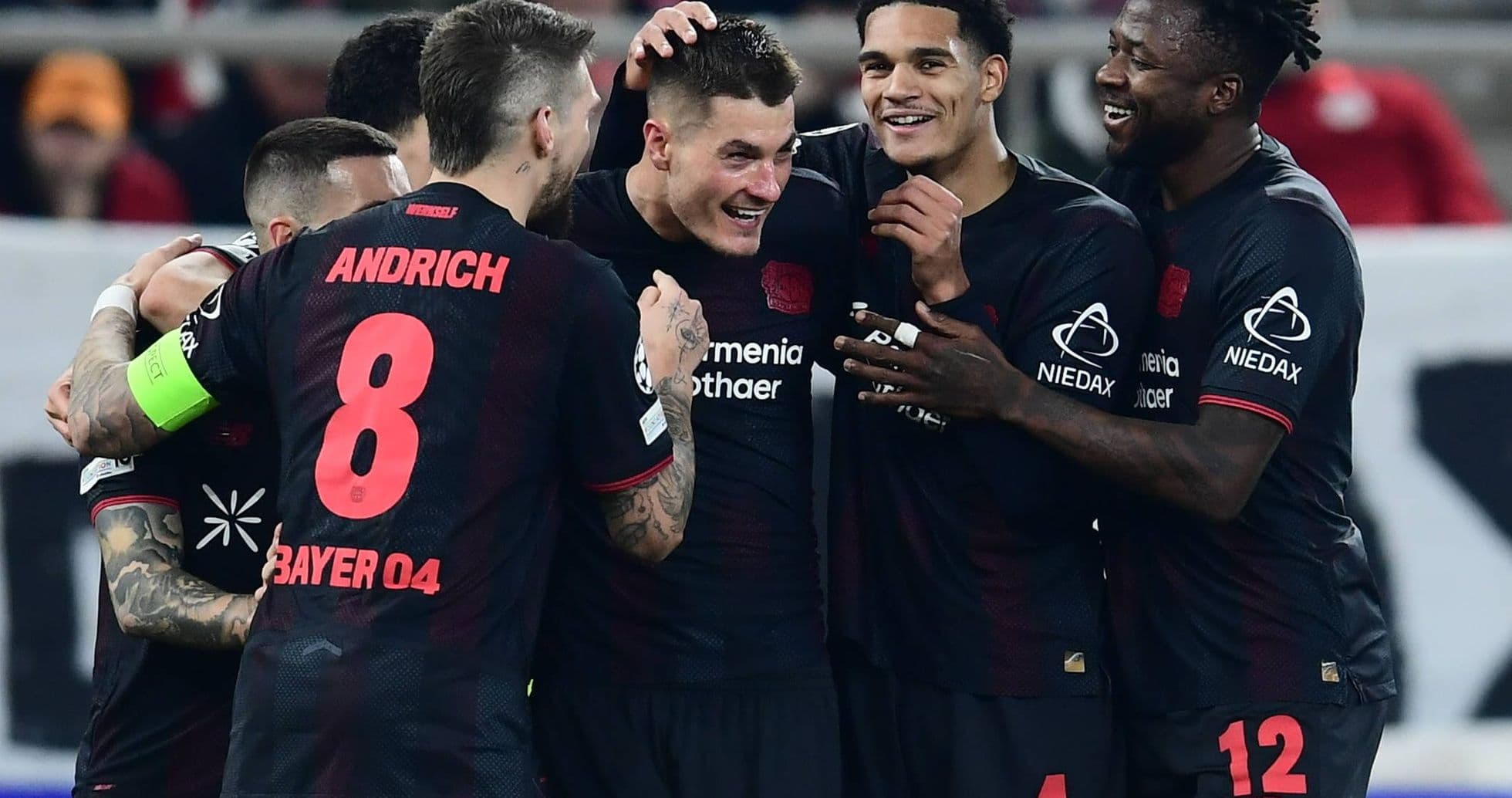
Bayer Leverkusen vs Olympiakos Piraeus: Champions League Showdown
Bayer Leverkusen host Olympiakos Piraeus at the BayArena in a UEFA Champions League Round of 32 tie on 24 February 2026 (20:00 UTC). Leverkusen arrive ranked 16th with 12 points and a -1 goal difference from 8 games, while Olympiakos sit 18th with 11 points and a -4 goal difference from the same number of matches.
Squad Analysis: Bayer Leverkusen
Leverkusen’s Champions League campaign has been built on a high-output but risky approach. Across 9 continental fixtures they have scored 15 goals, averaging 1.7 per game, but conceded 14 at 1.6 per match. At home this contrast is sharper: 8 goals for in 4 games (2.0 per match) against 10 conceded (2.5 per match), underlining both attacking intent and defensive vulnerability in Leverkusen’s own stadium.
Structurally, Leverkusen are settled: they have used a 3-4-2-1 in 8 of 9 European matches, only once switching to a 5-3-2. That back-three framework has still produced 4 clean sheets overall, with 3 of those away and just 1 at home, suggesting they defend better when forced to be more compact on the road.
Injuries may reshape key lines. The absence of goalkeeper M. Flekken (listed as “Injury”) removes an experienced option in goal. Further forward, N. Tella is also out injured, taking away an attacking piece from a side that has failed to score only once in 9 games. E. Ben Seghir (ankle injury) and I. Traore (inactive) reduce depth in advanced and wide roles. At the back, L. Bade is questionable, which is significant for a team already conceding 2.5 goals per home game in Europe.
Discipline is another subplot. Leverkusen have received yellow cards most heavily between 46–60 minutes (5 yellows, 38.46% of their total), and R. Andrich has already collected 1 red card in 6 appearances. That single dismissal accounts for 100% of their red-card record in the 31–45-minute window, hinting at potential volatility just before half-time.
Squad Analysis: Olympiakos Piraeus
Olympiakos arrive with a more conservative attacking record but similar defensive fragility. In 9 Champions League fixtures they have scored 10 goals (1.1 per game) and conceded 16 (1.8 per game). Away from home, they have 4 goals in 4 matches (1.0 per game) but have allowed 9 (2.3 per game), a figure close to Leverkusen’s home concession rate.
Their identity is clearer in structure: Olympiakos have lined up in a 4-2-3-1 in all 9 European games, signalling a consistent double-pivot screen in front of the defence. Despite conceding 16 times, they have managed 3 clean sheets (2 at home, 1 away), and have failed to score in 3 matches, suggesting a team that oscillates between control and bluntness.
Timing of their goals and concessions is crucial. Offensively, 3 of their 10 goals (30.00%) arrive between 46–60 minutes, while 4 goals each (25.00% + 25.00%) come in the 61–75 and 76–90 ranges. Defensively, they concede heavily late: 4 goals between 61–75 minutes and another 4 between 76–90, meaning 50.00% of their goals against come in the final half-hour. That late-game drop-off will be tested by a Leverkusen side averaging 1.7 goals per match.
Olympiakos are also missing depth. K. Angelakis, Rodinei, R. Vezo and Y. Yazici are all listed as “Inactive”, trimming options particularly in defensive and attacking rotations. However, their disciplinary leader, S. Hezze, is available: he has 3 yellow cards and 1 yellow-red in 8 appearances, alongside 17 tackles and 17 interceptions, underlining his dual role as ball-winner and potential booking risk.
Key Matchups & Tactical Trends
1. Leverkusen Attack vs Olympiakos Late-Game Defense
Leverkusen’s 15 goals in 9 games face an Olympiakos back line conceding 16 in the same span. The critical phase is the final 30 minutes: Olympiakos allow 8 of their 16 goals (50.00%) between minutes 61–90, while Leverkusen’s overall scoring rate of 1.7 per game suggests they can sustain pressure across 90 minutes. With Leverkusen averaging 2.0 goals per home match and Olympiakos shipping 2.3 per away game, the numbers point to a high-risk period for the visitors once legs tire and spaces open.
2. Structural Clash: 3-4-2-1 vs 4-2-3-1
Leverkusen’s 3-4-2-1, used in 8 of 9 matches, naturally creates width and high wing-backs, while Olympiakos’ 4-2-3-1, used in all 9, relies on the double pivot to plug half-spaces. Olympiakos’ midfield shield has helped produce 3 clean sheets, but their average of 1.8 goals conceded per match indicates that once the first line is broken, the back four can be exposed. Conversely, Leverkusen’s 14 goals against and just 1 home clean sheet show that their back three can be stretched by the Olympiakos wide players and late runners from midfield.
3. Creative Force vs Disciplinary Risk: Hezze at the Edge
Without explicit assist leaders, S. Hezze becomes the clearest two-way reference point. He has contributed 1 goal and 1 assist, alongside 268 passes and 7 key passes in 609 minutes, showing he can initiate attacks from deep. Yet his 3 yellow cards plus 1 yellow-red in 8 games make him Olympiakos’ prime disciplinary risk. This is especially relevant against a Leverkusen side whose yellow-card distribution spikes after half-time (38.46% of yellows between 46–60 minutes), hinting at more duels and transitions in that period. If Hezze is forced into repeated emergency tackles as Leverkusen’s midfield surges forward, Olympiakos’ 4-2-3-1 could be destabilised by a booking or dismissal in the pivot.
4. Intensity and Cards
Both teams show patterns of disciplinary tension. Leverkusen’s red card came in the 31–45 range, while Olympiakos’ only red arrived between 46–60 minutes. Olympiakos have 3 early yellows in the first 15 minutes (17.65% of their total), suggesting they sometimes set an aggressive tone from the start. With both sides showing card spikes around half-time, the middle third of the match (31–60 minutes) is statistically the likeliest window for momentum-changing fouls and bookings.
Verdict
Statistically, Leverkusen hold the edge in attacking output, with 15 goals and a 1.7-per-game average, compared to Olympiakos’ 10 and 1.1 per game. Defensively, neither side is solid, but Leverkusen’s 14 goals conceded in 9 matches is marginally better than Olympiakos’ 16. Home and away splits (2.0 vs 1.0 goals scored; 2.5 vs 2.3 conceded) suggest an open contest where Leverkusen’s firepower and Olympiakos’ late-game vulnerabilities could define the tie.