Bayern's Flaws Exposed: Tom Bischof's Bold Critique After Wolfsburg Win
Tom Bischof had barely caught his breath when he started dissecting Bayern’s flaws on live television.
"It's always bad when you concede so many goals and face so many chances," the 20-year-old told Sky after the 1–0 win in Wolfsburg, sounding more like an assistant coach than a youngster fighting for minutes.
From the sidelines, he said, he had seen the basics of Bayern’s counter-pressing fall apart: not enough immediate pressure after losing the ball, too many unnecessary metres covered, too many chances conceded. When they pressed properly, they scored plenty. Lately, they had been shipping goals instead.
Honest. Clear. And for a player with just returned from a torn muscle fibre and only sporadic game time in recent weeks, remarkably bold.
Bischof’s remarks landed with a thud in the mixed zone. A 20-year-old squad player publicly criticising Bayern’s defensive work in his first season at the club? At Säbener Straße, that is usually a topic for closed doors and low voices, not national TV.
So the question came, inevitably: was the youngster right?
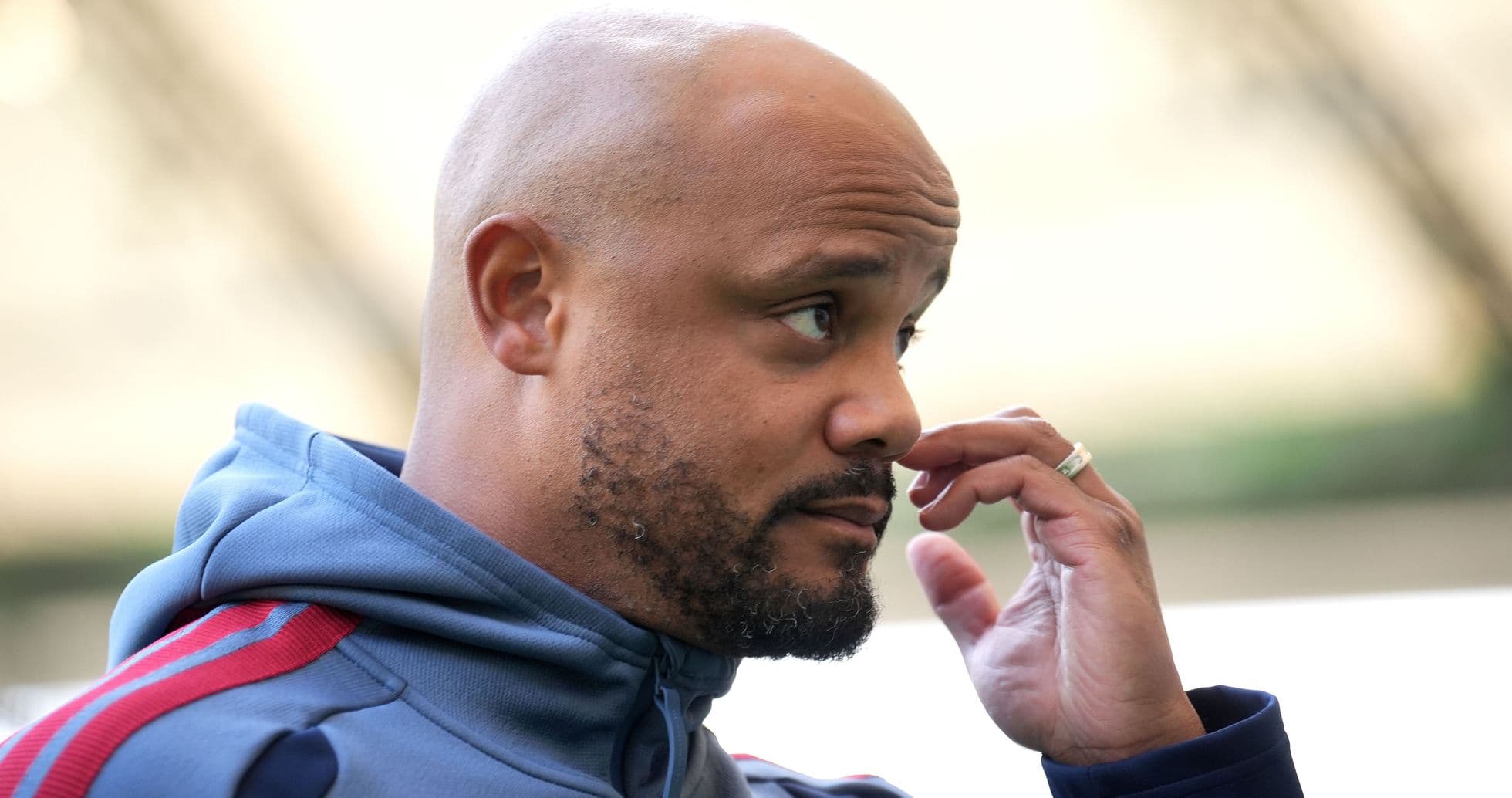
Vincent Kompany just grinned.
"No, of course not," the Bayern coach replied, the smile never leaving his face. "He is a young player and made a mistake in that interview."
For a man who rarely calls out his own players in public, it was a striking line. Yet the way he delivered it said more about Kompany than the words themselves. No anger. No sarcasm. No public shaming. Just a quick correction, delivered with the calm of someone completely at ease in his own authority.
The Belgian has already changed plenty at Bayern in purely footballing terms. But evenings like this show another part of his impact: his feel for people. He knows how to defuse a situation without turning it into a power play.
His response to Bischof captured that. It was firm but light, a slap on the wrist without the sting.
"The problem isn't a lack of willingness to counter-press; you can't win games that way," Kompany explained. For him, the issue lay elsewhere: Bayern trying to decide matches too quickly, burning energy in wild early pressing spells instead of managing the game.
"You don't always have to decide games in the first ten or 15 minutes. That doesn't always work."
They had started well, he said, then lost patience. You can go into the counter-press once, twice, three times. At some point, the legs go. In the second half, Bayern’s improvement came not from more pressing but from better work with the ball. They kept it, controlled it, and no longer had to constantly spring back into the press.
The subtext was clear: good idea, wrong diagnosis. And still, Kompany protected the player.
"Tom is a great lad. But it's straight after the match and I had a bit more perspective," he added. With that, the coach closed the file. No escalation, no drama. Issue resolved.
It was hard not to think of his predecessors. How would Julian Nagelsmann or Thomas Tuchel have reacted to such open criticism of their style from a fringe player? The football argument might have been similar. The temperature probably would not.
Kompany’s coolness on the touchline was mirrored by the chaos Bayern had to endure on the pitch. The champions, already crowned and still bruised by their Champions League exit to Paris Saint-Germain three days earlier, arrived in Wolfsburg with the air of a team running on emotional fumes. The Volkswagen Arena was sold out, the mood crackling, and 16th-placed VfL Wolfsburg smelled opportunity.
They went for it.
"They could have scored five goals; that wasn't good at all from us," Bischof admitted about the first half. Bayern’s opening ten minutes were fine, he felt, they saw how to create chances. Then the level dropped. Wolfsburg surged forward again and again, unsettling a side widely regarded as Europe’s second-best team this season.
Only one man stood between Bayern and real trouble: their goalkeeper. Once again, the Bayern No. 1 rose to the occasion. Bischof praised him without hesitation. "The way Manu (Neuer, ed.) always steps up when he gets the chance is brilliant."
At the other end, Bayern offered surprisingly little. Wolfsburg’s compact block held, Harry Kane found few clear openings. When the England captain finally had his moment, stepping up to the penalty spot in the 36th minute, the script seemed written. Kane from twelve yards is usually a formality.
Not this time. He slipped at the crucial moment, the ball skewed wide. Only his second missed Bundesliga penalty in 25 attempts. Rare, but somehow fitting on a night when Bayern’s rhythm felt off.
"With Harry, you're usually certain he'll score, but even he's allowed to miss every now and then," Bischof remarked.
The pattern, though, was familiar. Since clinching the title on 19 April, Bayern’s first halves in the league had drifted: a wild 4-3 in Mainz, a 3-3 against Heidenheim, now this laboured display in Wolfsburg. The difference on this occasion: no looming clash with PSG, no heavy rotation. Kompany went strong. Kane started. Michael Olise started. Joshua Kimmich started. The three outfield pillars of this Bayern side were all on the pitch from the beginning.
It didn’t help much before the break. The dressing room mood at half-time? Sour, by all accounts.
But as in Mainz and against Heidenheim, the response came.
"I also paid tribute to the team for their reaction," Kompany said. "It's not easy to come out and practically turn everything around. We did that again today in the second half."
Dieter Hecking, standing in the opposite technical area, could only agree. The Wolfsburg coach has seen enough Bayern teams to know when something is different.
"What his counterpart has achieved with Bayern this season is on another level," Hecking said. Of course, he pointed out, more people than just Kompany are involved. But the performances, week after week, impressed him. Even on this awkward evening, just days after a brutal European disappointment, Bayern’s intensity after the interval earned his respect. "Even today, it's not a given that, after such a defeat (against PSG, ed.), they would keep the pressure on us so high and give it their all to still win this match. That's worthy of a compliment."
The second half looked like the Bayern Kompany wants to see. They squeezed Wolfsburg back, moved the ball with more purpose, and allowed the hosts almost no time to breathe. Chances came. Then the pressure told.
Olise took over.
On 56 minutes, he did what is fast becoming his signature. Starting wide on the right, he drifted inside, opened his body and whipped a left-footed shot across goal into the far corner. The ball flew, curled, then nestled perfectly in the net. Everyone in the stadium knew what he wanted to do. No one could stop it.
Predictable. And yet, again, extraordinary.
Kompany had already described this move back in late April, when Olise produced the same finish in Mainz. "Michael has set the bar so high for himself that I would have been disappointed if it hadn't gone in – and that's absurd. It shouldn't be normal, but he's got us used to it," he said then. Wolfsburg saw exactly what he meant.
Olise’s goal gave Bayern more than three points. It gave them a moment of pure quality just 72 hours after the emotional crash against PSG. A reminder, for themselves as much as for anyone watching, of why they have already wrapped up their 35th Bundesliga title and why so many observers rank them just behind Paris in Europe this season.
Next Saturday, they will lift the Meisterschale in front of their own fans after the final-day meeting with 1. FC Köln. A week later, the DFB-Pokal final against VfB Stuttgart in Berlin awaits. The chance for a domestic double, the classic Bayern answer to European frustration.
Max Eberl, speaking to Sky before the game in Wolfsburg, had already set the bar. The sporting director made it clear that one trophy would not be enough to leave the season feeling complete.
"The way we play, we're German champions, we reached the Champions League semi-finals and held our own against the best team in Europe. We're also in our first cup final in years, and we want to win it," he said, calling it "a very, very good season so far." Then he pointed to something less tangible. People who have never supported Bayern, he insisted, now talk about how much fun it is to watch them. "You don't get a trophy for that, but it counts too."
That is the backdrop to evenings like Wolfsburg: a champion side that can wobble for 45 minutes, survive thanks to its goalkeeper, win thanks to a flash of brilliance, and then have a 20-year-old criticise the pressing on TV while the coach smiles and swats the argument away without breaking stride.
The football is sharp. The hierarchy is clear. The tone, from Kompany down, is controlled but human.
Now comes the real question: can this new Bayern, with its high-wire football and its calm conductor on the touchline, finish the job in Berlin and turn a "very, very good season" into one that truly feels complete?