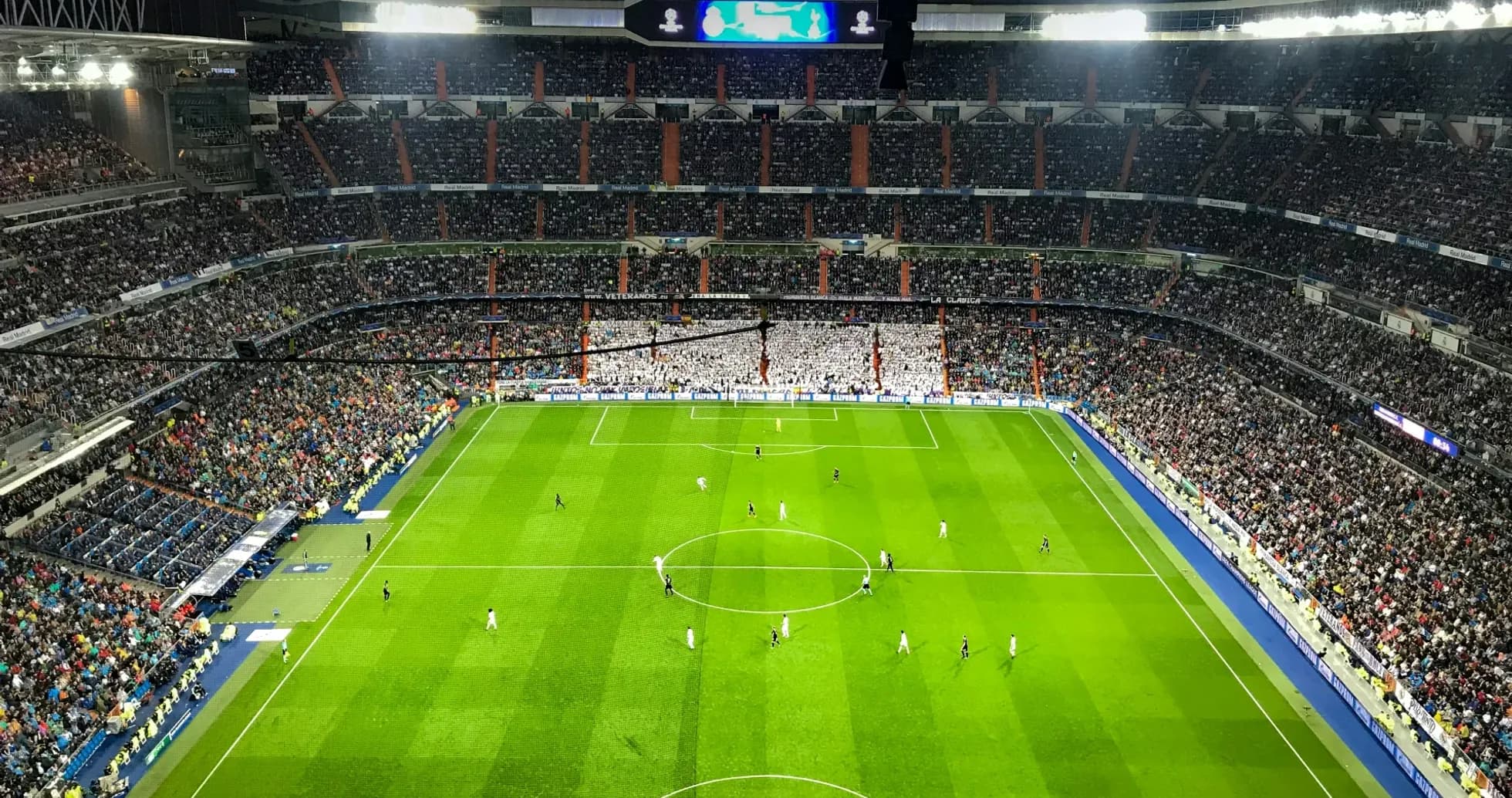
Bayern München Dominates Atalanta 4–1 in Champions League
Bayern München 4–1 Atalanta at Allianz Arena (UEFA Champions League 1/8 final).
Tactical overview
Bayern set up in a 4-2-3-1 under Vincent Kompany and imposed almost total control of the game: 71% possession, 859 passes at 93% accuracy. The double pivot of Leon Goretzka and Aleksandar Pavlović gave a stable platform for an aggressive, position-heavy front four of Lennart Karl, Raphaël Guerreiro, Luis Díaz and Harry Kane. Atalanta’s 3-4-2-1 from Raffaele Palladino tried to compress the middle with Mario Pašalić and Éderson, using wing-backs Raoul Bellanova and Lorenzo Bernasconi to spring transitions, but they spent long spells pinned in a 5-4-1 block.
Shot and chance profile
Bayern generated 25 total shots to Atalanta’s 14, with a clear territorial edge: 15 Bayern efforts came from inside the box versus Atalanta’s 10. Bayern München had 8 of their shots blocked by the Atalanta defense, illustrating how often they were able to work the ball into congested central areas. Atalanta managed 1 of their shots blocked by the Bayern München defense, reflecting fewer sustained attacks.
Expected goals underline Bayern’s dominance in chance quality: 3.61 xG for the hosts against 2.3 for Atalanta. Both sides registered 8 shots on goal, but the volume and repeatability of Bayern’s situations were superior, especially in the second half once the structure of Atalanta’s block started to stretch horizontally.
Pressing, buildup and territorial control
With the ball, Bayern’s 4-2-3-1 often morphed into a 3-2-5 in possession: one full-back (often Josip Stanišić) stayed a little deeper to form a back three with Min-jae Kim and Jonathan Tah, while the opposite side pushed higher. Goretzka stepped up selectively, with Pavlović anchoring circulation. The high pass volume (859 to Atalanta’s 349) and accuracy show Bayern’s comfort playing through all thirds.
Out of possession, Bayern’s press was supported by Kane’s work on Atalanta’s first phase, screening passes into Éderson and Pašalić. The front four narrowed to deny central progression, forcing Atalanta to build via the wing-backs, where Bayern could trap and recover. Only 4 fouls for Atalanta against 8 for Bayern suggest the visitors struggled to get close enough to disrupt Bayern’s rhythm in midfield, while Bayern’s fouls were often tactical, stopping counters after turnovers high up.
Atalanta’s plan was more vertical: 349 passes at 85% accuracy indicate they tried to play quicker, with Charles De Ketelaere and Kamaldeen Sulemana operating between the lines and Gianluca Scamacca as the central reference. However, Bayern’s compactness between the lines and the physical presence of Kim and Tah limited clean entries into the No. 10 spaces.
Key phases and goals
22'–25': VAR and the opener
A VAR check at 22' confirmed a penalty for Bayern. The sequence highlighted Bayern’s ability to overload the half-spaces and force defensive mistakes in the box. At 25', Harry Kane converted from the spot, rewarding Bayern’s early territorial dominance and forcing Atalanta to open up slightly.
First half trend
With a 1–0 lead at half-time (and 1–0 on the scoreboard at 45'), Bayern were already in control of tempo. Their 71% possession figure over 90 minutes reflects a similar pattern before the break: Atalanta rarely managed sustained pressure in Bayern’s third and were mostly limited to sporadic transitions.
54'–56': Bayern’s structural superiority breaks Atalanta
At 54', Kane struck again with a normal goal, assisted by Stanišić. The move encapsulated Bayern’s wide-to-central dynamics: Stanišić advanced from the right, exploiting the space outside Atalanta’s wide centre-back, and delivered for Kane, whose movement between defenders punished the back three.
Immediately after, Bayern consolidated their midfield with a defensive tweak. At 56', Deniz Ofli came on to replace Aleksandar Pavlović. This change nudged Bayern slightly towards more solidity without sacrificing width, as the front four remained aggressive.
Seconds later, Bayern made it 3–0 at 56' through Lennart Karl, assisted by Luis Díaz. Karl’s positioning between the lines and his timing to arrive in the box were central; Díaz, operating from the left, drove at the defensive line, then combined inside. This goal underlined how Bayern’s attacking midfielders were consistently finding pockets around Atalanta’s central trio.
Atalanta’s response from the bench
Recognising the midfield was being overrun, Palladino reacted at 57':
- At 57', Marten de Roon came on to replace Éderson.
- At 57', Lazar Samardžić came on to replace Charles De Ketelaere.
De Roon added defensive ballast in front of the back three, while Samardžić offered a more direct shooting threat and line-breaking passing from advanced areas. The idea was to stabilise the central block and then use Samardžić’s creativity to connect with the front line.
70': Bayern’s fourth and the left-side overload
At 70', Luis Díaz scored Bayern’s fourth, assisted by Lennart Karl. This time, Karl’s inside positioning drew Atalanta’s right-sided defenders infield, creating the channel for Díaz to exploit. The interplay between the left-sided midfielder and winger/inside forward was a recurring pattern: one would receive between the lines, the other would attack the depth or the half-space. By this stage, Atalanta’s wing-backs were being stretched both vertically and horizontally.
71': Atalanta chase the game
Palladino made a double attacking switch at 71':
- At 71', Giacomo Raspadori came on to replace Kamaldeen Sulemana.
- At 71', Nikola Krstović came on to replace Gianluca Scamacca.
Raspadori offered more mobility and dropping movements compared to Sulemana, while Krstović provided fresh energy up front. The intention was to increase fluidity in the front line and test Bayern’s centre-backs with more dynamic runs rather than a pure target man.
Bayern’s game management
Kompany reacted to the 4–0 cushion and the increased Atalanta risk with a triple change at 72':
- At 72', Nicolas Jackson came on to replace Harry Kane.
- At 72', Serge Gnabry came on to replace Tom Bischof.
- At 72', Filip Pavic came on to replace Josip Stanišić.
Kane’s withdrawal protected a key asset and added fresh pressing energy with Jackson, who could attack space on the counter. Gnabry’s introduction for Bischof shifted Bayern’s right side towards a more direct, winger-driven outlet, while Pavic for Stanišić freshened up the right defensive flank. These moves collectively tilted Bayern into a more transition-oriented posture while maintaining enough structure to keep Atalanta at arm’s length.
Later, both coaches made final adjustments at 83':
- At 83', Hiroki Itō came on to replace Raphaël Guerreiro for Bayern, adding defensive security and physicality on the left side to see out the game.
- At 83', Honest Ahanor came on to replace Giorgio Scalvini for Atalanta, a like-for-like defensive change with fresh legs in the back line.
Atalanta’s consolation and attacking profile
Despite the scoreline, Atalanta still produced 8 shots on goal and 2.3 xG, showing they did create danger when able to break Bayern’s first and second lines. Bayern’s goalkeeper Jonas Urbig made 7 saves, meaning Atalanta were able to test him repeatedly when they did reach the final third.
Their best attacking spell came late, aided by the fresh creativity of Samardžić. At 86', Lazar Samardžić scored, assisted by Mario Pašalić. The goal reflected Atalanta’s typical pattern: midfielders arriving late into the box and attacking second balls around the edge of the area. By then, however, Bayern were in game-management mode, slightly less intense in their pressing, which gave Samardžić the pocket of space he needed.
Defensive structures and duels
Bayern’s back four, shielded by Goretzka and Pavlović (then Ofli), generally controlled the central lane. Kim and Tah dealt well with crosses and direct balls into Scamacca and later Krstović, while the full-backs tracked wing-back runs. The fact Atalanta only reached 3 corner kicks compared to Bayern’s 6 underlines how rarely they were able to pin Bayern deep for extended periods.
Atalanta’s back three struggled with Bayern’s constant rotations. Kane’s habit of dropping into midfield dragged a centre-back out, opening space for Karl or Díaz to run beyond. When Atalanta tried to maintain a strict back five in deeper phases, Bayern simply overloaded the half-spaces, forcing them to defend crosses and cut-backs under constant pressure.
Discipline and physical intensity
With 8 fouls by Bayern and 4 by Atalanta, the match was not overly stop-start. Bayern’s slightly higher foul count was consistent with a proactive, front-foot approach: they were more often in positions to counterpress and commit tactical fouls to prevent transitions. Atalanta, by contrast, spent long stretches in a low or mid block, focusing on maintaining shape rather than aggressive challenges.
Set pieces
Bayern’s 6 corner kicks to Atalanta’s 3 reflected their territorial dominance. Even when corners did not lead directly to goals, they helped sustain pressure and keep Atalanta boxed in, contributing to the volume of shots and blocked efforts inside the area.
Conclusion
Bayern’s 4–2-3-1 delivered a complete performance: controlled possession, high shot volume, strong xG and effective pressing. The front four’s rotations and half-space occupation were too much for Atalanta’s 3-4-2-1, especially once Bayern went ahead and could dictate tempo. Atalanta still carved out chances and forced 7 saves from Urbig, but their more vertical, transition-focused approach could not match Bayern’s sustained territorial control and structured attacking patterns.