Bayern Munich's Penalty Controversy Explained
Bayern Munich stood frozen in disbelief. The Allianz Arena roared for a penalty, arms raised on the pitch and in the stands, but the whistle never came.
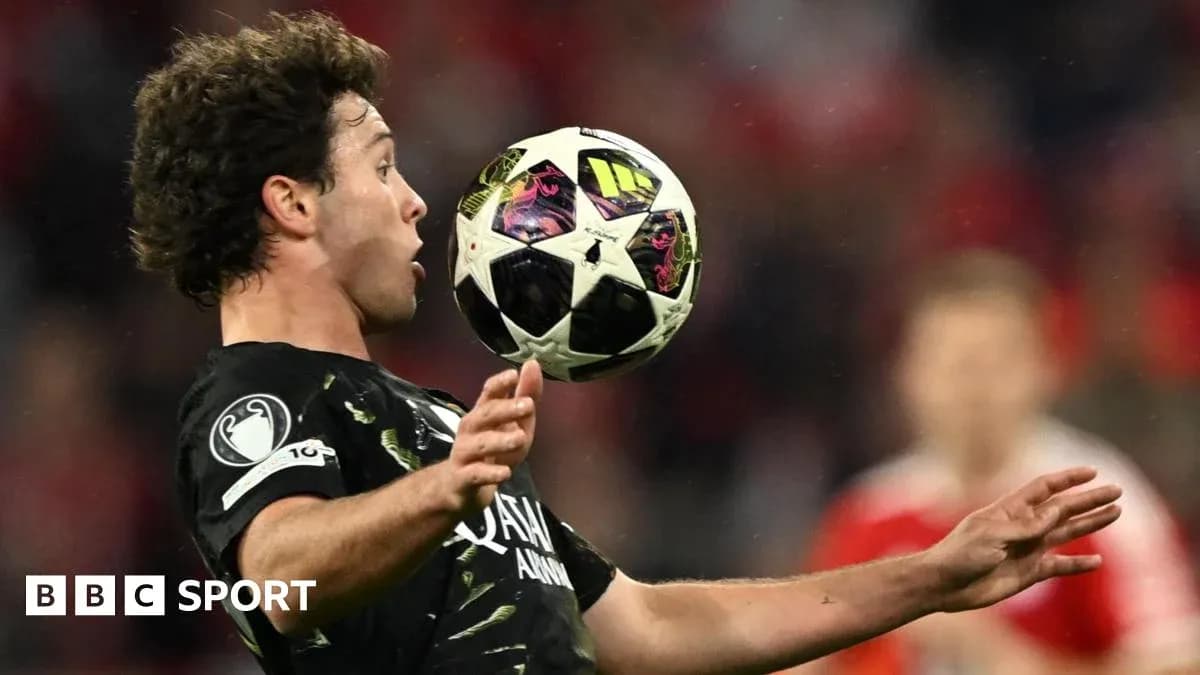
With Bayern trailing Paris St-Germain 1-0 on the night and 6-4 on aggregate in their Champions League semi-final second leg, the incident arrived at a crucial moment, around the half-hour mark. Vitinha thumped a clearance from inside his own box, only for the ball to cannon straight into the arm of his team-mate Joao Neves.
Red shirts swarmed around referee Joao Pedro Silva Pinheiro. Thomas Tuchel’s players surrounded him, demanding a spot-kick. The crowd joined in, sensing a lifeline. Pinheiro stayed calm, brushed away the protests and signalled for play to continue.
No trip to the pitchside monitor. No intervention from VAR. Just a collective gasp and a rising sense of injustice from the Bayern end.
On social media, the reaction was instant: how was that not a penalty?
The answer lay not in the emotion of the moment, but in the small print of the handball law – a rarely discussed clause that, on nights like this, suddenly becomes decisive.
As BBC Sport’s football issues correspondent Dale Johnson explained, the laws of the game include a specific exemption for this kind of situation. It is not considered handball if a player is:
"hit on the hand/arm by the ball which has been played by a team-mate (unless the ball goes directly into the opponents' goal or the player scores immediately afterwards, in which case a direct free-kick is awarded to the other team)."
That line changes everything.
"It covers when the ball is unexpectedly hit at you by a team-mate, even if your arm is away from your body - the law says you should not give away a penalty," Johnson said.
So when Vitinha lashed his clearance, the key question for officials was not whether Neves’ arm was away from his body, nor how loudly the stadium appealed. It was whether Neves could reasonably expect the ball to be fired straight at him from such a play.
"When Vitinha blasts the ball clear, could Joao Neves think the ball would be hit straight at him?" Johnson asked.
The law gives the benefit of the doubt in these situations. Unless there is a clear, deliberate movement of the arm towards the ball, the defender should not be punished for being struck by a team-mate’s clearance. Deliberate handball would override the exemption, but there was nothing in this passage of play to suggest intent.
In that context, the decision not to award a penalty aligned with the written law, even if it clashed with the instinct of players and fans in real time.
Bayern’s anger will linger. The sense of what might have been will hang over their exit. But on this occasion, the little-known wording of the handball law, not VAR, closed the door on their comeback.