Bayern Munich Wins Supercup: Neuer's Risks and Brown's Breakout
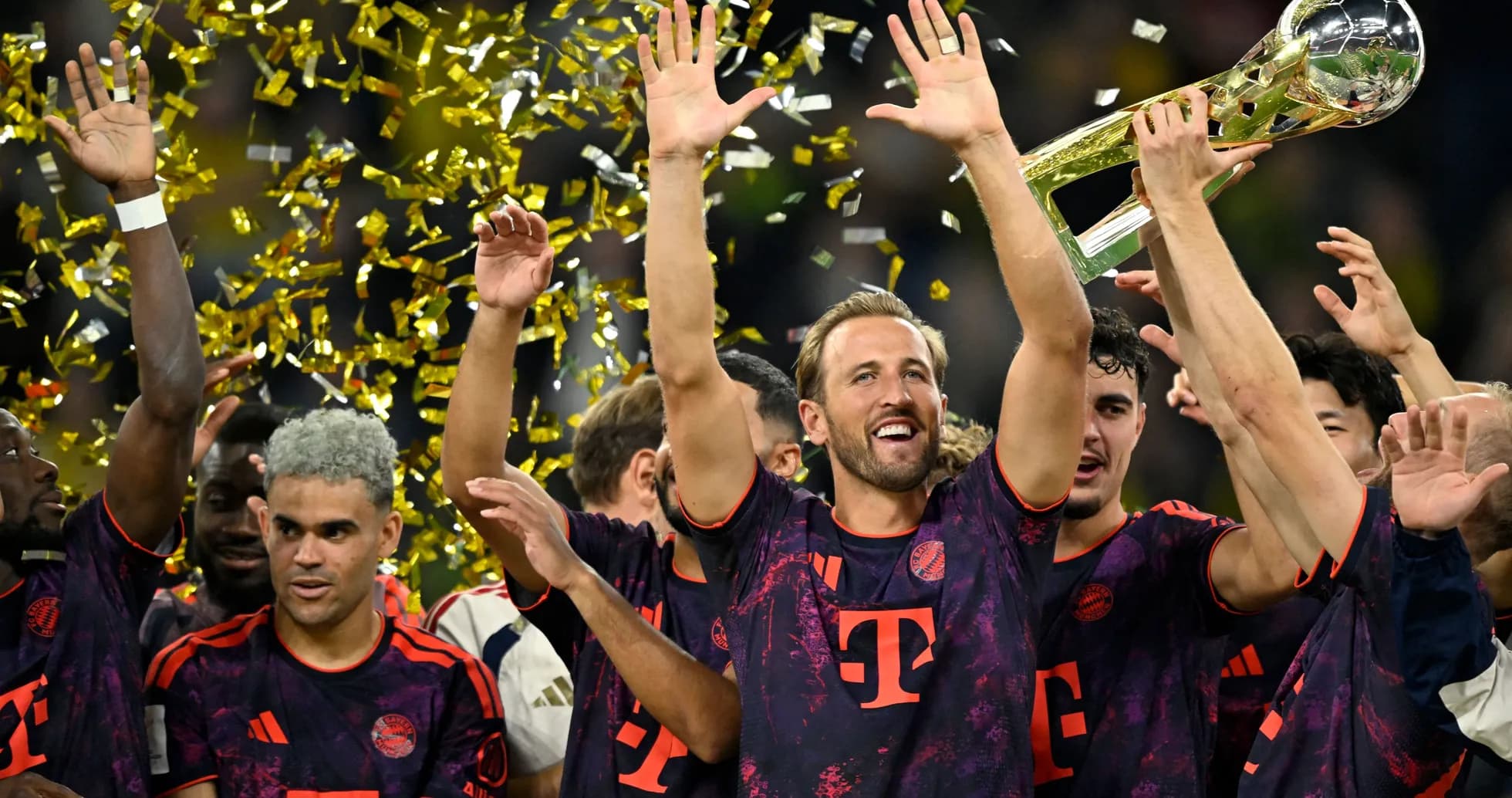
Bayern Munich have the season’s first piece of silverware and, for the moment at least, the upper hand in Germany’s biggest rivalry. A 2-1 win away at Borussia Dortmund in the Franz Beckenbauer Supercup felt more like a statement than a warm‑up act.
Nathaniel Brown struck on 28 minutes, Michael Olise added a ruthless second in first-half stoppage time, and Bayern’s control over the opening 45 minutes proved just enough. Fabio Silva’s response in the 75th minute dragged BVB back into it, but not quite far enough.
Behind the scoreline, though, the night at Signal Iduna Park told a few deeper stories.
Neuer still world-class – and still a risk
Manuel Neuer has built a career on playing on the edge. The sweeper-keeper who changed the position still steps out, still demands the ball, still tries to solve pressure with one pass. It’s part of what made him great.
It’s also increasingly what makes Bayern nervous.
The warning signs have been there. The glaring giveaway to Arda Güler in April’s Champions League quarter-final at the Bernabéu still hangs over him. In Dortmund, the pattern flickered again.
After 15 minutes, Neuer fizzed a sloppy ball into Min-jae Kim, inviting trouble right in front of goal. Kim bailed him out with sharp reactions; Bayern escaped with nothing more than a collective intake of breath.
Late on, Neuer created his own storm. Kim rolled the ball back, Neuer tried to nonchalantly let Jobe Bellingham run past with a feint behind his standing leg – and got it wrong. Suddenly Bellingham was in, the stadium erupted, and only Neuer’s explosive dive at the forward’s feet prevented a stoppage-time equaliser that would have haunted him.
The paradox remains. On the line, he is still outrageous. Early in the second half, new signing Konstantinos Karetsas hammered a difficult effort from close range; Neuer reacted with the kind of reflex save that belongs to his prime years, not a keeper pondering his final season.
But the balance is shifting. The unforced errors on the ball are no longer rare incidents; they are becoming a recurring subplot. Bayern know it. Neuer himself has hinted that 2026/27 could be his last campaign. And waiting behind him is Jonas Urbig, 23, earmarked as the heir and expected to see more minutes this season.
Neuer will be in goal for the biggest nights. That is still the plan. The question now is how many of those nights Bayern are prepared to gamble on his risk-taking with the ball at his feet.
Brown the full-back, playmaker, problem-solver
Bayern signed Nathaniel Brown to play left-back. On Saturday, he played as a No. 10 and scored the opening goal in a Supercup away to Dortmund.
That says a lot about Vincent Kompany’s view of his squad – and of Brown.
With Jamal Musiala out as he deals with neurological issues that caused collapses in recent friendlies, and new arrival Ismael Saibari not yet ready to start, the obvious pick behind Harry Kane seemed to be Tom Bischof. Kompany went the other way. He pushed Brown into the central pocket, right behind the striker.
The logic came straight from the coach. For Kompany, the zones his full-backs occupy often mirror the spaces of a No. 10. Brown, he argued, reads those pockets “unbelievably” well. Against Dortmund, the experiment had teeth.
Brown’s performance was not flawless – it couldn’t be, given he has only been at Bayern for a few weeks and is still learning the patterns of an entirely new role. There were miscommunications, a couple of moves that broke down on his touch or timing.
But he scored the goal that set Bayern on their way, timing his arrival and finish like a seasoned playmaker, and he never hid from the ball. For a 23-year-old debuting in that role in this stadium, it was a serious first impression.
He also adds to something Bayern have quietly been building: depth with real positional flexibility. Brown can operate as a left-back, a No. 6 and, as pre-season and now the Supercup suggest, even as a No. 10. Konrad Laimer can plug in across both defensive flanks and anywhere between six and ten in midfield. Josip Stanisic can play either full-back spot or slide into central defence.
On a night when Serge Gnabry, Lennart Karl and Musiala were all missing, that versatility didn’t just look useful. It looked essential.
Kovac’s inverted gamble – and its cost
On the opposite bench, Niko Kovac tried something different. He has been toying with inverted wing-backs in pre-season, and he doubled down on the idea in the Supercup.
Left-footer Daniel Svensson started on the right. Right-footer Julian Ryerson began on the left. The idea was simple: have both wing-backs able to drive inside, like modern wingers, rather than just hugging the touchline and whipping crosses.
It almost paid off early. Ryerson, coming in off the left, shaped a deep cross with his stronger right foot to the far post. Ramy Bensebaini stretched and glanced the ball into the net, only for the flag to go up – narrowly offside.
The concept had its moments, but it also had a clear ceiling. Too often, Dortmund’s wide players ended up in promising areas but on their weaker feet, or with the angle working against them. One scene in the first half summed it up: Bensebaini drilled a low ball across from the left, Svensson arrived centrally from the opposite flank – and then completely mis-kicked with his weaker right foot, the chance evaporating. You could almost picture Ryerson, with his stronger right, burying that same ball.
At the break, Kovac changed it. Svensson and Ryerson switched back to their natural sides. The effect was immediate. Dortmund gained thrust down both flanks, pushed Bayern deeper and finally began to pin them back.
The 2-1 goal was born from that more traditional set-up. Svensson, now on the left, surged to the byline and cut the ball back perfectly for Fabio Silva, who had dropped off just enough to finish from close range.
Kovac’s tweak showed promise, but also its price. With the wing-backs inverted, Dortmund lose some of that natural rhythm to the byline and the instinctive finishing angles in the box. With them on their “correct” sides, the threat grows – but the tactical wrinkle that aims to mimic elite inside-forwards fades.
The Supercup suggested he cannot have both at once.
Silva’s cameo and a transfer window twist
Up front, another subplot is brewing. Serhou Guirassy’s name has drifted out of the rumour mill lately, and for now he looks set to stay. His evening against Bayern, though, echoed some of last season’s tougher stretches.
He worked, he pressed, he tried to knit play – but he never truly arrived in the game. No real threat, no signature moment. After just over an hour, Kovac had seen enough and turned to Fabio Silva.
That change flipped the mood around Dortmund’s penalty area.
Silva, 24, has shown flashes since arriving at BVB, but not enough to lock down a starting spot. Here, he used every minute. For his goal, he cleverly dropped a step deeper in the box, found just enough space and then finished coldly to drag Dortmund back into the contest.
It was the sort of movement and composure that coaches remember when they pick their next XI.
There is a catch. Silva’s future remains open. Several clubs are pushing to sign him, with Real Betis viewed as the most serious suitor. The forward is reportedly not fully committed to staying, and Dortmund’s hierarchy would consider a sale if the right offer arrives.
His sharp cameo complicates that calculation. Letting him go this late in the window would demand a replacement who can offer the same penalty-box spark he showed in 15 restless minutes against Bayern. Finding that profile now is no easy task.
Bayern left with the trophy and the early psychological edge. Dortmund left with questions – about shape, about personnel, and about whether one of the few players who changed the game in their favour will still be there when the season truly starts to bite.