Bodo/Glimt Stuns Inter with 3–1 Victory in Champions League
On a crisp Champions League night at Aspmyra Stadion in Bodo, Bodo/Glimt produced a statement 3–1 victory over Inter in the Round of 32. The hosts, coached by Kjetil Knutsen, were level 1–1 at half-time but blew the tie open with a ruthless second-half spell. Despite Inter controlling 58% of the ball, Cristian Chivu’s side were punished by Bodo/Glimt’s efficiency in front of goal. The result is significant in the wider competition picture: Bodo/Glimt, ranked 23rd with 9 points and a -1 goal difference before this, claimed a marquee scalp against a side sitting 10th in the overall Champions League standings with 15 points and a +8 goal difference.
First half analysis
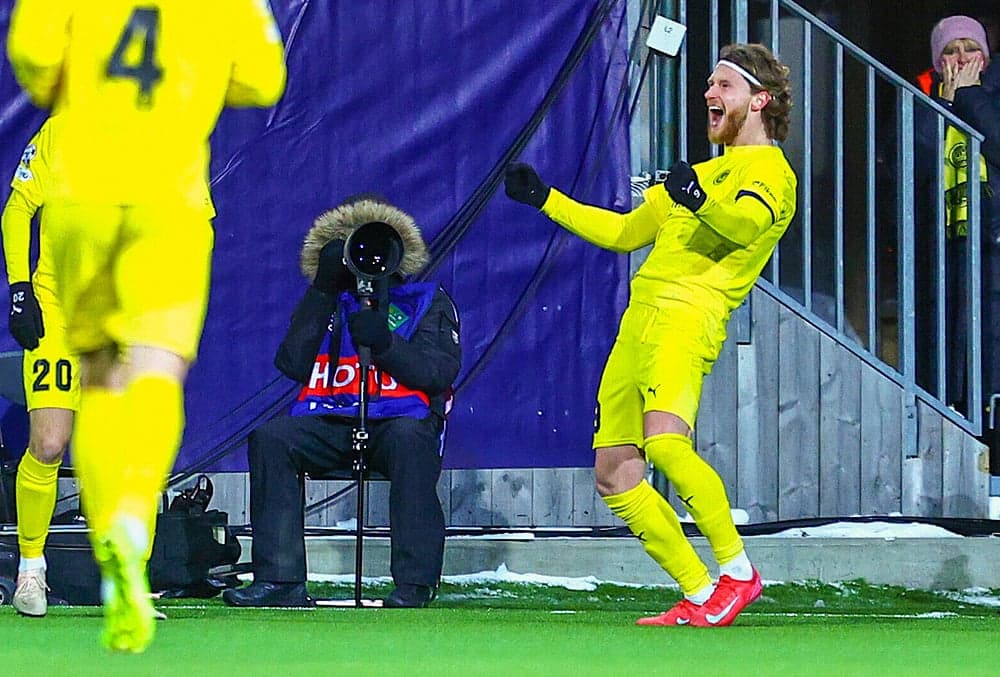
The opening 45 minutes in Bodo unfolded as a balanced contest on the scoreboard, even if Inter saw more of the ball. Bodo/Glimt struck first on 20', when Sondre Fet found the net for the home side, with Kasper Høgh credited as the provider. That early breakthrough underlined Knutsen’s commitment to an attacking 4-3-3 against Inter’s 3-5-2.
Inter responded on 30', levelling through Francesco Pio Esposito after a contribution from Carlos Augusto. The goal restored parity and ensured that Chivu’s team went into the interval still well placed despite trailing earlier.
The only booking of the first half arrived on 45', as Esposito received a yellow card for a foul, a moment that hinted at growing frustration in Inter’s ranks. With the score 1–1 at the break, the tie was finely poised, neither side yet able to translate their approach into clear control on the scoreboard.
Second half & tactical shifts
The match pivoted dramatically around the hour mark. On 61', Chivu made his first move, withdrawing captain Lautaro Martínez and introducing Marcus Thuram. The substitution was immediately overshadowed, though, as Bodo/Glimt retook the lead in the same minute: Jens Petter Hauge scored to make it 2–1, again with Høgh involved in the build-up.
Just three minutes later, on 64', Bodo/Glimt landed what proved to be the decisive blow. Høgh, already with two assists to his name, turned scorer to put the hosts 3–1 up, set up by Ole Didrik Blomberg. That rapid-fire double transformed the dynamic, forcing Inter to chase the game.
Chivu reacted with a triple change on 76', signalling a push for a comeback. Henrikh Mkhitaryan made way for Piotr Zieliński in midfield, Matteo Darmian was replaced by Luís Henrique to freshen the right flank, and goalscorer Esposito went off for Ange-Yoan Bonny in attack. Yet before those changes could settle, Bodo/Glimt managed the tempo and space intelligently.
Blomberg’s yellow card for a foul on 77' reflected Bodo/Glimt’s increasing defensive focus as they protected their two-goal cushion. Knutsen then used his bench to lock things down. On 78', Blomberg was taken off for Sondre Auklend, while Høgh, having delivered a goal and two assists, departed to applause, replaced by Andreas Helmersen. Two further late substitutions on 89' underlined the game-management approach: centre-back Jostein Gundersen was replaced by Haitam Aleesami, and scorer Fet went off for defender Isak Dybvik Määttä. Inter also made a final midfield change at 89', with Nicolò Barella replaced by Andy Diouf, but by then the visitors were running out of time and ideas.
Statistical deep dive
The numbers tell a story of contrasting styles. Inter controlled 58% of the ball and completed 528 of 606 passes, an 87% accuracy rate that underscored their technical superiority in possession. Bodo/Glimt conceded possession, operating with 42% of the ball and 452 total passes at 81% accuracy, but used their time on the ball far more decisively.
Inter generated more volume in attack, recording 15 total shots to Bodo/Glimt’s 8, and working 13 efforts from inside the box. Yet the hosts were markedly more clinical: 6 of their 8 shots were on target, compared to 4 on target from Inter’s 15. Expected goals were narrowly in Inter’s favour (1.35 xG to Bodo/Glimt’s 1.17), which underlines just how efficiently Knutsen’s side converted their chances.
Discipline and intensity were reflected in the foul count: Bodo/Glimt committed 12 fouls to Inter’s 6, each team receiving one yellow card. Despite that, the match did not spill into chaos; rather, the fouls illustrated the home side’s willingness to disrupt Inter’s rhythm when protecting their lead.
Standings & implications
In the broader Champions League picture, this result is a major boost for Bodo/Glimt. Coming into the tie ranked 23rd with 9 points and a -1 goal difference (14 scored, 15 conceded), they added both prestige and momentum, reinforcing their status as a dangerous knockout opponent after a mixed run of form (WWDLL). Inter, ranked 10th with 15 points and a +8 goal difference from five wins and three losses, suffer a setback that complicates their path in the play-offs. For Chivu’s side, so strong away with three wins in four prior road games (9 goals for, 2 against), defeat in Bodo is a reminder that control of possession alone is not enough at this stage of the competition.