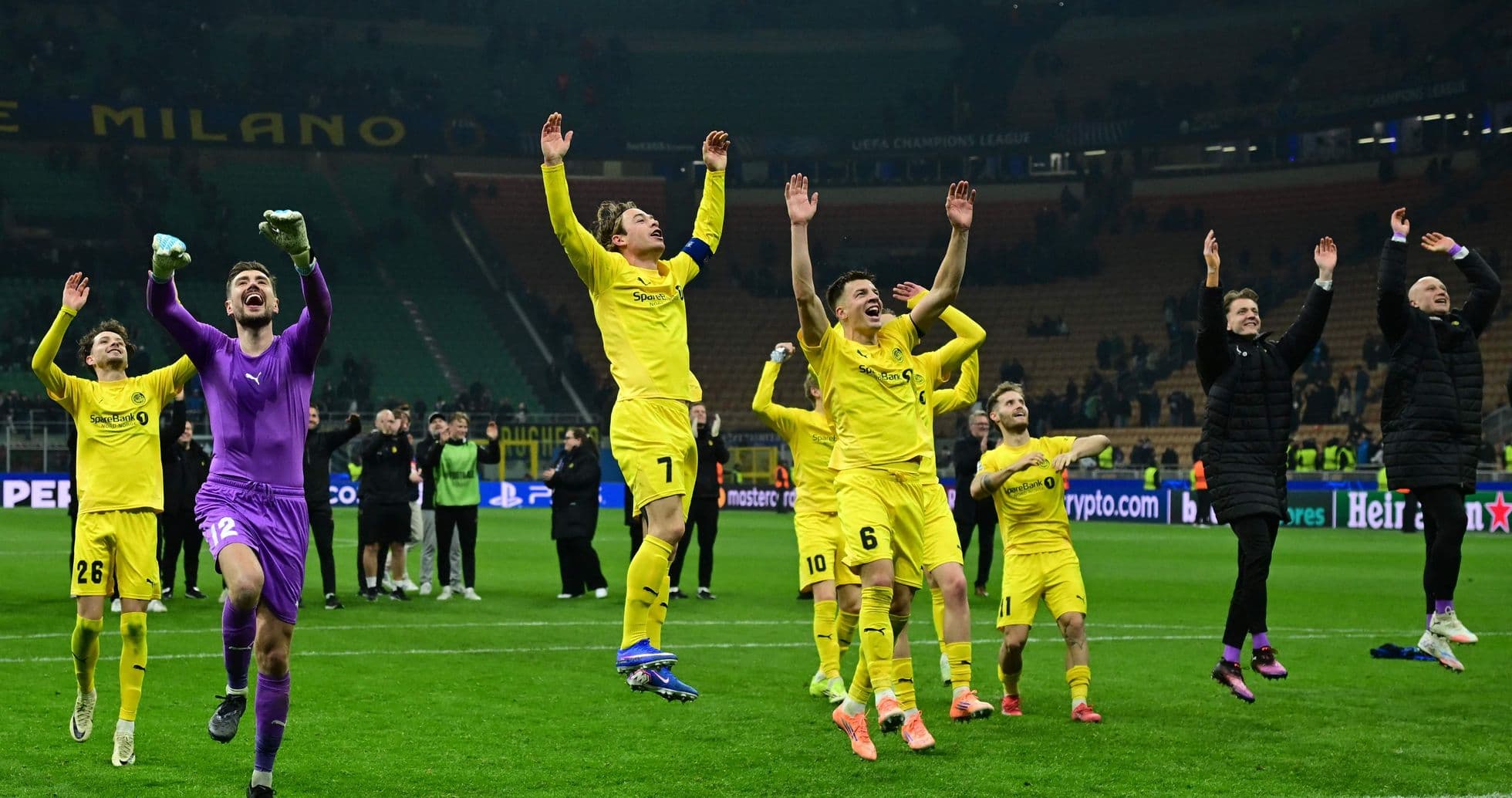
Bodo/Glimt's Tactical Masterclass Against Inter
Inter imposed almost total control of the ball but never full control of the game’s space. With 71% possession and 598 total passes at 87% accuracy, they clearly aimed for a territorial, patient 3-5-2 build-up, pinning Bodo/Glimt deep and circulating to find gaps. In contrast, Bodo/Glimt accepted just 29% possession and only 263 passes (71% accuracy), signalling a deliberate low-to-mid block with quick transitions from their 4-3-3.
The flow became a classic case of “sterile domination”: Inter monopolised the ball, especially in the middle and final third, while Bodo/Glimt waited for select moments to spring forward. The visitors’ plan was to control depth rather than the ball, conserving energy for sharp, high-value breaks rather than extended phases.
Offensive Efficiency
Inter’s offensive volume was enormous but inefficient. They generated 30 total shots, with 26 inside the box and 16 corners, which underlines constant territorial pressure and repeated deliveries into the area. Yet only 7 of those 30 efforts hit the target, and they scored just once despite an expected_goals figure of 2.15. The pattern suggests a lot of crowded-box attempts, blocked or rushed finishes (7 blocked shots), and a lack of composure in the final touch.
Bodo/Glimt embodied ruthless efficiency. With just 7 total shots, they placed 5 on target and scored twice, converting a relatively modest xG of 1.74 into a 2-1 win. Their shot profile—4 inside the box and 3 from outside—indicates that transitions were carried to completion, reaching the edge or interior of the area with enough support to create clean looks rather than speculative efforts. While Inter’s 16 corners hint at sustained siege, Bodo/Glimt’s single corner underlines how little time they spent camped in the attacking third; their danger came from dynamic, open-play situations rather than set-piece accumulation.
Defensive Discipline & Intensity
The match was not especially violent: Inter committed 11 fouls, Bodo/Glimt 9, with only one yellow card shown (to Jostein Gundersen). This points more to tactical, positional defending than to a disruptive foul-heavy approach. Bodo/Glimt’s compactness limited clear-cut chances despite Inter’s volume, reflected in Nikita Haikin needing only 6 combined interventions (4 saves, plus reliance on blocks and poor finishing).
Inter’s defensive structure was rarely tested in volume—Yann Sommer faced just 5 shots on goal—but those few moments were high quality. The low foul count for both sides suggests Inter tried to counterpress without excessive tactical fouling, while Bodo/Glimt trusted their block and timing of duels rather than constant breaking up of play.
Bodo/Glimt’s clinical counter-attacking and superior shot efficiency overturned Inter’s sterile domination of possession. Inter’s 71% of the ball and 30 shots lacked cutting edge, while Bodo/Glimt, with only 7 shots and 29% possession, maximised transitions to convert fewer but clearer chances into a decisive away win.