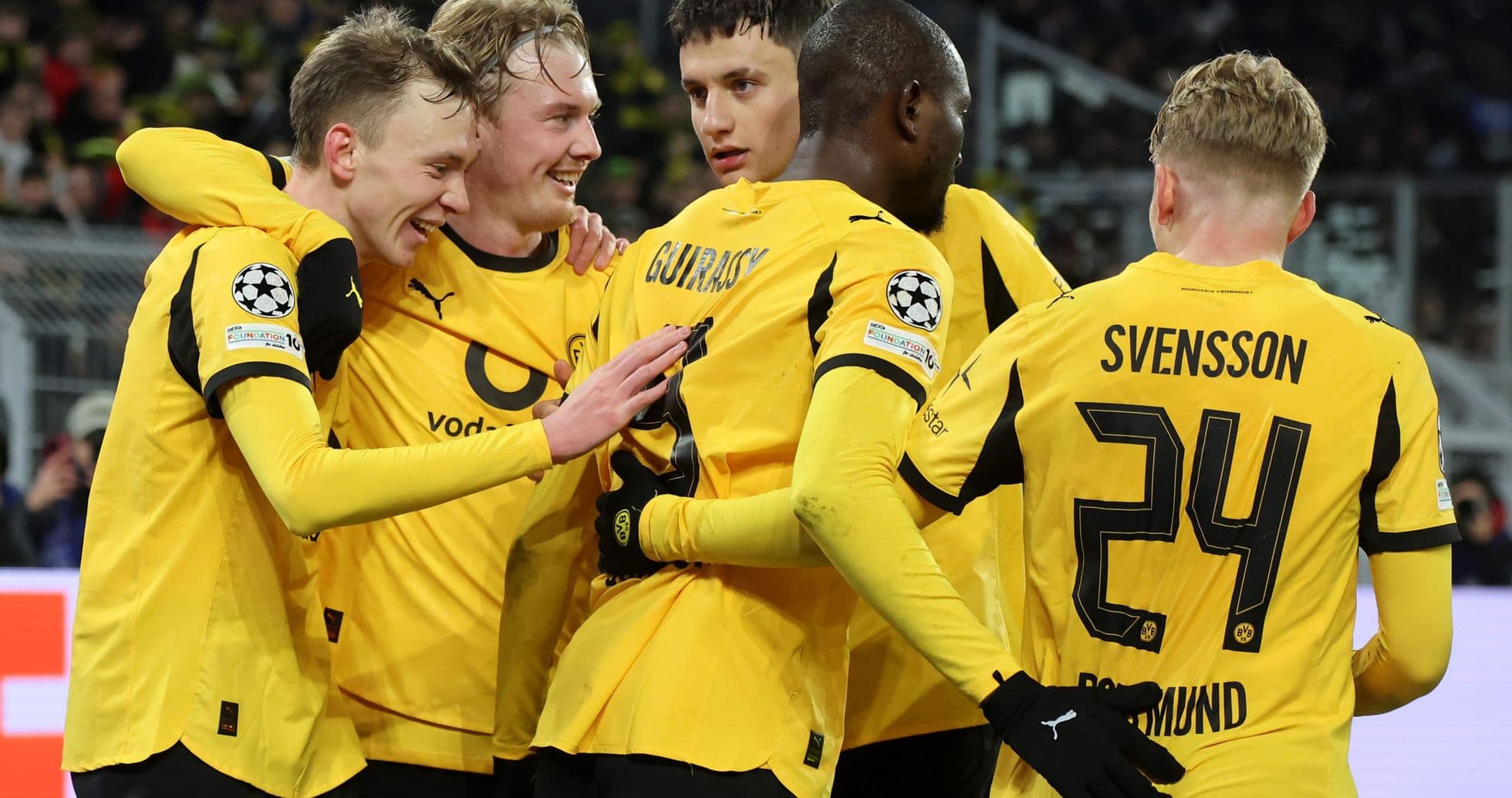
Borussia Dortmund 2–0 Atalanta: Guirassy and Beier Lead First-Leg Victory
At Signal Iduna Park, Borussia Dortmund seized a valuable 2–0 first-leg advantage over Atalanta in their UEFA Champions League Round of 32 tie on 17 February 2026. Niko Kovac’s team did the damage before the break through early and late first-half goals, then managed the game with discipline against an Atalanta side that controlled more of the ball but struggled to create clear chances. The result builds on Dortmund’s solid home record in Europe and dents an Atalanta campaign that had arrived in Dortmund with the stronger recent form and more points in the competition.
First-half analysis
Dortmund could hardly have scripted a better start. After just 3', Serhou Guirassy put the hosts in front, finishing a move created by Julian Ryerson’s assist to give Kovac’s side an immediate platform. That early breakthrough allowed Dortmund to lean on their compact 3-4-2-1 and invite Atalanta to chase the game.
The hosts’ aggression brought the game’s first booking at 18', when Luca Reggiani was shown a yellow card for a foul, underlining the physical edge in Dortmund’s defending. Atalanta’s response was more frustration than incision. In the 40', centre-back Berat Djimsiti was booked for arguing, and, moments later, fellow defender Odilon Kossounou followed him into the book for a foul, as Raffaele Palladino’s side struggled to keep their composure.
Dortmund then delivered a hammer blow just before the interval. In the 42', Maximilian Beier doubled the lead, with Guirassy turning provider this time. Atalanta’s evening darkened further in first-half stoppage time when Gianluca Scamacca picked up a yellow card for a foul at 45+1', encapsulating a half in which the Italians conceded both goals and three bookings without finding a route back.
Second half & tactical shifts
Palladino reacted immediately at the break, reshaping his back line and attack. At 46', Djimsiti was withdrawn and replaced by defender Isak Hien, a like-for-like change aimed at stabilising a back three that had been breached twice. Simultaneously, Scamacca made way for forward Nikola Krstovic, a switch designed to refresh Atalanta’s focal point up front and search for a route back into the tie.
Dortmund, however, continued to manage the tempo. Waldemar Anton received a yellow card for a foul at 48', a reminder that Kovac’s side were prepared to break up Atalanta’s rhythm when needed. As the second half progressed without a breakthrough for the visitors, Palladino pushed further. At 63', midfield anchor Marten de Roon was substituted for the more attacking Kamaldeen Sulemana, signalling a clear intent to add pace and dribbling higher up the pitch.
Kovac’s response came on 70', focused on energy and control rather than risk. Forward Julian Brandt went off for Carney Chukwuemeka, adding fresh legs between the lines, while goalscorer Beier was replaced by the rapid Karim Adeyemi, preserving Dortmund’s counter-attacking threat. Atalanta continued to adjust, with Davide Zappacosta replaced by Raoul Bellanova at 72' to offer renewed width on the flank.
The final exchanges were about game management for Dortmund. At 82', Palladino introduced Lazar Samardzic for Nicola Zalewski, another attacking-minded midfielder to chase an away goal. Kovac, in turn, turned to experience and fresh legs in midfield and up front: at 83', Felix Nmecha made way for Marcel Sabitzer, while Guirassy, already on a goal and an assist, was replaced by Fábio Silva. Dortmund saw out the closing stages without further incident on the scoresheet, preserving both their clean sheet and their two-goal cushion.
Statistical deep dive
Despite the scoreline, Atalanta actually controlled 56% of the ball, leaving Dortmund with 44% possession. The Italian side also posted a slightly higher pass accuracy, completing 452 of 521 passes (87%), compared to Dortmund’s 348 of 419 (83%). That reflects a pattern of Atalanta circulating the ball but struggling to penetrate a disciplined yellow-and-black block.
In attack, Dortmund were far more ruthless. They registered 9 total shots to Atalanta’s 7, but crucially matched their 2.09 expected_goals with two actual goals, underlining their efficiency in the final third. Atalanta, by contrast, produced only 0.46 expected_goals despite 3 shots on target, a sign that their efforts were generally from less threatening positions and well managed by the home defence and goalkeeper Gregor Kobel, who made 3 saves. Dortmund’s 2 shots on goal both found the net, a perfect conversion rate that decided the tie on the night.
Discipline was a recurring theme. Atalanta committed 13 fouls to Dortmund’s 11 and collected three yellow cards to the hosts’ two. The visitors’ bookings clustered around key moments of frustration in the first half, while Dortmund’s cautions, for Reggiani and Anton, reflected their readiness to disrupt Atalanta’s attempts to build momentum.
Standings & implications
In the broader Champions League picture, this win is significant for Dortmund. Coming into the tie with 11 points, a goal difference of +2 and a mixed recent form line of LLDWL, they needed a statement performance, particularly at home where they had previously scored 10 and conceded 5 in four games. A 2–0 victory strengthens that home pedigree and gives them a strong platform for the return leg.
Atalanta arrived with 13 points, a neutral goal difference and an impressive recent run of LLWWW, but leave Dortmund with their away record balanced at two wins and now two defeats, and 5 goals conceded on the road. They must overturn a two-goal deficit in the second leg to keep their promotion hopes from this Round of 32 alive, knowing that Dortmund’s blend of defensive structure and clinical finishing has already punished them once in this tie.