Bottesford Town's Disability Football Team Prepares for Special Olympics Gold
On a hot July evening in Scunthorpe, while England’s stars chase a World Cup final in New York, another team in another Central Park is chasing something just as precious: Special Olympics gold.
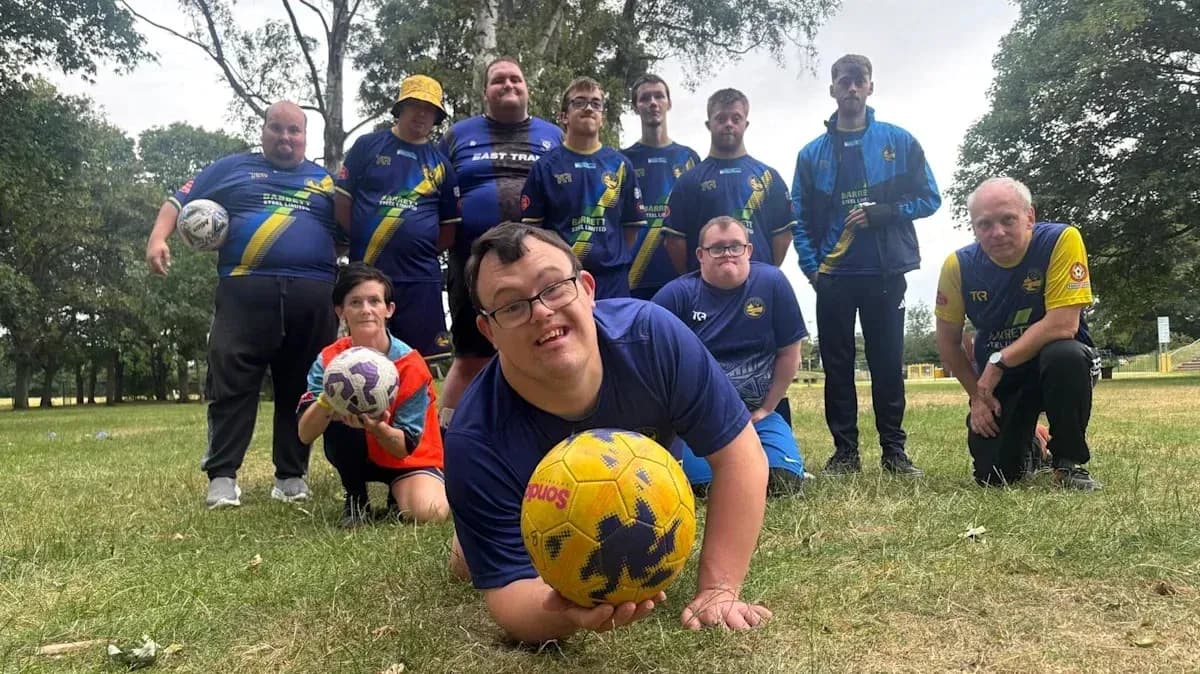
Under the shade of tall trees in the park at the heart of this North Lincolnshire town, a group of footballers move through drills with a seriousness that would not look out of place at a professional training ground. Calls ring out, cones are shifted, passes zip across the grass. Shirts match. Standards do too.
This is Bottesford Town’s disability side, a team born a decade ago for young adults with Down’s syndrome and now broadened to include players with a range of intellectual disabilities – autism, ADHD and other learning disabilities among them. The faces are familiar, but the level is not. The strides they have made since those early, tentative sessions are obvious in every touch.
Back then, the victories were small but vital: a completed pass, a louder voice, a new friend. Social confidence, one five-yard ball at a time. Now, those same players are wearing their own colours and preparing for the Special Olympics GB National Summer Games at Alexander Stadium in Birmingham from 26 to 30 August. The stakes have changed. The commitment hasn’t.
“I feel happy,” says Jake, a grin cutting through the heat when he’s asked how it feels to be heading to the Games. He doesn’t hesitate when describing his role. “I take corners,” he explains, before offering a quick masterclass in how to “wrap” the ball into the net.
He has been here before. In 2017, he came home with a silver medal from the Special Olympics. This time, the target is bolder: two goals, and gold.
Special Olympics GB exists for players like Jake – and like so many of his team-mates. The organisation estimates there are around 1.5 million people living with an intellectual disability in Great Britain. Its mission is clear: give as many of them as possible the chance to take part in sport, all year round, in their own communities. For this group in Scunthorpe, that mission has become a way of life.
At the heart of it stands Jake’s mum, Sue. She has been there from the very beginning, the quiet engine behind the project, driving fundraising, organising transport, making sure boots and dreams both make it to training on time. Her other son, Aiden, also has disabilities and is learning to coach the team, folding his own ambitions into the fabric of the club.
The idea for the team, she recalls, came from a simple need. “My son Jake, he’s got Down’s syndrome and he loves playing football but struggled to play it mainstream. He found it too difficult and couldn’t keep up with the team.” So she went to Bottesford Town FC and asked for a chance – not just for Jake, but for his friends too.
“For Jake to be able to play football was just such a big thing for him,” she says. “It’s his passion. He loves football and he wanted to be able to play it.”
The impact has gone well beyond technique. Yes, first touches have sharpened, passes have more purpose and positional sense is growing. But so too have friendships. The group that once arrived shy and unsure now jokes, debates, and competes like any other squad.
“When your child is born and you find out they have a disability, it’s a complete unknown,” Sue says. “But my commitment was always that my boys would access as much as possible in their lives.” Football has become one of the main gateways to that promise.
Bottesford Town FC have wrapped their arms around the project. Sue calls them “amazing” and the evidence is all around: the sports hall that hosts training sessions, the 4G pitch that gives the players a consistent surface all year round, the sense that this is not a token gesture but a fully integrated part of the club.
It has not been a smooth journey. The team was accepted into the Games in 2021, only to see the event cancelled because of the Covid-19 pandemic. The blow was heavy. “It set quite a few of them back. Jake was one of those who struggled,” Sue admits. Momentum, once lost, is not easily rebuilt.
The biggest obstacle, though, has been financial. To get two teams to Birmingham this summer – to cover travel and accommodation – they needed to raise £10,000. For a community side, that figure loomed large. They pushed on regardless, just as they do on the pitch.
Manager Michael Potts has watched the transformation from the touchline. Training, he says, is “ramping up” as the Games approach. The players are “excited” and it shows. The 4G surface has helped them refine their game, giving them a reliable stage on which to repeat drills, sharpen movements and grow in confidence.
With the squad now including players with a wider range of intellectual disabilities, the coaching staff have had to evolve too. Sessions are adjusted, instructions tailored, support reshaped to fit the individual. The standards remain high; the methods are simply more nuanced.
At one end of the pitch, Mason stands tall in goal. He talks about a “rock solid” defence in front of him, a goalkeeper’s pride in the line he marshals. Asked if he has any advice for England’s men as they chase their own glory, he doesn’t blink. They should “train hard”, he says, and the goalkeeper must focus on “throwing the ball out” properly.
His own ambitions match his words. At his last competition, he saved a penalty. That memory fuels him now as he, too, targets gold.
Nearby, Taylor – a defender who joined the team 10 years ago – moves through a drill with quiet assurance. He says training is going well. His message to others is simple: train hard. His own prediction is less modest. Four goals.
As the sun begins to dip and the session winds down, the park returns to its usual evening rhythm. Dog walkers drift past. Children shout from distant swings. On the pitch, bibs are collected, balls bagged, plans for Birmingham quietly traded between team-mates.
Walking back through the trees, it is impossible to miss what has taken root here: passion, professionalism, and a belief that football belongs to everyone. The medals in Birmingham will matter. So will the results. But the real measure may come later, when someone returns to this same spot and counts how many more of these players’ dreams have been turned into reality.