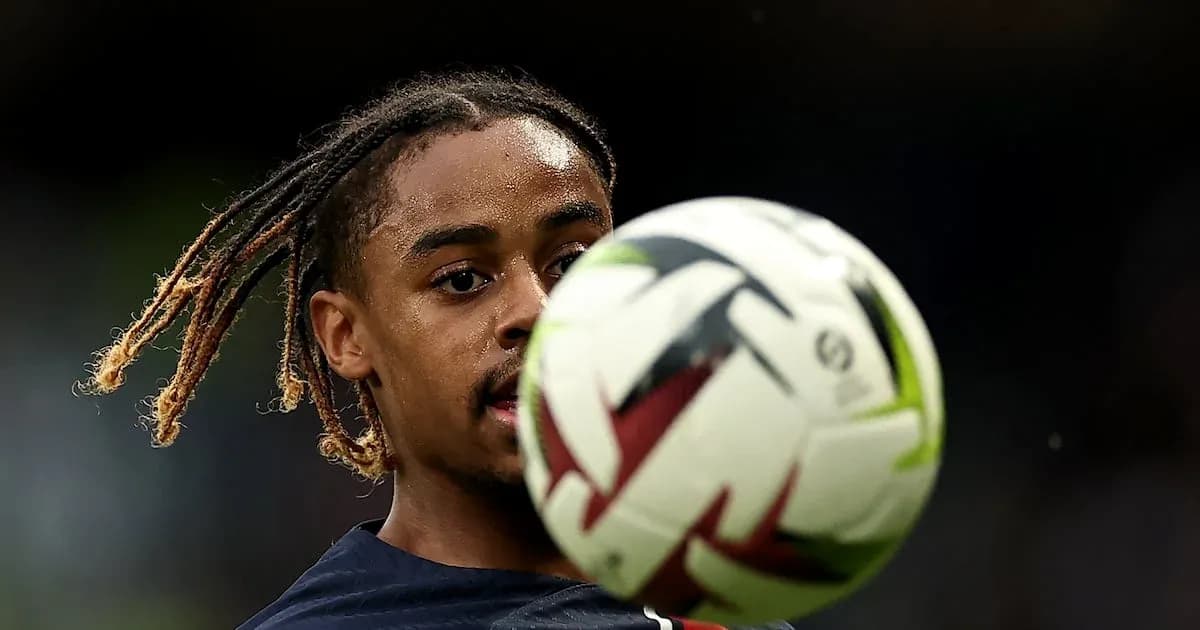
Bradley Barcola: Liverpool's Record Signing and Future Star
Bradley Barcola walked into Anfield carrying the weight of a £123m fee and a childhood promise.
“As a kid, he always spoke to me about Liverpool,” recalls Amaury Barlet, one of his youth coaches at Lyon. So when Liverpool finally called, Barcola barely paused for breath. “He didn’t ask any questions,” he admitted in his first interview as a Liverpool player. The dream he voiced at 15 and 16 has survived the detours through Lyon and Paris. It has simply grown more expensive.
From late bloomer to record sale
Barcola arrives on Merseyside after three seasons at Paris Saint‑Germain, but his story really begins at Lyon’s academy, where returning youth players sit down each year for a formal interview. It was in one of those sessions that he told Barlet about Liverpool. Back then he was skinny, still growing, still waiting for his body to catch up with his ideas.
“He wasn’t small, but he was very fresh,” Barlet says. “He was very thin. He hadn’t yet grown.” Lyon resisted the temptation to fast‑track him. No leapfrogging age groups, no accelerated path. While others, like Rayan Cherki, broke into the first team at 16, Barcola had to wait until 19 for his debut. Lyon wanted his frame to match his ambition.
When it finally did, he didn’t hang around. He broke through midway through the 2021‑22 season and needed only one full campaign to persuade PSG to pay €45m for him. The “late” developer had suddenly become one of Europe’s most expensive wide forwards.
Yet his rise did not turn him into a pure winger overnight. As a youngster, Barcola was more predator than provider. “He was a bit of a fox in the box; he scored a lot of goals,” Barlet remembers. Acrobatic volleys, toe‑pokes, left foot, right foot – anything but headers. He loved running in behind, sometimes too much. “Because he was playing against defenders that were stronger than him, he always wanted to get ahead of them. He was very often offside.”
The raw edges never disappeared entirely, but they sharpened into a weapon. His most prolific season came in 2024‑25: 21 goals, 21 assists. Those numbers sit awkwardly alongside the criticism that his end product can be wasteful. A wayward Champions League display against Newcastle in November 2023 prompted one French pundit to call him a “little lamb”. The insult barely grazed him.
“I didn’t know what was being said about me, but I knew that there would be criticism,” he told Le Parisien. “I don’t pay any attention to it, whether what they say is good or bad.”
PSG’s luxury problem
For PSG, Barcola became both an asset and a dilemma. He started every Champions League match up to the last‑16 second leg against Chelsea last season, only to lose his place when the stakes rose. He played in the past two Champions League finals but only from the bench.
Luis Enrique’s decision to start Khvicha Kvaratskhelia ahead of him was hard to dispute. The Georgian’s arrival in January 2025, though, was a clear warning. Barcola’s difficulty in being equally effective on the right or through the middle limited his minutes in the biggest games. In an attack stacked with world‑class options, he drifted towards the periphery.
It made a summer exit feel inevitable. His contract ran until 2028, but his role was shrinking. At the same time, his performances for France in North America, where three of his six international goals came at the most recent World Cup, showed he could light up the biggest stage. A move, for club and player, became common sense.
The pressure finally told in the boardroom, not on the pitch. PSG turned a major profit. The fee from Liverpool helped them make almost €100m more than they paid Lyon. Barcola leaves as the most expensive sale in the club’s history, surpassing the €90m Al‑Hilal paid for Neymar. His departure formed a key part of a remarkable €350m in player sales in one summer, a Ligue 1 record.
Inside the dressing room, the reaction was very different. Team‑mates flooded social media with farewell messages. PSG’s hierarchy, too, sent him off with their blessing. Despite his clear desire to join Liverpool, he never forced the issue. His absence from early‑season matchday squads was, by all accounts, about protection rather than punishment.
“He’s got good people around him,” Barlet says. His parents, he explains, echoed the academy coaches. The family kept him grounded. The proof runs through the bloodline: his older brother Malcolm, a goalkeeper, has carved out his own professional career and now plays for Ittihad Tanger in Morocco after coming through Lyon’s ranks.
Loyal, competitive, insulated
Those who know Bradley best talk less about his stepovers and more about his stubbornness. Barlet remembers a tight group at youth level: Barcola alongside Castello Lukeba, now at RB Leipzig, and Billy Koumetio, once of Liverpool and now at Charlton. “He’s a very loyal person,” the coach says. Defeats cut him deeply, but he never turned on team‑mates. “He had tears in his eyes; he was annoyed when he lost, but he wouldn’t criticise his team-mates. He was more annoyed with himself because he is a real competitor.”
Barlet calls him “the ideal team-mate” and “endearing”. The player himself offers a glimpse into that inner circle. “I don’t have many friends. I have very few, in fact,” Barcola has said. “So when they say, ‘You’re doing something stupid,’ it is because they’re right, and if they say that I played well, it’s also because it’s true. I don’t listen to what is said on the outside. To be completely honest, it’s my friends who send me the things [being said] in the media. Sometimes we laugh about it, but it doesn’t go any further than that.”
That tight filter may prove vital now. Liverpool have paid a premium for potential and production, but also for temperament. The price tag, the expectation, Andoni Iraola’s stuttering start – all of it swirls around him. His challenge is to treat it like the noise he already knows how to mute.
The perfect fit – on paper
On the pitch, the fit looks obvious. Luis Enrique once called Barcola “one of the best dribblers in Europe”. Liverpool, increasingly suffocated by low blocks in recent games, have craved exactly that kind of chaos from wide areas. The Premier League’s tactical trend is clear: games are decided in transition, in how quickly and cleverly teams exploit the space that appears when structure briefly collapses.
Barcola lives in that space. His habit of darting behind defences, once a source of offsides in youth football, is now a weapon Liverpool want to unleash rather than tame. Iraola has been blunt about his demands for his wide players: they must be “game-changers”. Barcola fits that brief. He has spent the past few years as a luxury option in Paris, often watching the biggest nights from the bench. Anfield offers him something different – a starring role, responsibility, and a fanbase that will demand he bends games to his will.
He has dreamt of this stage since he was a teenager in Lyon, still too thin, still “very fresh”, as Barlet puts it. Now he arrives as Liverpool’s record buy, PSG’s record sale, and France’s newest World Cup match‑winner.
The excuses have gone. The spotlight is his. What he does with it will define not just his own career, but Liverpool’s next era.