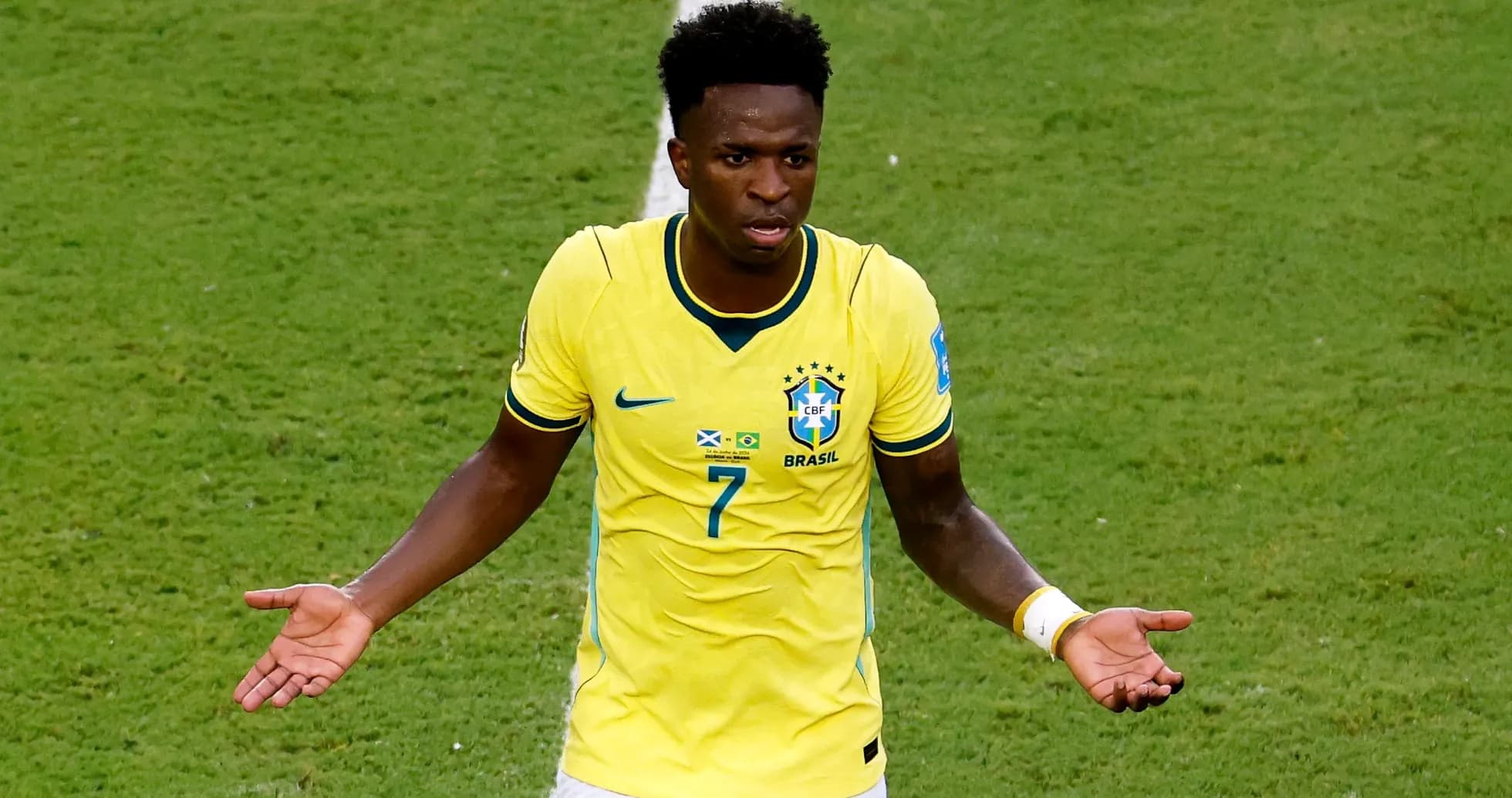
Brazil's VAR Controversy: CBF Takes Aim at FIFA and Referee Ramos
For a few charged seconds in the 21st minute, it felt like Brazil had slammed the door on Scotland and the rest of Group C.
Vinicius Jr, already on the scoresheet, hunted down Jack Hendry, nicked the ball, glided into the box and slipped a cold-blooded finish past Angus Gunn. Cesar Ramos pointed to the centre circle. Brazil wheeled away. Job done, it seemed.
Then came the familiar, unwelcome pause.
VAR called the Mexican referee to the monitor. A replay. Another. A hint of contact in the challenge on Hendry. The goal that would have put Brazil two up was wiped away for a foul in the build-up, and the mood inside the stadium flipped in an instant.
On the touchline, Carlo Ancelotti and his staff erupted. The anger wasn’t just about one decision; it was about the threshold that is supposed to govern all of this. To them, the contact was minor, nowhere near the “clear and obvious” error standard that justifies a video intervention. To see a referee reverse his own on-field call for that level of contact cut deep.
And in Brazil, it hasn’t been left on the pitch.
CBF Goes to War Over Ramos
CBF president Samir Xaud has moved the fight from the technical area to the boardroom. He has written directly to FIFA president Gianni Infantino, challenging not only the decision against Scotland but what Brazil sees as a pattern of inconsistency across the tournament.
The federation has gone further than a simple complaint. It has formally requested that Cesar Ramos be removed from any future Brazil assignments in North America, arguing he should never have been appointed to their games in the first place.
In a document cited by Brazilian outlet Estadao, the CBF points to what it calls a “negative history” with Ramos. The reference goes back to the 2018 World Cup group stage against Switzerland, a match Brazil still feel was tilted by two key calls: a denied penalty and a missed foul in the build-up to the Swiss equaliser. Those grievances, never forgotten, have now been dragged into the present as part of the case against the Mexican official.
For the CBF, this isn’t about one disallowed goal. It’s about trust.
Using Messi and Argentina as Exhibit A
In a striking move, Brazil’s federation has even reached for the ultimate rivalry to make its point. The CBF letter cites a goal scored by Lionel Messi for Argentina against Austria earlier in the tournament, highlighting what it believes are similar physical challenges in the lead-up to goals that have been allowed to stand for other nations.
The implication is blunt: what is waved on for Argentina is punished for Brazil.
By invoking Messi and Argentina, Brazil has turned the spotlight onto perceived double standards at the highest level of officiating. If that kind of contact is acceptable in one game, the CBF argues, why is Vinicius Jr’s goal against Scotland treated differently?
The document also underlines how the moment played out on the field. According to the CBF, the decision “seemed unexpected not only for the Brazilian team, but also for the Scottish players,” noting that their immediate reactions suggested they neither anticipated a review nor the dramatic step of overturning the goal.
In other words, nobody on the grass thought there was a problem until the VAR screen lit up.
Ancelotti Blocks Out the Noise
While administrators trade letters and accusations, Ancelotti has little choice but to narrow his focus. Brazil’s path has taken them to Houston and a round of 32 tie against Japan, a fixture that offers no room for emotional hangovers.
On the night against Scotland, Brazil ultimately made sure the controversy did not define the result. Vinicius Jr found the net again later in the game, underlining his status as the team’s attacking spearhead, and Matheus Cunha added a third. The group was won with authority, even if the scoreline could have been more emphatic.
Ancelotti, who has seen every shade of chaos in elite football, struck a pragmatic tone after the final whistle. His message was not about injustice. It was about evolution.
“Now we are playing as a team, that is the goal. We are not perfect, we have things to improve. We can be a little quicker when we have control,” he told reporters, framing Brazil’s progress as a work in motion rather than a finished article.
The Italian stressed what he values most in knockout football: “I’m happy because the team has improved a lot, now we are solid. In the knockout stage, solidity is very important. We have a solid team. Compared to the first game, we are making fewer mistakes, we have more rhythm, and we are more effective up front.”
The subtext is clear. Let the federation fight its battles; his job is to keep this group sharp, compact and ruthless.
Tournament on a Knife-Edge
The VAR flashpoint against Scotland will not be forgotten quickly in Brazil. It has reopened old wounds from 2018, dragged refereeing politics into the spotlight and placed Ramos under intense scrutiny. The CBF’s request to sideline him sends a message to FIFA: Brazil expects not just fairness, but the appearance of fairness.
Yet the tournament will not pause for the paperwork.
Japan await in Houston, an opponent capable of exposing any lapse in focus. Brazil arrive with a forward in form, a coach preaching solidity, and a federation locked in a public fight over officiating standards.
If the margins in the knockout rounds are as fine as that contact on Jack Hendry, Brazil must decide where their energy is best spent: in the corridors of power, or in the 90 minutes that will decide how far this campaign truly goes.