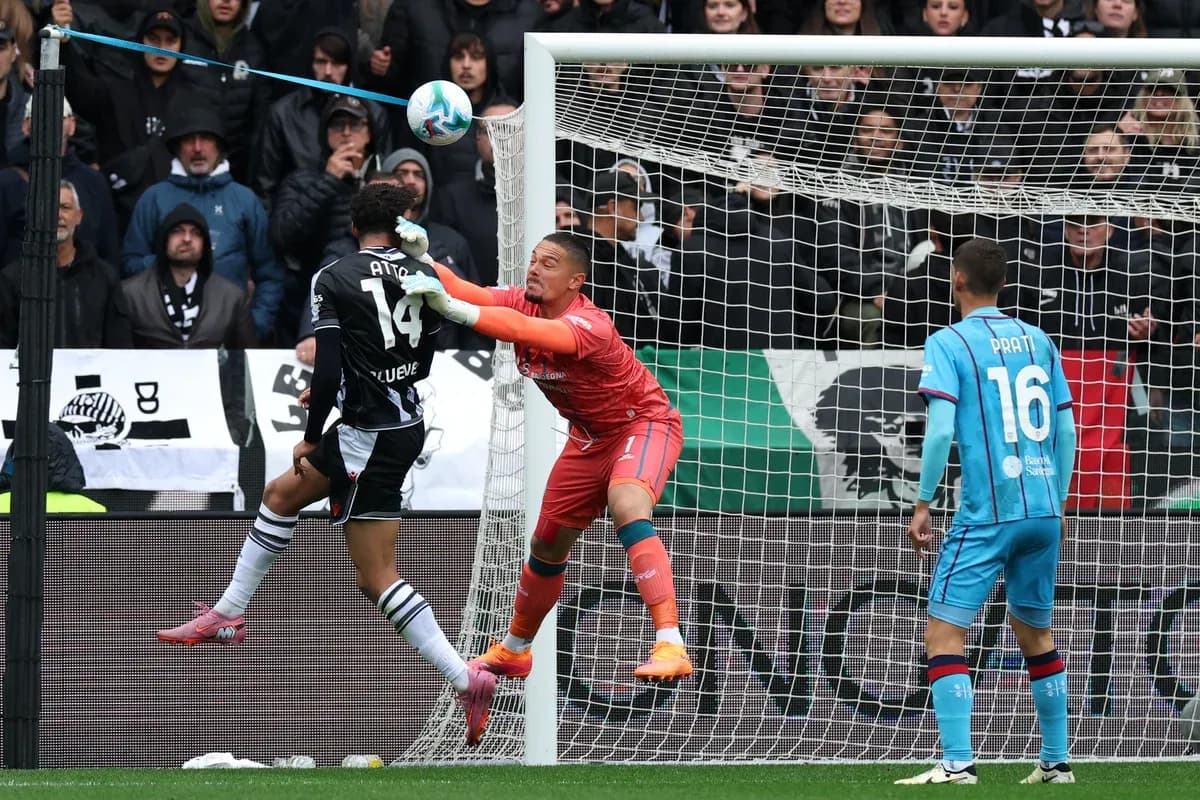
Cagliari vs Udinese: High-Stakes Serie A Clash
Unipol Domus stages a high‑stakes relegation and mid‑table clash on 9 May 2026 as 15th‑placed Cagliari host 11th‑placed Udinese in Serie A’s Round 36. With the Sardinians sitting on 37 points and a goal difference of -13, they are still glancing nervously over their shoulder, while Udinese, on 47 points and -3 goal difference, are pushing to cement a top‑half finish and potentially climb further in the final sprint.
Context and stakes
In the league, Cagliari’s record across all phases reads 9 wins, 10 draws and 16 defeats from 35 games (36 scored, 49 conceded). The form line of “DWLWL” underlines a season of inconsistency; every step forward has tended to be followed by a stumble. At home, however, they have been more competitive: 6 wins, 4 draws and 7 losses at Unipol Domus, scoring 20 and conceding 20. Survival is within reach, but any slip could drag them back into danger in the final two rounds.
Udinese arrive with a more robust platform. Across all phases they have 13 wins, 8 draws and 14 defeats, with 43 goals scored and 46 conceded. Their recent “WDLWD” sequence suggests a side that has steadied itself and is finishing the campaign relatively strongly. Crucially, their away form is impressive: 7 wins, 3 draws and 7 losses on the road, with 25 goals scored and 26 conceded. That travel resilience is a major factor heading into Sardinia.
Tactical outlook: Cagliari
The numbers paint Cagliari as a side constantly searching for balance. They have used a wide tactical palette this season, but the backbone has been a three‑at‑the‑back structure: the 3‑5‑2 has been deployed 17 times, far more than any other setup. That points to a team that wants defensive protection with three centre‑backs, wing‑backs to provide width, and a double presence up front to threaten in transition.
At home, Cagliari average 1.2 goals for and 1.2 against per game, reinforcing the sense of narrow margins. Six clean sheets at Unipol Domus show they can shut games down when the structure holds, but they have also failed to score in 6 of 17 home matches – a worrying sign in a fixture where a single goal could be decisive.
Their biggest home win, 4-0, hints at an occasional capacity to overwhelm opponents when everything clicks, especially when the wing‑backs are aggressive and the midfield can step onto second balls. But the broader form string across all phases – a long, choppy sequence with short winning streaks (maximum three in a row) and a four‑game losing run at its worst – underlines how fragile that confidence can be.
In possession, expect Cagliari to build from a back three, using the central overload to progress through midfield and then work the flanks. Out of possession, the 3‑5‑2 can flatten into a 5‑3‑2, with wing‑backs dropping deep to contain Udinese’s wide threats and protect the box against crosses aimed at the visitors’ powerful striker line.
One small but important detail: from the spot, Cagliari have been perfect this season, scoring 2 of 2 penalties as a team. With margins tight and tension high, that reliability could matter if VAR intervenes.
Tactical outlook: Udinese
Udinese’s season has been built on flexibility within a clear framework. They, too, are primarily a three‑at‑the‑back side: 3‑5‑2 has been their go‑to shape (18 times), supported by 3‑4‑2‑1 (8 times) and occasional switches to 4‑4‑2 or other variants. That means both teams are likely to mirror each other structurally, turning this into a battle of execution rather than surprise.
Away from home, Udinese average 1.5 goals scored and 1.5 conceded, a more open profile than Cagliari’s. They have 4 away clean sheets and have failed to score in only 3 of 17 away matches, underscoring their attacking consistency on the road. Their biggest away win, 0-3, and heaviest defeat, 5-1, show that when the game opens up, they are comfortable in chaos but also vulnerable if the defensive block is stretched.
The focal point is clear: Keinan Davis. Udinese’s number 9 has 10 goals and 3 assists in 27 appearances, with a strong all‑round profile – 35 shots (22 on target), 27 key passes, and a high volume of duels (302, winning 143). He is more than a penalty‑box finisher; he can drop in, link play and occupy multiple defenders. Importantly, his penalty record this season is spotless: 4 scored, 0 missed. In a tight contest, that ruthlessness from the spot is a genuine weapon.
Udinese’s team penalty record matches that efficiency: 5 taken, 5 scored. Combined with their willingness to commit numbers forward in a 3‑5‑2 or 3‑4‑2‑1, they will back themselves to force mistakes in and around the Cagliari box.
Team news and selection headaches
Cagliari are heavily hit by absences. Confirmed out are G. Borrelli (thigh), M. Felici (knee), R. Idrissi (knee), J. Liteta (thigh), L. Mazzitelli (injury), L. Pavoletti (knee) and O. Raterink (muscle). That list strips depth from both attack and midfield, and removes a classic target‑man option in Pavoletti. A. Deiola is questionable with a thigh injury, further clouding the midfield picture.
For a coach leaning on 3‑5‑2, the lack of forwards and midfielders could force either a more cautious 5‑4‑1 variant or an improvised second striker role from a wide player or attacking midfielder. It also limits Cagliari’s ability to change games from the bench if they fall behind.
Udinese are not at full strength either. N. Bertola (thigh), K. Davis (thigh), C. Kabasele (suspension for yellow cards), A. Zanoli (knee) and J. Zemura (muscle) are all listed as missing, while A. Atta and J. Karlstrom are questionable. The key detail here is that the data lists K. Davis as both injured for this fixture and as the club’s top scorer for the season. If he is indeed unavailable, Udinese lose their main reference point in attack and a reliable penalty taker.
Without Davis, Udinese will likely lean more on mobility and interchanging forwards in their front line, with midfield runners asked to attack the box more aggressively. The absence of Kabasele also weakens their experience in the back three, potentially inviting more pressure from Cagliari’s set pieces.
Head‑to‑head narrative
Looking at the last five competitive meetings (including Coppa Italia, excluding friendlies), Udinese have had the upper hand:
- In October 2025, the reverse league fixture in Udine finished 1-1, with Cagliari leading at half‑time before being pegged back.
- In May 2025, at Unipol Domus, Udinese came from 1-1 at the break to win 1-2.
- In October 2024, Udinese won 2-0 at home in Serie A.
- In February 2024, the league meeting in Udine ended 1-1.
- In November 2023, a Coppa Italia 2nd Round tie in Udine went to extra time, with Cagliari winning 1-2 after a 1-1 draw in 90 minutes.
Over those five competitive fixtures, Udinese have 2 wins, Cagliari have 1 (the cup tie), and there have been 2 draws. Udinese have not lost to Cagliari in the league over this span, and they also won the most recent meeting in Sardinia. That psychological edge matters, particularly in a pressure game for the hosts.
Discipline and game rhythm
Both teams carry a combative edge. Cagliari’s yellow cards cluster heavily in the second half, especially between minutes 46‑60 and 76‑90, with two red cards late in games. Udinese’s bookings also spike after the hour mark, and they have one early‑game red on record. This suggests a contest that could become increasingly fractured and stop‑start as fatigue and tension rise, especially if the score is close.
With both sides comfortable in a 3‑5‑2, the midfield battle will be intense. Expect a lot of duels for second balls, tactical fouls to break transitions, and a significant role for set pieces in deciding the outcome.
The verdict
The data points to a tight, tactical game. Cagliari’s home record is solid but not intimidating; Udinese’s away record is positive and underpins their higher league position. Head‑to‑head form favours Udinese, particularly in league play, and their general attacking output away (1.5 goals per game) is superior to Cagliari’s home scoring rate.
However, the injury lists complicate the picture. If Keinan Davis is indeed out, Udinese lose their most reliable finisher and penalty taker, which could blunt their edge in the final third. Cagliari, meanwhile, are stripped of depth but still have the structural familiarity of their 3‑5‑2 at home and the urgency of needing points to secure safety.
On balance, Udinese’s broader form and away resilience suggest they are slightly better placed to avoid defeat. Yet Cagliari’s need and the home factor should keep them competitive.
A low‑margin contest feels likely, with neither side running away with it. A draw or a narrow Udinese win fits the underlying numbers, with set pieces and discipline – and perhaps a single moment of quality – likely to decide it.