Canada and Bosnia & Herzegovina Draw: A Tactical Showdown
Under the Toronto lights at BMO Field, Group B opened with a contest that felt less like a curtain‑raiser and more like a statement of intent from two sides determined not to blink first. Canada and Bosnia & Herzegovina shared a 1–1 draw, a result that leaves both with 1 point and a goal difference of 0, but the story beneath the scoreline was one of contrasting structures, evolving roles, and a tactical arm‑wrestle that will shape the rest of their World Cup campaigns.
I. The Big Picture – Two 4‑4‑2s, Two Different Souls
Both coaches arrived with a 4‑4‑2 on the teamsheet, but the symmetry ended there.
Canada’s shape under Jesse Marsch was aggressively front‑foot. With M. Crepeau behind a back four of A. Johnston, L. De Fougerolles, D. Cornelius and R. Laryea, the hosts tried to compress the pitch, trusting their defenders to hold high lines and win duels. De Fougerolles, who played the full 90 minutes and took a yellow card, embodied that risk‑embracing brief: 50 passes at 80% accuracy and 22 duels contested show a centre‑back dragged into a game that was as much about stepping into midfield as it was about last‑ditch defending.
Ahead of them, the midfield quartet of T. Buchanan, I. Kone, S. Eustaquio and L. Millar was designed to tilt the game into Bosnia’s half. Eustaquio’s role as the metronome, Kone’s vertical carries, and Buchanan’s wide thrusts were all aimed at feeding the front two of J. David and T. Oluwaseyi. In total this campaign, Canada have scored 1 goal and conceded 1, both at home, with averages of 1.0 goals for and 1.0 against at home; this performance stayed faithful to that balanced, high‑risk identity.
Bosnia & Herzegovina, by contrast, brought a more layered interpretation of 4‑4‑2. Sergej Barbarez anchored his side around a rugged back line: A. Dedic, N. Katic, T. Muharemovic and S. Kolasinac in front of N. Vasilj. In total this campaign, Bosnia have also scored 1 and conceded 1, both on their travels, with away averages of 1.0 for and 1.0 against. But where Canada’s back four was asked to squeeze, Bosnia’s was asked to absorb and counter.
The midfield of E. Bajraktarevic, B. Tahirovic, I. Basic and A. Memic had a clear dual task: screen central spaces and launch quick transitions into the front pairing of E. Demirovic and J. Lukic. Lukic’s role was particularly pivotal; in 62 minutes he scored once, took 3 shots (2 on target), and won 10 of 13 duels, a classic target‑man performance that gave Bosnia an outlet whenever Canada’s press overreached.
II. Tactical Voids and Discipline – Where the Edges Frayed
There were no listed injury absences, so the “voids” were tactical rather than personnel‑driven.
For Canada, the main gap lay between ambition and control. Their season card profile hints at a side that can be emotionally spiky: all 2 yellow cards so far have come in the 0–15 and 46–60 minute windows, each accounting for 50.00% of their cautions. That early and early‑second‑half edge was visible here. De Fougerolles and Johnston both collected yellows, the latter after a performance built on physical duels (7 contested, 5 won) and aggressive stepping out of the line. The upside was territorial dominance; the downside was exposure to counters whenever the press was broken.
Bosnia’s disciplinary map is more spread and, crucially, more late‑game. Their 3 yellow cards this campaign are evenly distributed: 31–45 (33.33%), 46–60 (33.33%) and 91–105 (33.33%). Lukic, Katic and Demirovic all sit on one yellow, each embodying a different layer of Bosnia’s resistance: Lukic disrupting build‑up from the front, Demirovic snarling in the half‑spaces, Katic patrolling the box. Katic’s numbers are especially telling: 5 tackles, 2 blocked shots and 3 interceptions underline a defender who not only defended his area but actively hunted the ball, at the cost of 2 fouls and a booking.
III. Key Matchups – Hunter vs Shield, and the Engine Room
The “Hunter vs Shield” narrative is already taking shape around the tournament’s early top scorers.
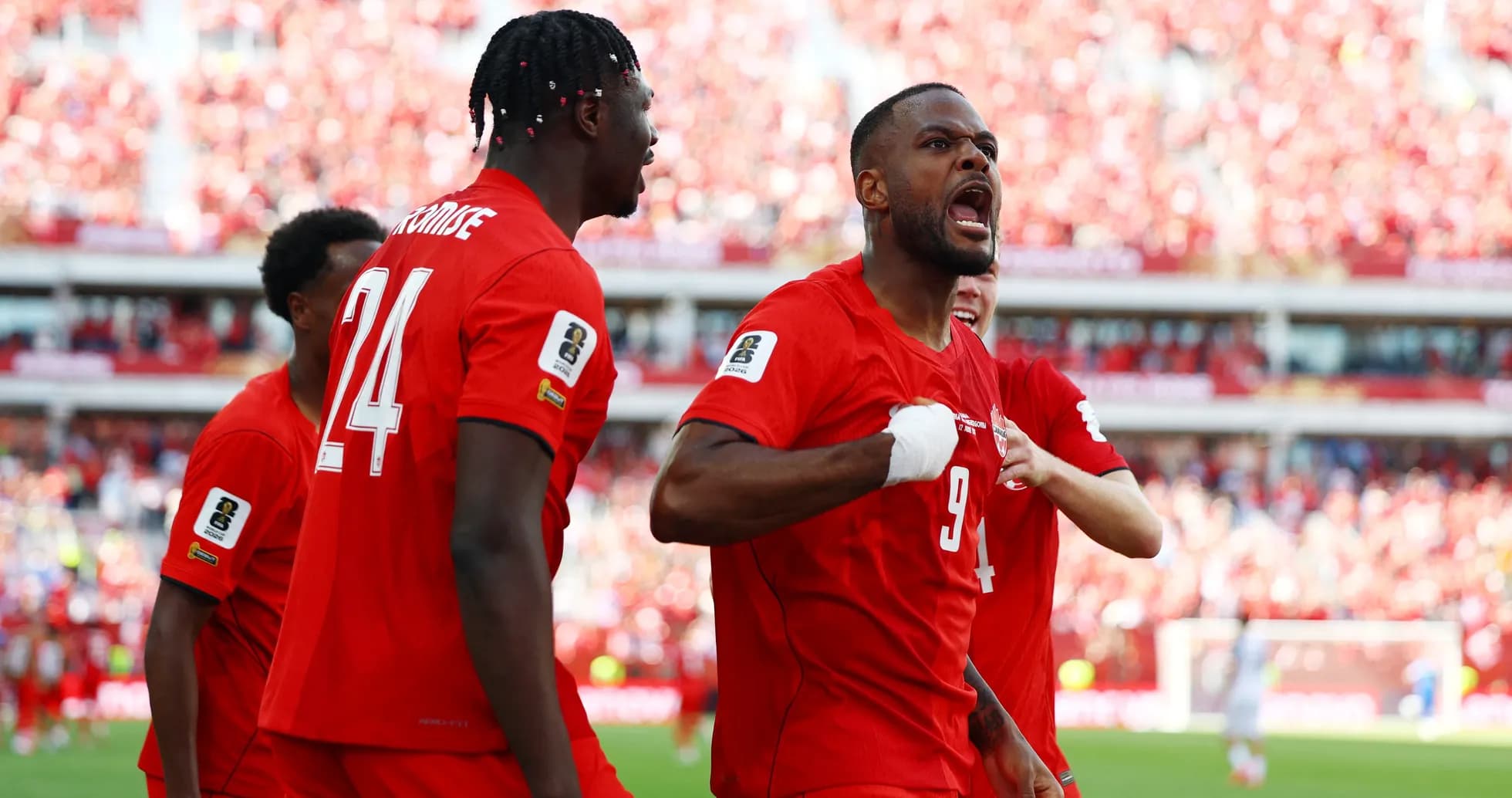
For Canada, C. Larin is the purest expression of the Hunter archetype. Off the bench he played 14 minutes, scored 1 goal from his only shot on target and drew 1 foul. His rating of 7.7 and the fact he came on as a substitute underscore his potency as a late‑game weapon rather than a volume shooter. He is supported by P. David, who in 29 minutes produced 1 assist, 1 shot and 1 key pass, while engaging in 10 duels. Together they give Marsch a bench capable of radically changing the texture of the front line.
Across from them, Bosnia’s Shield is two‑headed. Katic is the pure defensive anchor, but Kolasinac is the hybrid: a defender who, in 84 minutes, provided 1 assist, completed 21 passes at 71% accuracy, made 2 blocks and 2–3 tackles depending on the metric set, and drew 2 fouls while committing 3. He is not just clearing danger; he is initiating Bosnia’s first pass out of pressure. His presence on both the top scorers’ and top assists lists (via his creative contribution) underlines how central he is to their transition game.
In the engine room, Canada’s creativity is increasingly flowing through P. David and, deeper, through Eustaquio. David’s 1 assist already places him among the tournament’s leading creators, and his ability to drop off the front line to link play offers Canada a way to overload Bosnia’s double pivot of Tahirovic and Basic. Bosnia, for their part, lean on Kolasinac’s diagonal balls and Basic’s metronomic passing to find Lukic early and often.
IV. Statistical Prognosis – Margins, xG Shadows and What Comes Next
Heading into this game, both sides were statistical blank slates beyond this single fixture, so any xG‑style reading must be inferred from shot quality and usage rather than a large sample.
Bosnia’s attack looks more efficient than expansive: 1 goal from their 1 away game, with Lukic taking 3 shots and Demirovic adding 1. The front two do not need volume; they need clean deliveries and space to attack. Canada, meanwhile, are already showing signs of a multi‑source threat: J. David as the starter, Larin as the finisher, P. David as the connector. Their 1 goal at home so far is less a ceiling than a baseline for a side that can escalate pressure late, especially with fresh forwards from the bench.
Defensively, both are fragile in similar ways. In total this campaign, Canada and Bosnia have each conceded 1 goal, with no clean sheets and no penalties faced. The absence of penalty incidents (0 taken, 0 missed for both) removes one high‑variance factor, but the card profiles suggest future matches could be shaped by suspensions or late‑game fatigue, particularly for Bosnia, whose yellows extend into the 91–105 window at 33.33%.
If we sketch the xG story from the roles and numbers, Canada’s ceiling feels marginally higher: more attacking profiles, more bench impact, and a willingness to commit numbers forward. Bosnia’s defensive solidity, anchored by Katic and Kolasinac, is real, but it comes at the price of long spells without the ball.
Following this result, the prognosis is of two teams whose campaigns will likely be decided by fine margins: Canada by whether their attacking rotations can turn 1.0 home goals on average into something more ruthless, Bosnia & Herzegovina by whether their Shield can keep holding while the Hunter in Lukic continues to make every chance count.