Canada's Historic 6–0 World Cup Victory Over Qatar
Canada did not just win a World Cup match on Thursday night. It tore up a script that had trailed the men’s national team for generations and wrote something entirely new in bold red ink.
A 6–0 demolition of Qatar in Vancouver. Their first-ever World Cup victory. A statement scoreline that will live in the country’s sporting memory – and yet one framed by the sight no one wanted to see: Ismaël Koné leaving the pitch with a broken leg and his tournament over.
A night painted red
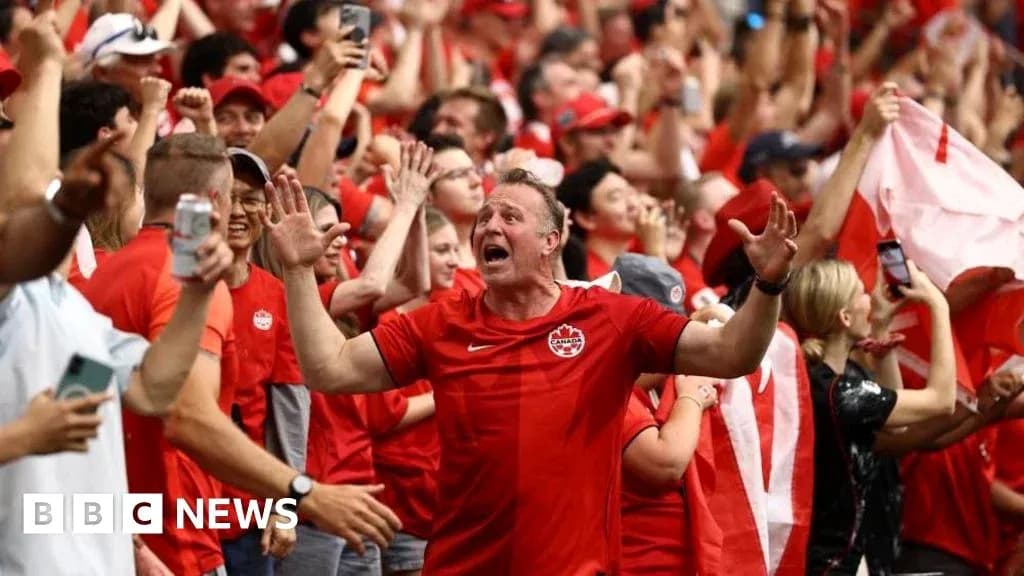
By kick-off, the city had already turned itself into a postcard. The “last mile” to the stadium ran through a tunnel of red smoke, drums, and flags. Fifty-two thousand fans packed inside, most of them in some version of the same colours, a sea of red and white that felt more like a hockey playoff night than a group-stage fixture.
This was Canada’s first match of the tournament on home soil in Vancouver. It sounded like it. It looked like it. It felt like a country trying on a new sporting identity and realising, quickly, that it fit.
Across Canada, the soundtrack matched the stadium. Granville Street in downtown Vancouver filled with watch parties. In Toronto, small neighbourhood bars turned into little pockets of belief. In one of them sat Dave Di Cola, a long-time believer in Canadian football, watching with dozens of others as the team he had followed for years suddenly looked like it belonged on the biggest stage.
He went into the night with what he called “reserved optimism”. Anything can happen in football. Canada fans know that better than most.
What followed blew past optimism and straight into history.
Goals, cards, and a rout
The match tipped early, and it never came back. Canada struck three times before half-time, ripping through a Qatari side that unravelled under the pressure and finished the game with nine men after two red cards.
By the end, it was a blowout. The kind of scoreline that usually happens to Canada, not for Canada.
Jonathan David owned the night on the scoreboard, scoring three of the six goals and earning an improvised tribute from the stands. One photo that raced around social media captured the mood perfectly: a fan in a Connor McDavid ice hockey jersey, the “Mc” taped over with a homemade “J” to read “Javid” in honour of the hat-trick hero. A hockey nation, literally rewriting its favourite jersey for its football star.
For supporters like Di Cola, this was not just a good night. It was vindication.
“Canada soccer has always been kind of a joke. It’s always secondary,” he said. Watching the team dominate, hearing the roar inside the stadium and seeing the reaction across the country, “nearly brought a tear” to his eye.
Les Rouges, so often dismissed, suddenly looked like a serious threat in this tournament. The badge carried weight. The shirt meant something.
Joy, shock, and a broken heart
The mood flipped in an instant.
Koné, the Ottawa-born midfielder who had become a central piece of Jesse Marsch’s system, went down in obvious distress. The stadium noise drained away. His team-mates rushed to him as medics sprinted on. This was not a knock or a cramp. This was the kind of injury players fear and fans dread.
Koné’s leg was broken. His World Cup was over.
Marsch had called him “a big part of the heart of our team.” That heart had just taken a direct hit.
The response on the pitch said everything about what Koné means in that dressing room. Nathan Saliba came on in his place and, not long after, smashed in Canada’s fourth goal. He did not celebrate for himself. He held up Koné’s jersey in tribute, a simple, powerful gesture that cut through the scoreline.
The rout continued, but the celebrations never felt quite the same. Even Di Cola, riding the wave of a historic win, admitted the injury changed everything. “If that didn’t happen, I would have been running up and down the avenue yesterday,” he said.
Instead, the night became something more complicated: joy wrapped around genuine concern for a player who had become symbolic of this new Canada.
On Friday morning, after surgery, Koné spoke for himself on Instagram: “What you guys did yesterday will stay with me forever.” The team had given him a performance to cling to. He had given them a cause.
A country takes notice
Inside the locker room, the significance of the moment was not lost on anyone. Prime Minister Mark Carney addressed the squad after the match, praising the way they had responded to the shock of Koné’s injury.
He told them they had shown “a level of character that some people never achieve,” and that they had done it with “the entire country and a good part of the world” watching – or ready to watch the highlights the next day.
Canada’s sporting history is not short on iconic scenes. Sidney Crosby’s golden goal in Vancouver in 2010. The Toronto Raptors toppling the Golden State Warriors in 2019. The women’s football team winning Olympic gold in Tokyo in 2020.
Thursday night does not sit on that top shelf yet. Di Cola is the first to say it. This was a group-stage win against Qatar, not a final, not a medal, not a championship.
But it felt like a starting gun.
For decades, men’s football has trailed behind in the national hierarchy, overshadowed by hockey and, more recently, by the women’s team’s success. It has been mocked, ignored, or treated as a niche interest. On this night, in this stadium, with this scoreline, that perception shifted.
The country did not just tune in. It cared.
Switzerland next, and a new standard
The danger now would be to treat one big win as a destination. Inside the camp, that will not fly. Di Cola knows it too. Canada, he insists, still has “a long way to go.”
He is right. A single result, even a 6–0 World Cup win, does not erase years of underachievement or guarantee what comes next.
What it does is change the starting point.
Canada will face Switzerland with something it has rarely carried into a major tournament fixture: momentum and expectation. The bar has moved. The crowd will demand more than effort and plucky near-misses. They have seen this team dominate. They have seen them respond to adversity in real time.
Koné will not be there. His absence will hurt tactically and emotionally. But the standard he helped set – in the press, in possession, in the way this team carries itself – will travel with them.
Canada has been waiting a long time to call itself a soccer nation without irony. After a 6–0 World Cup win, a sold-out stadium in full voice, and a team that showed both flair and resilience, the question is no longer whether the country is ready for that label.
It is whether this group can keep playing in a way that makes it impossible to take it back.