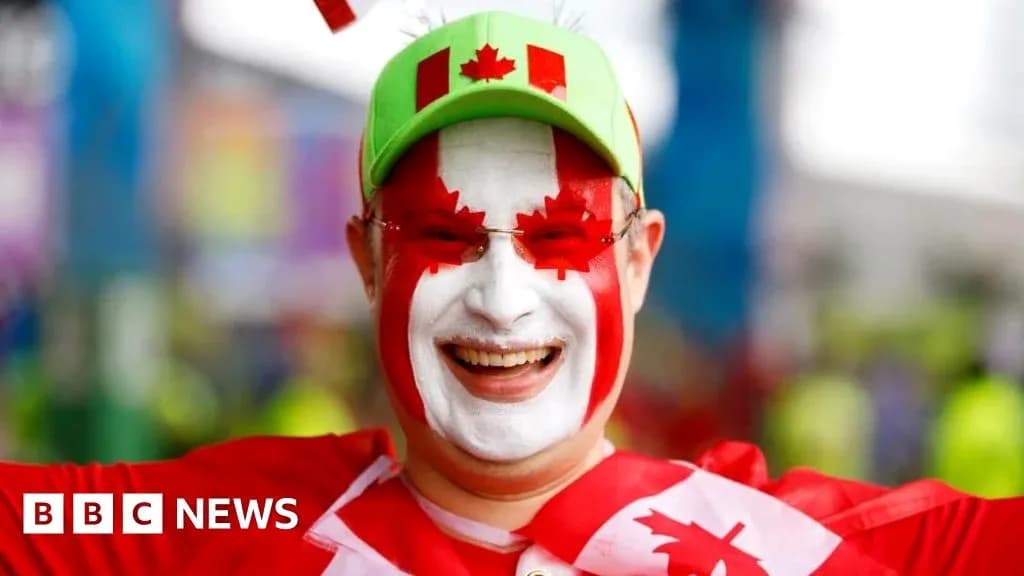
Canada’s Unforgettable World Cup Journey
Canada spent much of this World Cup tucked in the shadows, labelled by some as the “forgotten host” in a tournament dominated by the United States’ scale and Mexico’s colour. On the pitch, that tag didn’t survive July.
Jesse Marsch’s side tore it up.
Brash, unapologetic and relentless, Canada’s men fought their way into the round of 16 – the furthest the country has ever gone – before bowing out to Morocco. Along the way they ticked off milestone after milestone: first World Cup point, first win, first knockout victory. A nation that has long treated men’s football as background noise suddenly had a team it could not ignore.
“They shocked everyone,” fan Matt Lorincz said in Calgary, capturing the mood of a country that had not dared to dream this big.
A Hockey Country Turns Its Head
Football – or soccer – is technically Canada’s most-played sport. Kids grow up with a ball at their feet across suburbs and schoolyards. But in the national imagination, the game has always sat behind ice hockey’s mythology and the pull of big-league baseball and basketball.
This tournament cracked that hierarchy.
“Most people you talk to watch, like, hockey or other sports, right?” Lorincz said. “There’s not a lot of – or as many – soccer fans in Canada. So hopefully there may be a few more of those.”
For a few weeks in June and July, the country lived as a football nation. Toronto’s downtown streets pulsed with noise as matches blared out of packed bars, supporters wrapped in flags marched to Toronto Stadium, and the city’s usual summer soundtrack gave way to drums, horns and chants in a dozen languages.
On the west coast, Vancouver had its own moment of ignition. Canada crushed Qatar 6-0 in a ruthless display that felt like a statement of intent. The only sour note came when star midfielder Ismaël Koné was stretchered off with a broken leg after a heavy challenge, a brutal reminder of the cost of this stage.
The World Cup finally signed off in Vancouver with Switzerland’s round-of-16 win over Colombia. The football moved on. The imprint on the city will linger.
Carney Leans In as the World Watches
If Canada sometimes seemed overlooked in the three-nation hosting arrangement, its prime minister made sure his country’s presence was impossible to miss.
Mark Carney, a self-confessed sports obsessive with a jersey for every occasion, has so far been the only leader among the three hosts to attend stadium matches. He treated the World Cup as a chance to project Canada’s image with the world’s cameras trained on it.
After that 6-0 demolition of Qatar, Carney stepped into the dressing room in Vancouver and delivered the kind of speech players remember.
“You showed a level of character that some people never achieve in their life,” he told them. “And you showed it when a good part of the country and the world is watching.”
Sports minister Adam van Koeverden framed the tournament as part of a broader national coming-of-age.
Canada, he said, had been “growing up a little bit as a middle power”, and hosting “the biggest event of the year” had been a privilege the country “has not taken lightly”.
The original bid sold a romantic idea: one continent, three countries, a united World Cup. John Kristick, now with Playfly Sports Consulting and formerly executive director of the United Bid Committee, believes the reality has drifted from that vision.
He feels Canada and Mexico have struggled to cut through as hosts, with the United States inevitably grabbing more of the limelight through sheer volume of games and the high-octane politics of the Trump era.
Even so, he is in no doubt about how it has landed at home.
“Every Canadian knows Canada is hosting it,” Kristick said, “and I think there’s been a great deal of national pride.”
Between Toronto and Vancouver, Canada staged 13 of the tournament’s 104 matches. It did not feel like a footnote to those who filled those stands.
Packed Bars, Full Hotels – and a Big Bill
In British Columbia, the World Cup was felt in the tills as much as on the streets. Ian Tostenson, who heads the British Columbia Restaurant and Foodservices Association, called life in a host city a crash course in “the enormity of the World Cup”.
The numbers backed it up. Alcohol sales climbed roughly 5% on last year, he said. More important was the mood.
“It raised the spirits of the entire province,” Tostenson told the BBC. “I think the whole conversation [for the] last four weeks had been about soccer.”
Canada may be wrestling with economic headwinds, but the tournament offered a sharp lesson in what happens when you give people a reason to go out and spend.
There is, however, a bill to reckon with. The decision to co-host has triggered fierce debate over cost and value. Taxpayers shelled out an estimated C$1.1bn to get Canada World Cup ready, with Toronto alone responsible for around C$380m.
For City Councillor Josh Matlow, that equation never added up.
“I don’t think that hosting the games made the city’s situation any better,” he said, pointing to already stretched municipal finances.
Van Koeverden pushed back, calling the spending “prudent” and insisting the money flowed back into the wider economy.
“Full stadiums, full parks, full restaurants, and full hotels is a nice problem to have in 2026,” he said.
The ‘Forgotten’ Host Leaves a Mark
On the ground, visitors found little forgettable about Canada’s role.
Portugal manager Roberto Martinez praised Toronto’s stadium, the smallest of the World Cup venues and bulked up with temporary seating, saying it reminded him of “old-fashioned Premier League grounds”. After Portugal’s win over Croatia, he called the overall spectacle “an incredible spectacle for football”.
From the stands, the impression was similar. Norwegian fan Gudmund Agotnes, in town for three matches, felt fortune had smiled on his group.
“We were lucky with the draw,” he said, describing the experience as “pretty cool”, especially the “bird’s eye view” that took in both the pitch and Toronto’s skyline in one sweep.
The “forgotten host” tag never made much sense to those who queued at security, sang through the anthems and spilled out into the Canadian night.
Record Eyes on Les Rouges
If the streets told one story, the screens told another. Canadian audiences turned up in record numbers for the men’s national team.
Bell Media, the host broadcaster, reported that viewership for the round-of-16 clash with Morocco on 4 July peaked at 11.7 million unique viewers – the biggest non-final World Cup figure ever recorded in Canada.
For context, 9.8 million people tuned into the opening of the NHL season last October. In a hockey country, the football team briefly stole the national spotlight.
Across the round-of-32, World Cup matches drew an average Canadian audience of 1.9 million. Hockey Night in Canada, the weekly institution built around NHL action, averages around 1.2 million per broadcast.
In the stands, in bars, in living rooms, Les Rouges were no longer a niche interest. They were appointment viewing.
Fifa, for its part, said more than a million fans attended the opening 16 games across the three host nations and projected that the expanded tournament would surpass the all-time attendance mark of 3.5 million set in 1994. With more matches on the schedule this time, those numbers were always likely, but they still underline the scale of the event Canada helped carry.
A Football Nation in Waiting
Canada is not starting from scratch. The country has long had a deep recreational football culture and two established clubs in Major League Soccer: the Vancouver Whitecaps, founded in 1973, and Toronto FC, launched 32 years later.
The missing piece has been consistent elite performance, particularly on the men’s side. While the women’s national team sits ninth in the Fifa rankings and has built a reputation as a global force, the men have often struggled to turn grassroots enthusiasm into results.
This World Cup run has started to change that equation.
Canada Soccer, the sport’s governing body, launched a major fundraiser ahead of the tournament and hit its C$25m target months ahead of schedule, a clear sign that corporate backers and fans alike see momentum worth investing in.
For supporters, the numbers matter less than the feeling. In Calgary, as Canada battled Morocco, Zeileen Reardon watched from a bar and tried to put it into words.
“It brought a lot of people together in a very kind of segregated world that we’re living in,” she said. “So, I think it actually showed the world that we can come together, even for a game.”
That is the power the men’s team has tapped into at last: a shared experience in a country that often defines itself by distance.
Canada may not have dominated the hosting headlines. It did something more important. It put a men’s national team on the map, lit up its cities, and left millions asking the same question as the final whistle faded in Vancouver:
What comes next for Les Rouges?