Canelo Álvarez Regains WBC Title in Riyadh
In a city living under the thud of intercepted missiles and the glare of global scrutiny, Saúl “Canelo” Álvarez stepped through the ropes and reclaimed a piece of himself.
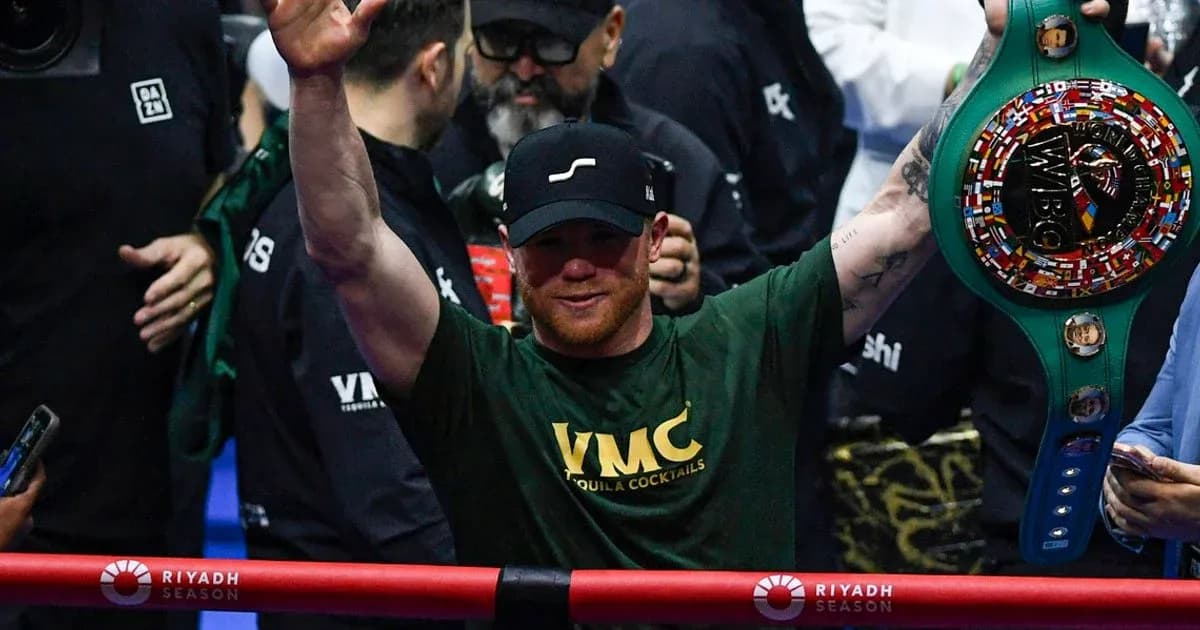
At Kingdom Arena in Riyadh on Saturday night, the 36-year-old Mexican outboxed and outlasted the previously unbeaten Christian Mbilli to regain the WBC super-middleweight title by unanimous decision. The scorecards – 115-112, 116-111 and 117-110 – told the story of control, not chaos. So did the man in the middle of the ring.
“It feels like my first title,” Álvarez said, the emotion cutting through as clearly as his right hand. Twenty-one years as a professional. Sixteen since his first belt. And yet this one, after everything, clearly mattered.
A fight that refused to move
The bout went ahead in a city on edge. In the weeks leading up to fight night, the Saudi-led coalition said it had intercepted missiles and drones fired by Iran-aligned Houthi forces. A missile strike on King Khalid International Airport killed at least 12 people and injured more than 300. Another projectile hit a passenger terminal the following day. Airlines pulled flights. Events were cancelled or pushed back, including the much-hyped Six Kings Slam tennis exhibition.
This one stayed.
Turki al-Sheikh, the powerful chairman of Saudi Arabia’s General Entertainment Authority and the architect of the kingdom’s boxing boom, had already made it clear why. Álvarez, he said, had personally promised to fight in Riyadh “no matter what happens”. “He fears nothing,” Al‑Sheikh wrote.
In that context, the walk to the ring felt heavier. Álvarez’s family, usually a constant presence at his biggest nights, stayed away. After the final bell he slipped in a pointed, if veiled, nod to the backdrop.
“I also want to thank my family, who are watching me from afar today for the first time,” he said in Spanish. “My siblings, my parents, my daughters, my son, and my wife – who also couldn’t make it due to certain circumstances.”
He left those circumstances hanging. He didn’t need to spell them out.
Old Canelo, old weapons
If the setting was new, the performance was unmistakably vintage.
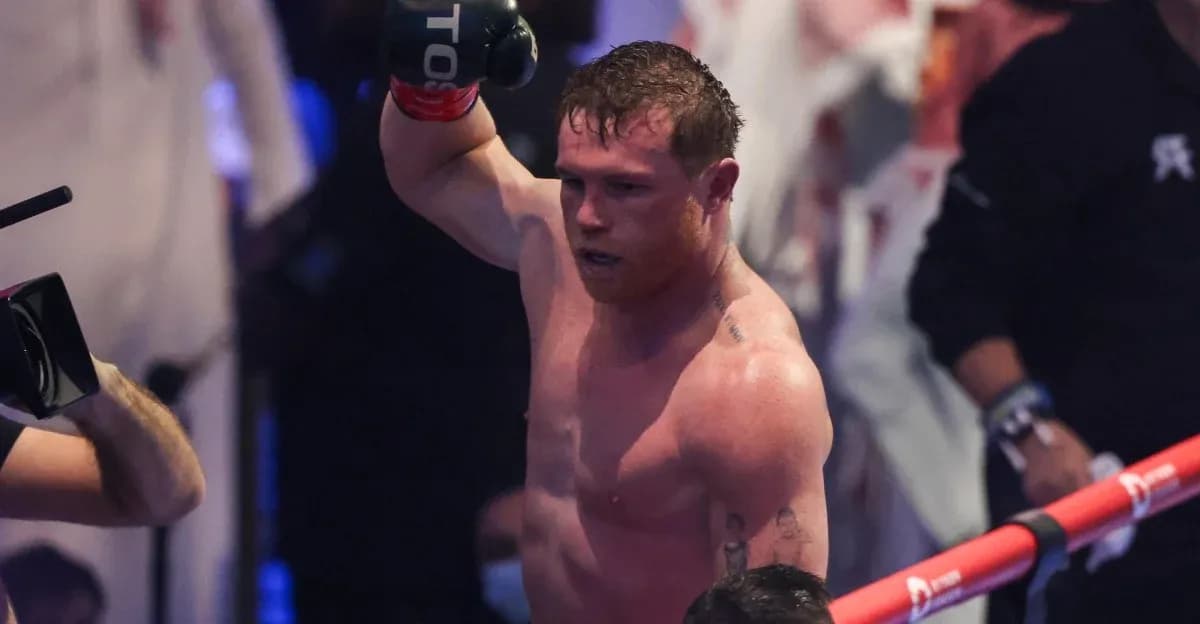
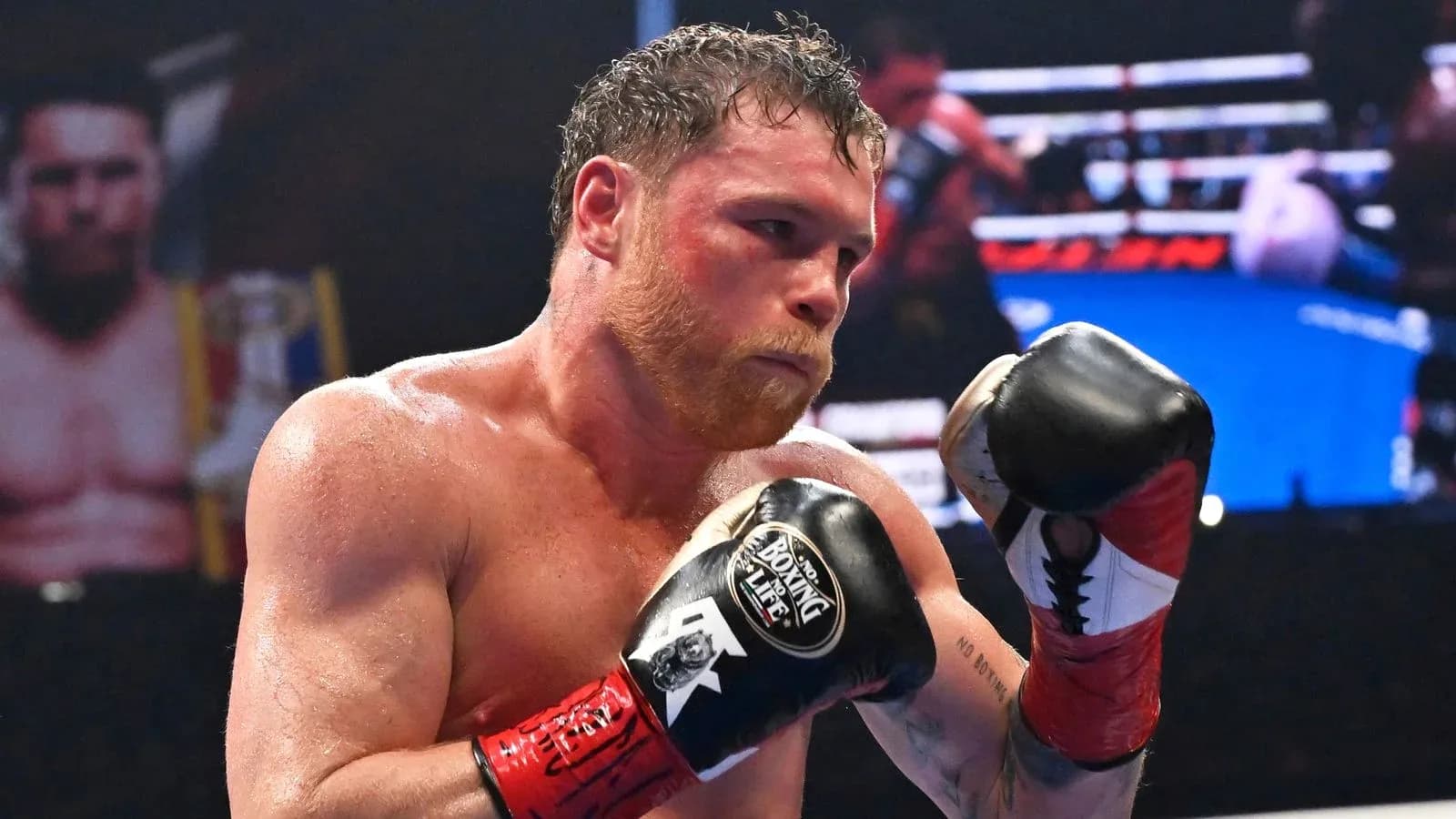
Fighting for the first time in more than a year, Álvarez leaned on the tools that built his legend: razor-sharp counter-punching, a granite chin and those cruel, accurate body shots that slowly drain the ambition out of opponents.
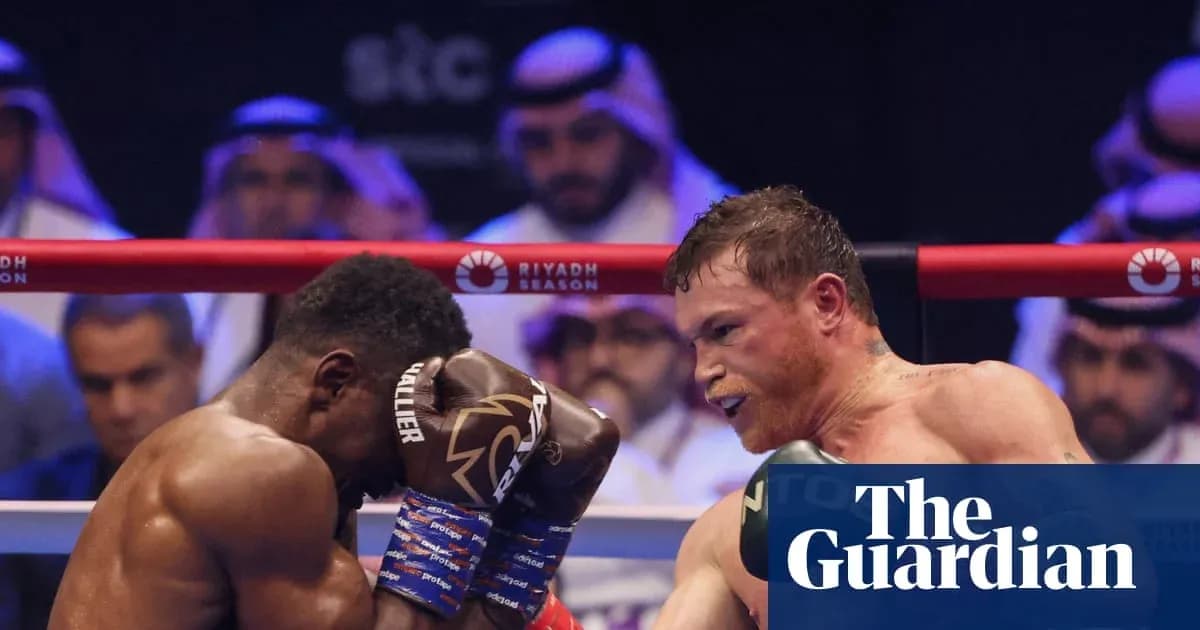
Mbilli came to Riyadh with an unbeaten record – 29 wins and one draw – and the full WBC title he had inherited after Terence Crawford vacated the division. The Cameroon-born Frenchman promised pressure and delivered it, marching forward behind a high guard, throwing in volume, trying to drown the older man under sheer activity.
The problem? Activity is not the same as effectiveness.
Álvarez read him early. He slipped, rolled, waited for the gaps and then punished them. Hooks under the elbows. Jabs that snapped the head back. Sudden counters that reminded Mbilli he was sharing a ring with one of the sport’s great finishers, even if the knockout never came.
The turning point arrived in the seventh. As Mbilli pressed, Canelo detonated a sharp uppercut that staggered the champion and briefly froze the crowd. Mbilli stayed on his feet, but the illusion that his pressure would eventually break Álvarez evaporated in that instant. From then on, the Mexican dictated when and how the exchanges took place.
The Guardian’s card read 117-110. The official judges were not far off.
A comeback with scars
This win does not come in isolation. It comes after a fall.
In September 2025, Álvarez suffered only the third defeat of his professional career when Terence Crawford outpointed him by unanimous decision, stripping him of his undisputed super-middleweight crown and all four major belts in the division. For a fighter who had spent years as boxing’s commercial and competitive axis, that loss cut deep.
Questions followed. Had the miles finally caught up? Had the reflexes dulled? Was this the start of the slow fade that even the greatest cannot outrun?
Riyadh did not erase Crawford. It did something different. It showed that Álvarez still belongs in the conversation at the very top of 168lbs, that the instincts and timing that made him a generational talent remain intact, even if the explosive finishing of his twenties has given way to something more measured, more ruthless in its own way.
He spoke about love, not legacy.
“I love boxing. That’s why I’m here, because I still love boxing and I enjoy it a lot,” he said. After 64 wins, three defeats and two draws, that sounded less like a slogan and more like a confession.
Mbilli’s first step back
For Mbilli, 31, this was a brutal education in what separates a very good champion from a future Hall of Famer.
Elevated from interim to full WBC champion after Crawford’s exit, he arrived in Saudi Arabia with momentum despite a recent blemish – a split draw with Lester Martínez on the Álvarez‑Crawford undercard that halted his run of 29 straight wins. Here, he showed heart and ambition. He refused to fold when the shots grew heavier and the counters sharper. He kept trying to press, to make something happen.
But the clean, telling work came from Álvarez. The Mexican’s punches landed with more authority, his defence proved tighter, his judgment of distance superior. When the final bell rang, Mbilli had the first loss of his professional career and a clear view of the level he must reach if he wants to stay in this company.
Saudi stakes and boxing’s crossroads
All of this played out under the wider story of where boxing now lives.
Saudi Arabia has muscled its way into the sport’s centre, using vast resources to lure its biggest names and most marketable events. Under Al-Sheikh’s guidance, Riyadh has become a second home for super-fights, even as the kingdom’s expanding sporting portfolio faces intense criticism over human rights and accusations of sportswashing.
The recent escalation in attacks threatened that project. Missiles, grounded flights, global unease – hardly the backdrop any promoter dreams of. Yet Álvarez’s presence, his insistence on fighting regardless, handed Saudi Arabia a symbolic win as much as a sporting one. The show went on, and its main attraction delivered.
The question now shifts from whether Canelo Álvarez is finished to something more intriguing: with his old belt back on his shoulder and his aura refreshed in the most volatile of arenas, how much more history does he intend to write at 168 pounds?