Carrick Responds to 'On the Beach' Jibes After United's Draw at Sunderland
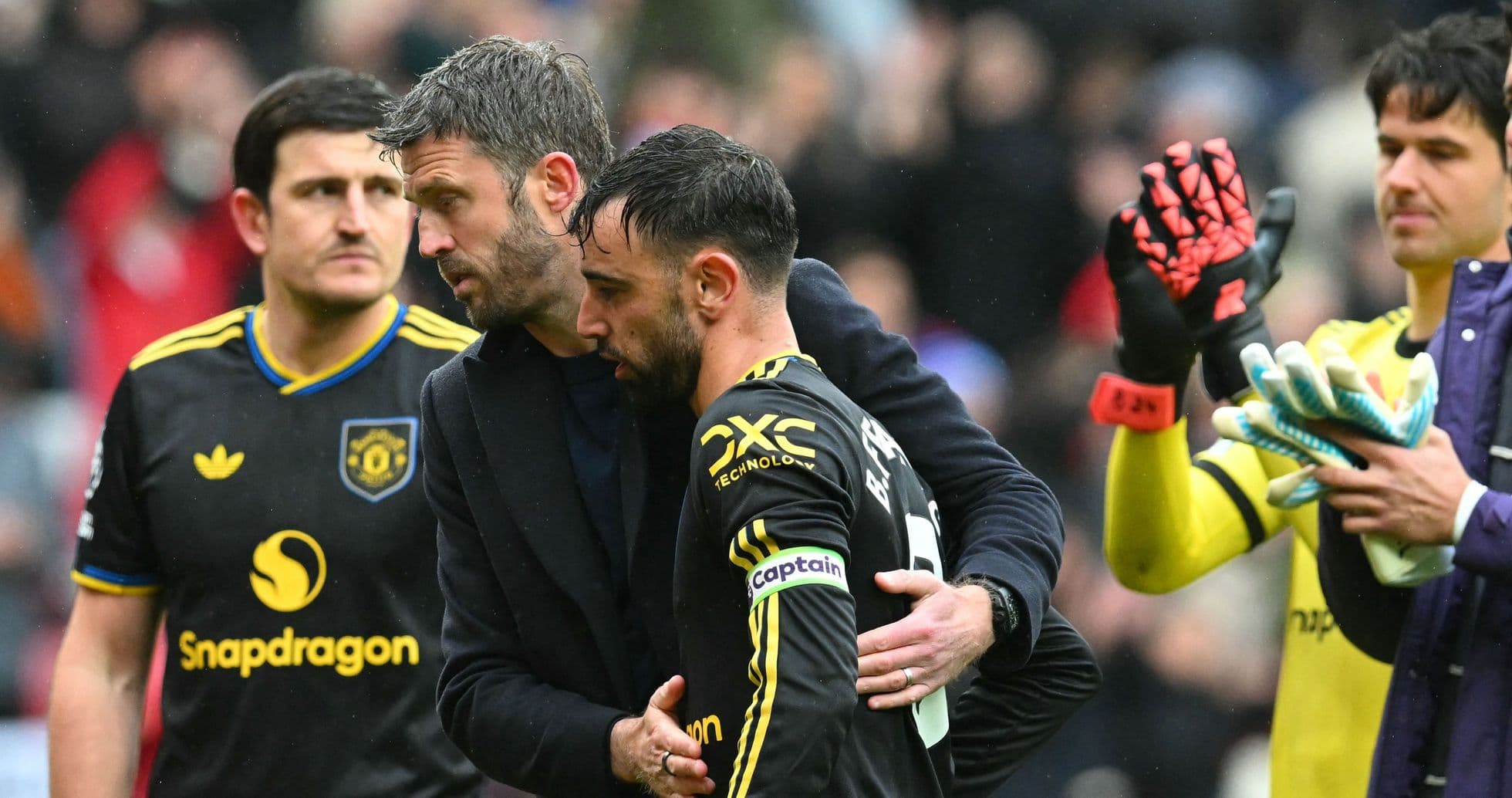
Michael Carrick did not try to sugar-coat the performance. United were second best for long stretches at the Stadium of Light, clinging to a point and leaning heavily on goalkeeper Senne Lammens. But the moment the suggestion came that his players had “gone to the beach” after securing Champions League football, the United manager’s tone hardened.
This was not a man prepared to let the narrative drift.
United’s high-wire win over Liverpool last weekend sealed a top-four finish and, with it, the primary objective of their season. What followed on Wearside looked nothing like the high-intensity, front-foot football that carried them there. Sunderland snapped into challenges, moved the ball with purpose and, for long spells, pinned United back.
Lammens became the away side’s most important outfield player in everything but name. He stood between Sunderland and a statement victory, as United struggled to impose themselves.
Carrick, though, refused to accept that this was a team easing off after a job well done.
He spoke of preparation, of attitude, of a dressing room that had not allowed itself to drift after the Liverpool high. The draw, in his eyes, was not evidence of complacency but of resilience — a team grinding through a bad day and still finding something to take home.
“I almost get offended by that,” he said of the accusation that his players had checked out.
For Carrick, the way they approached the game, the way they left the changing room, mattered as much as the limp attacking display that followed. Sunderland, he acknowledged, “played really well at certain points” and forced United into uncomfortable territory. In that context, he argued, an unfocused side would have lost.
The club’s stature sat at the heart of his defence. Carrick leaned on the weight of the badge, the history that he believes will not allow a player to coast, no matter what the league table says. Pride, responsibility, the obligation that comes with wearing United colours — he pushed all of it to the fore.
That, he insisted, is the constant. Performances will rise and fall, but motivation cannot be the culprit.
He accepted the obvious: United were blunt. Matheus Cunha’s effort in the 93rd minute, saved by Robin Roefs, was their only real moment of attacking incision. For a side that had just outgunned Liverpool, the contrast was stark. This was a heavily rotated XI, short on rhythm, short on fluency and often short of ideas.
Carrick chose to see something else. A clean sheet. A point banked. A team that, even when outplayed, “had to dig deep” and did just enough to avoid defeat. He framed it as a trait in development, a layer of character being added to a squad still learning how to manage the grind of a long campaign.
He acknowledged the disruption of changes and the difficulty of finding a flow, but he clung to the positives: defensive discipline, collective effort, a platform from which, he believes, they can play better in the coming weeks.
It was not a performance to stir the blood. It was not one that will live long in the memory of those who travelled north. But in Carrick’s mind, it was not a warning sign of a team switching off after reaching its target.
The question now is simple: with Champions League football secured and pride so fiercely defended, will United’s final games prove him right?