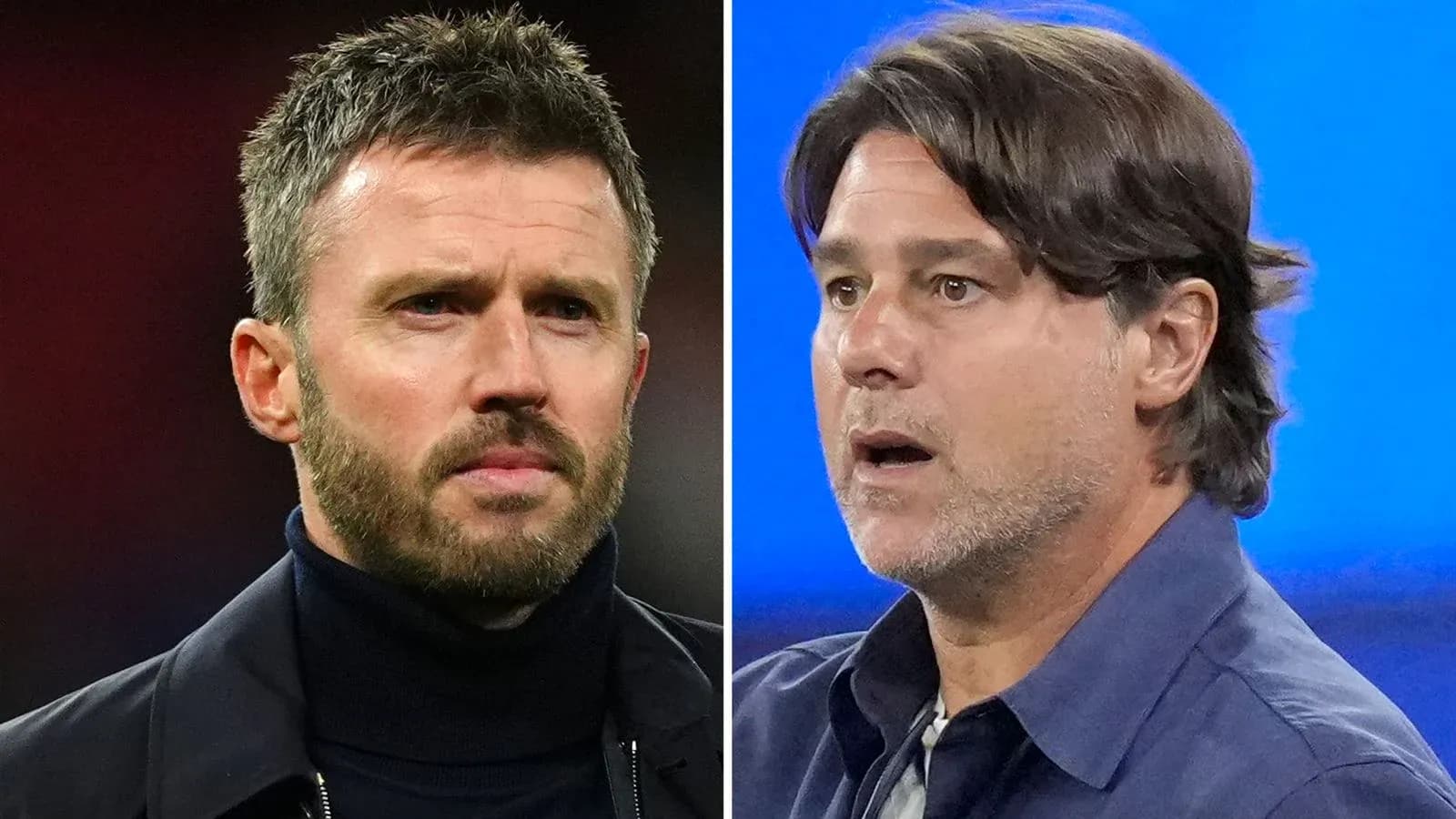
Michael Carrick's Future at Manchester United: Pochettino on Standby
Michael Carrick’s grip on the Manchester United job is loosening by the week, and the club’s powerbrokers know it.
Mauricio Pochettino, currently in charge of the USA national team, is understood to be open to talking if United come calling. The buyout figure to prise him away from his contract is thought to be around £7m – not insignificant, but hardly prohibitive for a club of United’s scale.
Ratcliffe summit looms over Carrick’s future
The next significant move will not come in the dugout but in Monaco. CEO Omar Berrada and director of football Jason Wilcox are scheduled to meet minority owner Sir Jim Ratcliffe on Wednesday, armed with the findings of their season review and their recommendations on Carrick’s future.
For now, Sky Sports News is being told there is no final decision. That feels like a technicality. One win in 11, 30 goals conceded in all competitions – the worst defensive record in Europe’s top five leagues – and the club’s worst-ever start to a Premier League season have turned this into a slow, public inquest.
Carrick reported to the training ground on Tuesday as normal, walking into a club that is reviewing almost everything he oversees. Wilcox is leading a full assessment of the campaign so far, and the international break has given the hierarchy rare breathing space to step back and judge the bigger picture.
Reprieve running out
Carrick survived a major flashpoint a fortnight ago. After a 3-0 home humiliation by Bournemouth, he was effectively handed a stay of execution: three games to change the narrative, three games to show the slide could be halted.
The numbers since then have not helped him. United are now eight Premier League matches without a win. Even the late rally to snatch a point against Villa on Sunday, and the dramatic Champions League comeback win over Roma before that, have been framed as chaos rather than character.
The comebacks have kept the mood from collapsing completely. They have not changed the direction of travel.
Inside the club, there are genuine doubts over whether Carrick will still be in the dugout when United head to Anfield to face Liverpool the weekend after next. That fixture is starting to feel like a deadline.
Pochettino waits, but no rush to pull the trigger
Pochettino’s name is back on the Old Trafford agenda, as it has been so many times before. United have held talks with him on at least two previous occasions about the manager’s job. Now, with the former Argentina defender having just extended his USA deal to 2030 and preparing for a Nations League quarter-final against Haiti, the question is whether United are ready to move decisively.
So far, they are not. There have been no substantive talks with any candidate, despite the availability of high-profile, out-of-work coaches such as Julian Nagelsmann and Eddie Howe, both believed to be open to discussions if United make a change.
The board is adamant about one thing: if Carrick goes, they want to avoid another interim. They want clarity, a clean line from one permanent regime to the next. That, more than sentiment, is one reason for the delay.
Why Carrick is still in a job
Three factors, in particular, have kept Carrick in post longer than the league table and the goal difference might suggest.
- First, the stands. Old Trafford is not turning on him. There are no mass chants for his dismissal, no poisonous atmosphere. Carrick’s playing legacy – 11 major trophies, including the Champions League and five Premier League titles – has bought him a level of affection that most modern managers can only dream of. United’s hierarchy knows the usual fan-driven pressure to sack the boss simply isn’t there.
- Second, the dressing room. The feeling in the boardroom is that the players have not checked out on Carrick. The team’s disorder has been obvious, but so has their refusal to fold. The late surge to beat Roma in Europe and the fightback to draw with Villa suggest a squad still willing to run for its manager, not one that has “downed tools”.
- Third, doubt at the top. There is a lingering belief that changing the head coach alone will not cure United’s ills. If the club’s leadership were convinced a new manager would instantly fix the slide, Carrick would likely already be gone and a candidate like Nagelsmann or Howe would be walking through the door.
Instead, they are using the international break to take a wider view. Results must improve – that message has been made clear – but there is caution about mistaking a symptom for the disease.
Over-achievement, under-achievement and a club at a crossroads
Inside United, there is an acknowledgement that Carrick over-achieved last season. A third-place finish and a return to the Champions League, given the squad’s flaws, bought him both credit and time.
That credit is almost spent. The same decision-makers now believe this group of players has badly under-achieved this season. The scale of the regression has stunned them. The defensive record has horrified them.
Carrick and his staff returned to Carrington on Tuesday after a scheduled day off for the players. With most of the squad away on international duty and no first-team sessions planned for several days, the manager finds himself in a strange limbo: working, planning, waiting.
Ownership shadow and a harsher warning
Over all of this hangs the ownership question. As Sky Sports News chief reporter Kaveh Solhekol put it, the issue at United runs deeper than the man in the technical area.
He argues that the club must “become Manchester United again” – a club that competes for titles and European Cups, not one drifting away from the game’s elite. In his view, it “doesn’t matter who’s in charge” while the current ownership structure remains. Change the manager, and you risk simply “papering over the cracks”.
Once, United measured themselves against Barcelona and Real Madrid. Solhekol warns that if this drift continues, the club will be rubbing shoulders with Lincoln and QPR instead. Many supporters, he suggests, now believe that unless the owners change, nothing truly will.
For Carrick, that is the cruellest irony. He may pay with his job for a decline that predates him, and may outlast whoever comes next.