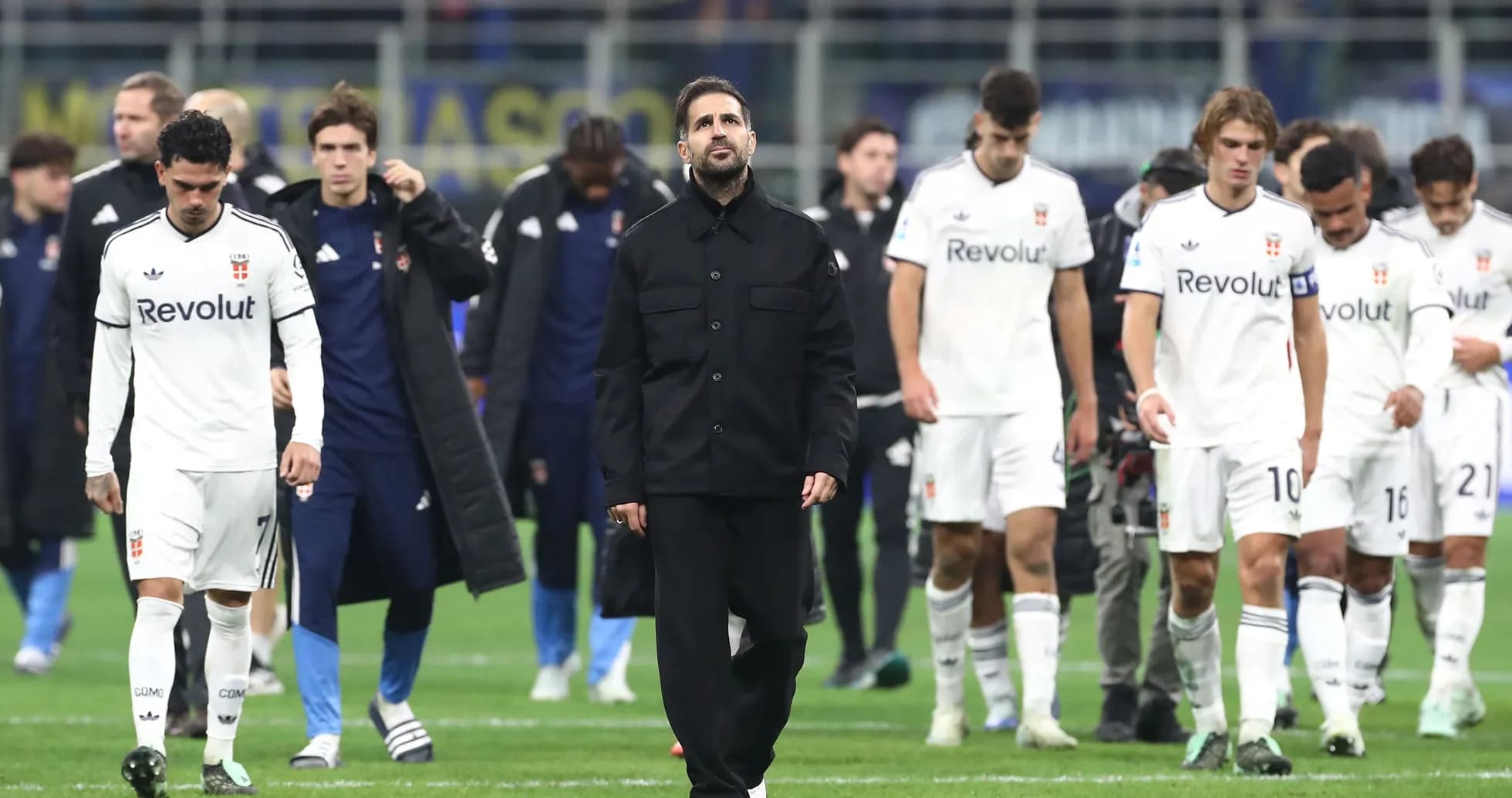
Cesc Fàbregas Transforms Como into a Footballing Powerhouse
Cesc Fàbregas is quietly building something serious on the shores of Lake Como.
The World Cup winner arrived as a headline name, a glamorous figure at an ambitious club. He has quickly become something far more valuable: a catalyst. Under his watch, Como are not just climbing the Italian ladder; they are manufacturing internationals.
Two of them, Jacobo Ramon and Mattia Liberali, are the latest proof.
From Madrid to the lake: Ramon finds his stage
Jacobo Ramon did what many hesitate to do. He walked away from Real Madrid.
He left the comfort, the prestige, the badge that intimidates most young players into staying put. He chose minutes over mythology, development over décor, and found himself in Lombardy, placing his future in the hands of a rookie head coach with a legendary playing career.
It took Fàbregas no time to win him over.
Ramon has spoken openly about that shift. The centre-back, now a Spain international, underlined how quickly Fàbregas’ ideas took root in a dressing room full of differing ages, backgrounds, and ambitions. The message was sharp, the roles clear, the football modern.
“Cesc trusted me after I left Madrid, explained everything to me, and his philosophy fits perfectly with my style. And I'm incredibly grateful,” he told AS, distilling in one sentence the leap of faith that changed his trajectory.
Trust, though, is only part of it. Communication is the real weapon.
Ramon highlighted the way Fàbregas talks to his players, how he sells a plan and keeps everyone invested – starters, squad players, even those on the fringes. It is not easy to convince a full group that their moment will come, that their importance is real. At Como, that buy-in is visible in the way they defend, in the way they press, in the way even a young centre-back steps out with authority.
Physically, Ramon has been rebuilt as well. Under the demands of Italian football and Fàbregas’ staff, he has added six kilos of muscle, toughening his frame without losing his eye for goal from the back. The reward arrived in the most coveted form: his first senior call-up to Spain under Luis de la Fuente.
From Castilla hopeful to La Roja defender, via Lake Como. That route did not exist a few years ago. It does now.
Liberali’s leap: from Serie B to the Champions League spotlight
If Ramon’s story is about calculated risk, Mattia Liberali’s is about acceleration.
The Italian midfielder had already sampled the grind of Serie B on loan in Calabria, learning the realities of professional football away from the limelight. Then came the jump that tests even seasoned players: Serie A and the UEFA Champions League, with all the speed, intensity, and scrutiny that follow.
That transition can swallow young talents. Under Fàbregas, Liberali has surfed it.
“It wasn't easy to go from Serie B to the intensity of Serie A and the Champions League,” he admitted. The difference in rhythm, in tactical detail, in expectation is brutal. Yet he speaks now from a place of momentum, not struggle. “Fàbregas is helping me a lot and giving me a lot of confidence. It's going really well with him and also with the fantastic group. So much has happened in a short time, for me it's been a wonderful week, the best of my life.”
That “wonderful week” had a defining image: Liberali, in Como colours, scoring his first Champions League goal in an emphatic win over Lens. A teenager, on one of Europe’s biggest stages, delivering in a way that makes national team coaches sit up.
Roberto Mancini did more than take note. He called him up.
From Champions League breakthrough to senior Italy selection in a matter of days – that is not a normal development curve. It is the mark of a player operating in the right environment, under a coach who understands the pressures of elite football because he has lived every one of them.
Como’s global footprint grows
What is happening at Como is no longer a local curiosity. The international break has exposed the scale of the project.
Up to twelve players from the club are away with their national teams, a staggering number for a side still carving out its place among Italy’s established powers. It is not just the volume that stands out, but the profile.
Liberali’s first Italy call-up is joined by another landmark: 2009-born midfielder Riccardo Cassano stepping into the senior Azzurri setup for the first time. A 15-year-old in that company underlines the level of trust being placed in Como’s work with youth.
On the French side, captain Lucas Da Cunha is back in the “Blues” shirt after earning his maiden call-up last month, now preparing for fixtures against Italy and Turkey. His rise mirrors the broader pattern: players arriving at Como and leaving as internationals.
Liberali will look to carry his club form into Italy’s UEFA Nations League tests against France and Belgium, two fixtures that will measure not just his readiness, but the depth of the country’s next generation. Ramon, meanwhile, steps into the Spain camp as a defender shaped in Madrid’s academy but sharpened in Fàbregas’ laboratory.
Both players, by their own admission, feel older than their passport suggests. Working every day under a coach they describe as a tactical maestro has accelerated their footballing age by years. Sessions are not just drills; they are tutorials in how to think the game.
Fàbregas the architect
Strip away the romance of the lake and the famous name on the bench, and the core of Como’s surge is clear: structure, clarity, and ambition.
Fàbregas has taken the vision that defined him as a player – the angles, the timing, the insistence on the ball – and translated it into a framework that young footballers can understand and execute. He speaks their language, but demands their maturity.
Ramon’s added muscle, Liberali’s sudden composure in the Champions League, Cassano’s precocious promotion, Da Cunha’s international recognition – they are all strands of the same story. Como are no longer just a romantic project with a star coach. They are a serious production line.
The question now is not whether this rise is real. It is how far Fàbregas and his young core can push it, and how long Como can keep hold of the very players his methods are turning into the next generation of European internationals.