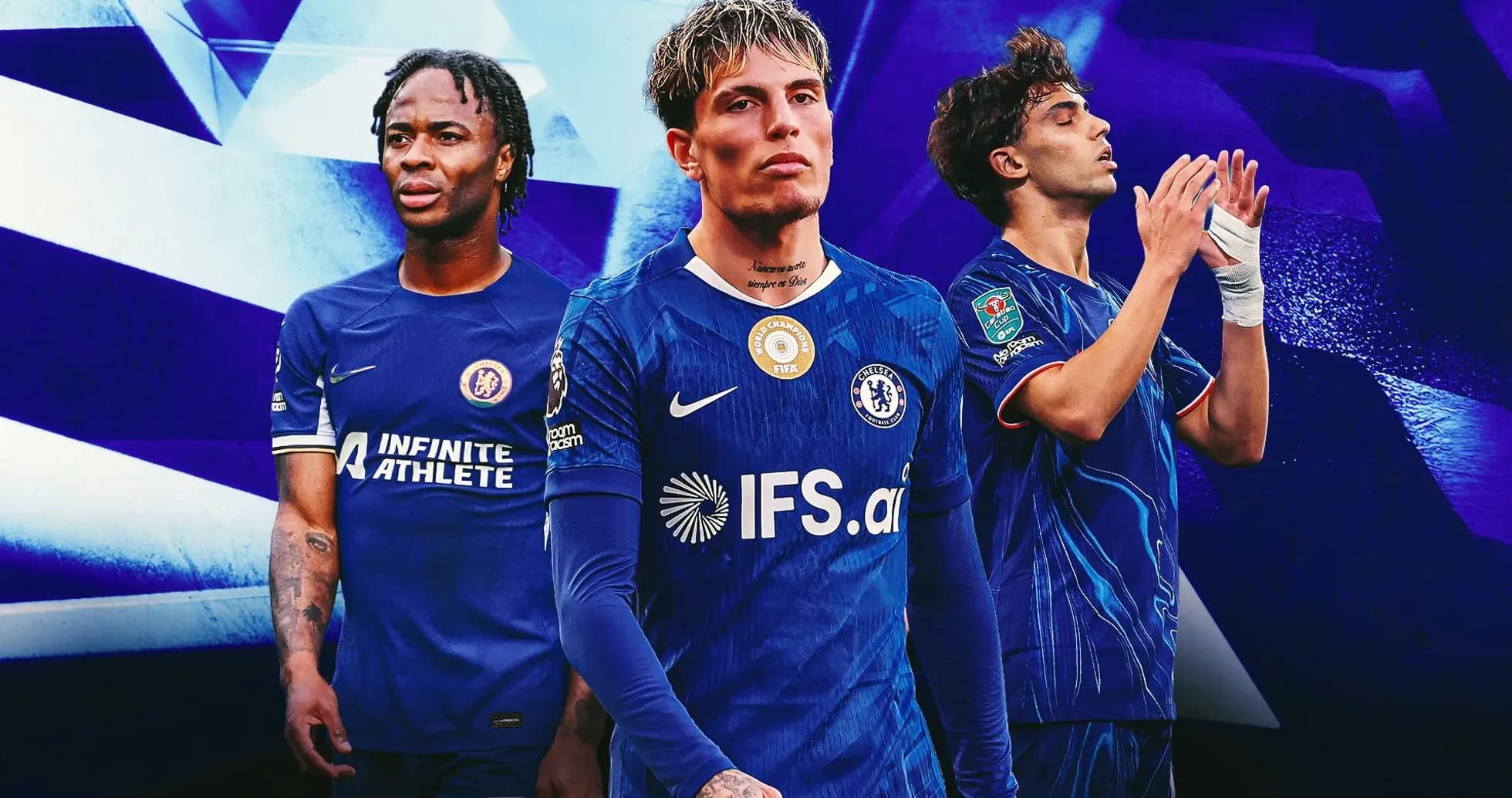
Chelsea's Costliest Non-Events: A Review of BlueCo Misfires
Carney Chukwuemeka arrived at Stamford Bridge as a statement of intent. £20m from Aston Villa, fresh from driving England’s Under-19s to European glory, he was meant to be one of the faces of the new Chelsea. Instead, his time in west London barely registered. Injuries stalled him, managers overlooked him, and a two-and-a-half-year spell drifted by with just 32 appearances before he slipped away to Borussia Dortmund last summer after an initial loan. For a player once billed as a cornerstone, it was a ghost of a Chelsea career.
Christopher Nkunku’s story carried even more expectation. Chelsea swooped early in 2023, paying £52m to prise a prolific forward from RB Leipzig, a signing hailed as a coup and a potential long-term leader of the attack. Then pre-season bit back. A serious knee injury almost as soon as he joined the squad wrecked his first campaign, keeping him out for half of 2023-24 and blunting his impact once he did return. By the time he was fit, Cole Palmer had seized the spotlight. Nkunku never truly imposed himself, reduced to a bit-part role in 2024-25 and gone to AC Milan last summer after just 27 Premier League appearances. What was meant to be a centrepiece turned into a footnote.
If Nkunku’s move felt unlucky, Alejandro Garnacho’s transfer looked misguided from the outset. Chelsea pounced on a “market opportunity” in the summer, paying £40m to take the winger from Manchester United after he had been frozen out by Ruben Amorim. United banked the money. Chelsea got a player stripped of the swagger that once lit up Old Trafford. On the left flank he offered little of the directness or daring that defined his rise, failing to nail down a starting place under either Enzo Maresca or Liam Rosenior and stringing together a run of forgettable displays. Now the club is ready to cut its losses, hoping for £43-£45m. They will need a generous buyer.
Pierre-Emerick Aubameyang’s Chelsea chapter was doomed almost before it began. Thomas Tuchel pushed for his signing from Barcelona in the summer of 2022, only to be sacked a day after the striker’s debut. The logic behind the deal vanished overnight. Graham Potter never truly trusted him, used him sparingly, then froze him out altogether. By the time Aubameyang left on a free to Marseille, his Chelsea ledger read 21 appearances and three goals. A marquee name, a minimal return, and a season that felt over before it had really started.
Kalidou Koulibaly was supposed to anchor the defence in that first BlueCo window. A commanding presence at Napoli, he arrived in 2022 with the aura of a leader and the expectation that he would steady a wobbling back line. Instead, he walked into chaos. Managers came and went, the team lurched from one crisis to another, and Koulibaly never quite looked the same force. High-profile errors undermined him, his authority never fully took root, and Chelsea cashed out a year later, selling him to Al-Hilal as part of the first wave of big-name moves to Saudi Arabia. The transformative signing never transformed anything.
Raheem Sterling’s move felt like a sure thing. A proven Premier League scorer, multiple titles at Manchester City, £47.5m for a player who knew how to deliver in big moments. This was supposed to be the blockbuster that set the BlueCo era alight. Instead, the flame barely flickered. Two flat seasons later, Sterling found himself banished to Maresca’s infamous “bomb squad” and sent on loan to Arsenal in 2024-25, a spell that did nothing to revive his Chelsea standing. When he returned in 2025, nothing had changed. He did not get back in, did not get back on track, and in January 2026 his contract was terminated, 18 months after his last appearance in blue. A marquee arrival that drifted into silence.
Joao Felix’s double act with Chelsea is a tale of persistence where there should have been perspective. His first loan from Atletico Madrid in January 2023, amid that wild winter of spending, never truly caught fire. A red card on debut against Fulham set the tone, and while he produced flashes, he never justified the fuss. That should have been the warning. Instead, Chelsea went back for him in 2024 after a productive spell at Barcelona, only for history to repeat. Half a season under Maresca, little real impact, and then another exit, this time on loan to AC Milan. By the summer of 2025 he was off to Al-Nassr permanently. Two bites at the cherry, no lasting taste of success.
Some missteps were so fleeting they barely registered. Facundo Buonanotte’s loan from Brighton in the final days of the 2025 summer window was one of them. Drafted in, ostensibly, to pad out Maresca’s attacking options, the Argentine attacking midfielder managed just eight appearances, with only one in the Premier League. He spent more time out of matchday squads than in them. By January, Chelsea cut the cord and terminated the loan. A similarly flat half-season at Leeds followed. His time at Stamford Bridge felt like a clerical note rather than a chapter.
Deivid Washington’s Chelsea career has unfolded mostly out of sight. Signed from Santos for £17m in 2023 as part of the long-contract youth wave, he has made just three first-team appearances, all in 2023-24. The rest of his time has been spent in the development squad, with a loan back to Santos in 2025 that failed to ignite anything and ended in a recall. Now 21, he remains on the books but not in the plans. For a player once filed under “one for the future,” the future clearly lies elsewhere, and a permanent move now looks inevitable.
Then there is Mykhailo Mudryk, perhaps the starkest symbol of what went wrong. His £89m arrival from Shakhtar Donetsk in January 2023 sent a jolt of excitement through the fanbase. Raw pace, electric promise, a winger who seemed tailor-made for a new era. The reality unravelled quickly. Mudryk never consistently showed the fearless, free-flowing form that had persuaded Chelsea to pay such a fee, drifting in and out of the side under a carousel of managers. In November 2024, he was provisionally suspended after a doping offence. He has not played since.
In April 2026, the Football Association handed him the maximum four-year anti-doping ban. Mudryk has appealed and reportedly believes a return in 2026-27 is possible, but the odds of that comeback happening in a Chelsea shirt look remote. His story, like so many of the BlueCo era’s biggest bets, stands as a stark question: how did a project built on ambition produce so many signings that never truly began?