Club Brugge vs Atletico Madrid: Tactical Analysis of a 3-3 Draw
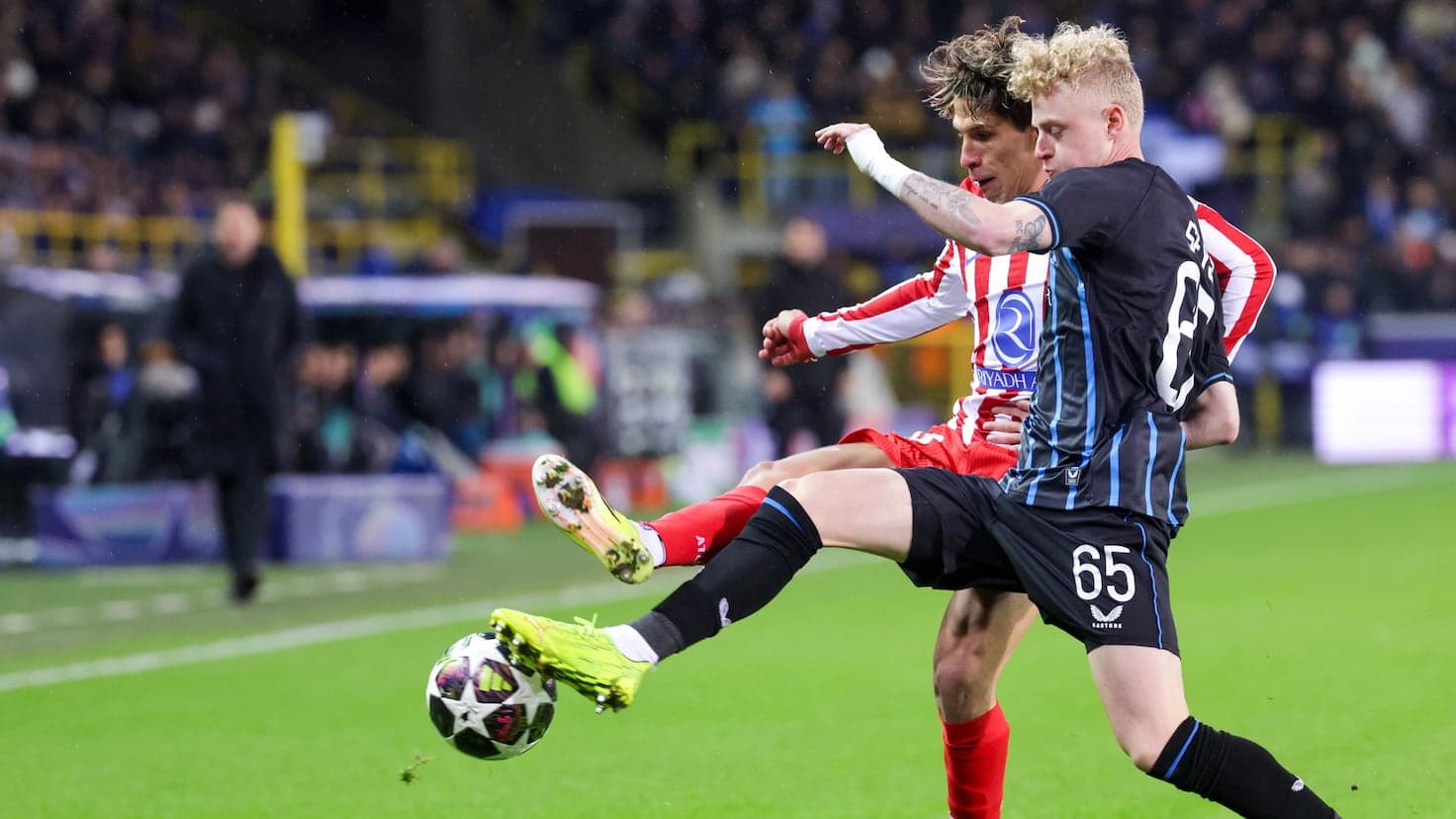
This was a clash between Club Brugge’s territorial control and Atletico Madrid’s space management. Brugge held 58% possession and completed 650 passes at 87% accuracy, using their 4-2-3-1 to circulate the ball and gradually push Atletico back. Yet Atletico, with only 42% of the ball and 484 passes (85% accuracy), dictated the early scoreboard by attacking quickly from their 4-3-3. The first half reflected classic Simeone pragmatism: concede possession but control the key zones, particularly central spaces in front of the box. As Brugge grew into the game after the break, their sustained possession began to translate into territory and pressure, progressively pinning Atletico deeper.
Offensive Efficiency
Brugge’s game plan was based on volume and sustained attacking phases. They produced 17 total shots to Atletico’s 13, with a clear edge in shots on goal (10 vs 4). Eleven of Brugge’s attempts came from inside the box, indicating they were not settling for speculative efforts; their possession was geared toward creating high-quality chances. An xG of 2.33 underlines the structural soundness of their attacking patterns, and 4 corners further show how often they forced Atletico to defend their area.
Atletico, meanwhile, were more selective but not ultra-clinical. Their 13 shots, 9 from inside the box, and identical xG of 2.33 point to a counter-attacking and transitional focus: fewer long spells on the ball, more direct attacks when they did win it. With only 4 shots on target, they relied on making those moments count rather than sustained pressure. The fact that the game finished 3-3 with both sides on 2.33 xG suggests a contest where Brugge’s territorial dominance eventually matched Atletico’s earlier efficiency, turning what looked like a controlled away performance into a chaotic, end-to-end second half.
Defensive Discipline & Intensity
The match was relatively clean, with just 5 fouls from Brugge and 8 from Atletico. This low foul count, combined with only three yellow cards in total (1 for Brugge, 2 for Atletico), suggests neither side relied on heavy disruption or constant tactical fouling; instead, both trusted their structures. Atletico’s defensive plan leaned on Oblak and the back line’s resilience: he made 7 saves, a clear indicator of sustained Brugge pressure, especially late on. Brugge’s keeper faced less volume, with just 2 saves, but their 3 blocked shots show active defending in and around the box. Atletico’s 5 blocked shots further confirm a compact, low-to-mid block approach, absorbing Brugge’s attacks and throwing bodies in front of goal-bound efforts rather than pressing high.
Club Brugge’s possession-based, chance-creating approach (58% possession, 10 shots on target) wore down Atletico’s compact, counter-focused strategy. Atletico’s early efficiency could not withstand the volume and quality of Brugge’s second-half attacks, and efficiency and territory converged into a balanced, high-level 3-3 draw.