Colombia Advances to Last 16 with Victory over Ghana
Colombia did not dazzle. They did not need to. They simply handled their business in Kansas City, beating Ghana 1-0 to reach the World Cup last 16 for the third consecutive tournament.
It is becoming a habit. Quarter-finalists at Brazil 2014, last-16 in 2018, now back in the knockouts with a familiar blend of steel, tempo and just enough quality in the final third.
This time, the decisive moment arrived early.
Chaos, then clarity
The game began with a jolt of unwanted history. Inside 15 minutes, both teams had been forced into substitutions through injury – something never previously recorded at a World Cup.
First, Jhon Cordoba limped off after just eight minutes, replaced by Luis Suarez. Five minutes later, Ghana lost Marvin Senaya, with Alidu Seidu thrown on. Two plans ripped up before either coach had settled into his seat.
Colombia shrugged it off. Ghana did not.
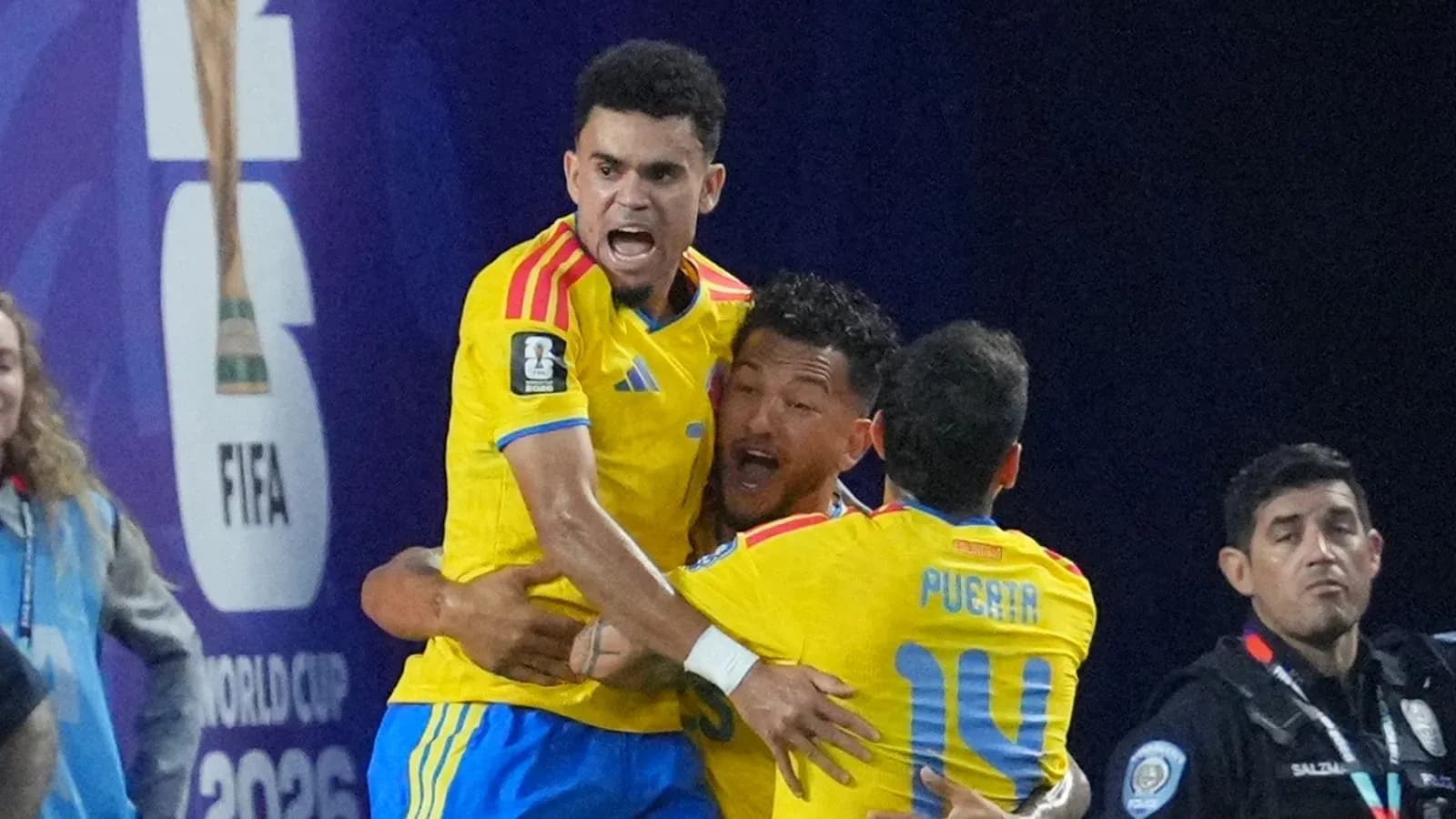
Barely a minute after Senaya’s exit, Suarez made his presence felt. Pulling wide on the right, he shaped a teasing, curling cross into the area. Jhon Arias, ghosting in untracked, met it with the calm of a training-ground drill and guided it beyond Lawrence Ati Zigi.
One change enforced. One change decisive.
Colombia in control, Ghana toothless
From that point, Colombia owned the game’s rhythm.
Thomas Partey had fired an early warning shot from 25 yards that skimmed past the post, but Ghana’s threat quickly faded. Their low block, so effective in the group stage, invited pressure they could not relieve.
Colombia poured forward. Luis Diaz, always on the shoulder, went close on the counter, dragging a shot just wide. Suarez, already buzzing from his assist, glanced a header past the far post. Johan Mojica thought he had doubled the lead, only for Ati Zigi to arch backwards and claw his header away in first-half stoppage time – a save that kept Ghana alive.
The pattern did not change after the break. Yellow shirts pushed higher, the ball zipped between the lines, and Ghana retreated deeper and deeper, seemingly content to cling to the possibility of a single break that never came.
Just before the hour, Colombia believed they had killed it. Jefferson Lerma, raiding from midfield, drilled a low cross across the six-yard box, and Diaz slid in to turn it home. The celebrations were cut short by the assistant’s raised flag. Offside. Still 1-0. Still a question hanging over Colombia’s finishing.
The tension never really translated into danger. Ghana’s attack lacked punch, ideas and numbers. The longer it went on, the more it felt like a game Colombia could only lose by their own carelessness.
They did not oblige.
Diaz, Davinson Sanchez and substitute Juan Fernando Quintero all had chances to stretch the lead, but the single goal proved enough against opponents who rarely looked capable of landing a serious blow.
Quintero changes the temperature
If Colombia are to go deeper into this tournament, they will need more edge in the final third. The answer may already be in the squad – and he wears No 10.
Quintero entered the fray after 72 minutes, replacing match-winner Arias. At 33, now pulling the strings at River Plate, he no longer glides across the pitch as he once did, but his brain remains a step ahead of everyone else.
In just under 20 minutes, he turned the game’s mood. He touched the ball 24 times, completed all 19 of his passes and created five chances – more than any other player managed across the entire match. Every time Colombia advanced, he seemed to be at the heart of it, slipping runners through, changing angles, forcing Ghana’s defenders to look over both shoulders.
His finest moment almost produced one of the goals of the tournament. Picking the ball up in space, he unleashed a rising drive that screamed past Ati Zigi and crashed just wide of the right-hand post. The goalkeeper was beaten. Ghana were simply fortunate the ball was not.
Those numbers will not have escaped Nestor Lorenzo. Nor will the contrast. Before Quintero, Colombia were dominant but wasteful. With him, they looked capable of tearing teams apart.
Vancouver and a higher bar
The 1-0 scoreline flatters Ghana more than Colombia, but it also underlines the one lingering concern. This was a game that should have been settled long before the final whistle. Against stronger opposition, a failure to convert 2.19 xG into more than a single goal could prove fatal.
Next up: Switzerland in Vancouver on July 7. The prize: a place in the quarter-finals, where Argentina or Egypt will wait.
Colombia arrive there with momentum, a settled core and a playmaker whose cameo screamed for a starting shirt.
If Lorenzo really wants this side to step out of the “solid last-16 team” bracket and back into the conversation as genuine contenders, the decision feels obvious: build the attack around Quintero’s left foot and see just how far this group can go.