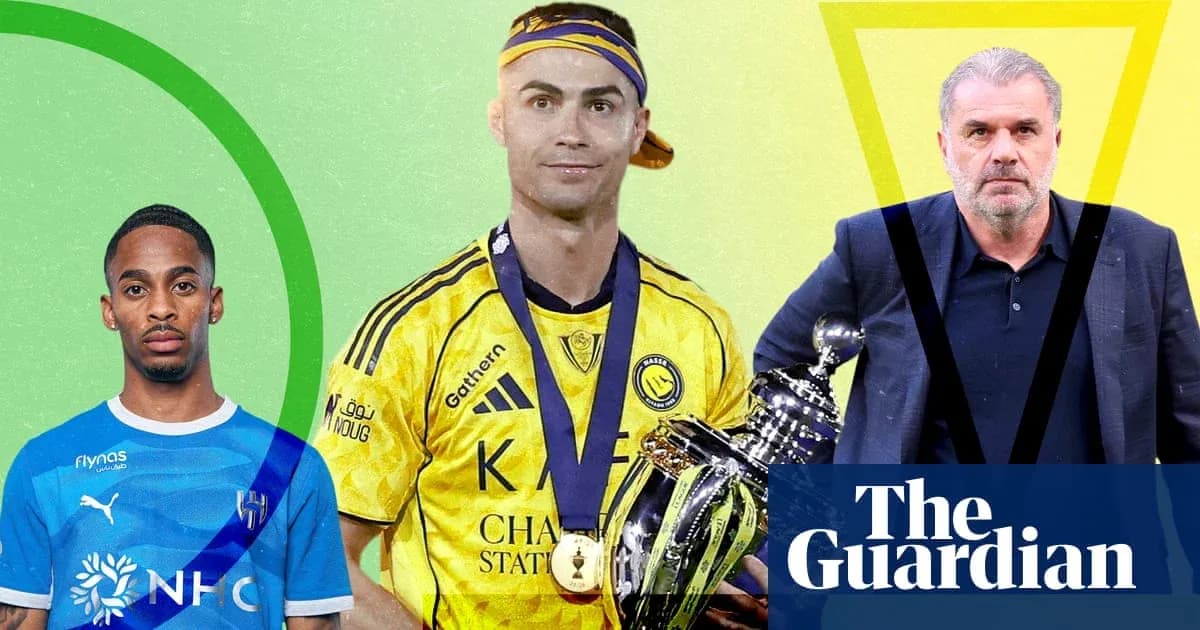
Cristiano Ronaldo's Historic Chase in Saudi Pro League
Cristiano Ronaldo walks into another Saudi Pro League season on the brink of a number nobody in football has ever touched. No Mohamed Salah, no new megastar unveiling, but a 41-year-old chasing history. He is 24 goals away from 1,000 in his career. With 102 in 107 league games for Al-Nassr already, that landmark is not a fantasy. It is a live storyline for the year.
What that means for the league itself is a different question.
From spending spree to soul-searching
This is year four of the Saudi project since the tap really opened in the summer of 2023. Around $957m (£710m) went out in that window alone. The result was an explosion of attention: global TV deals, a flood of coverage, and yellow CR7 shirts turning up in cities that had never previously cared what happened in Riyadh.
Now the tone has shifted. The money is still there, but the conversation has moved from “Who’s next?” to “What are we getting for this?” The aim is no longer just to fill stadiums and timelines. It is to drag the entire standard of Saudi football upwards.
The early evidence is uncomfortable. The national team’s World Cup exit prompted scrutiny, even if the raw results – draws with Uruguay and an impressive Cape Verde, a narrow defeat to eventual champions Spain – were not disastrous. The real issue sat underneath: had all this investment actually improved Saudi players?
So far, the answer looks like no.
The league is not yet a talent exporter. Of the 26-man World Cup squad, only right-back Saud Abdulhamid, now at Lens, plays abroad. That statistic jars in Riyadh and Jeddah. The fear is obvious: local players are stagnating at home, many of them short of minutes in key positions. Foreign signings dominate the attacking and creative roles, and even the goalkeeping spots. Saudi clubs are stronger in Asian competition, but the national team has not caught the same wave.
Salah stays away as strategy shifts
That is the backdrop to the summer’s biggest non-move. Many inside and outside the region expected a renewed push to lure Salah, with the Red Sea a more natural destination than the Black Sea port of Trabzonspor. The appetite to land the Egyptian icon, though, seemed to cool in recent months – assuming he ever seriously weighed Saudi Arabia as his first choice.
On pure star power, Salah would have been a coup. The 34-year-old remains the defining figure of Arab football. Yet he no longer fits the preferred template. The model now leans younger: players who can come in, light up the league, then head back to Europe for a substantial fee.
That is the theory. Crysencio Summerville is the test case.
Summerville, Hilal and the weight of expectation
The Dutch winger is the headline arrival of the window so far, joining Al-Hilal for around €80m (£68m). At 24, he is exactly the profile the league wants: peak years ahead, resale potential intact. If his time in Riyadh goes to plan, he will leave not as a fading name but as an asset.
Summerville has already been accused in some quarters of choosing money over ambition. That criticism ignores the reality of Al-Hilal. Ambition is stitched into the club’s identity. Nineteen league titles. Four Asian championships. An undefeated domestic campaign last season still ended in second place – and was treated as failure.
Hilal’s ownership structure changed in April, with the club sold by the Public Investment Fund, but the squad remains stacked: Karim Benzema, Rúben Neves, Theo Hernández, Yassine Bounou, Kalidou Koulibaly and others. Simone Inzaghi steps into a dugout where finishing runner-up is not a near miss. It is a problem to be fixed. The mandate is simple: take the title back from the yellow side of the capital.
Ronaldo, Postecoglou and a different kind of pressure
That yellow side is Al-Nassr, champions in May, Ronaldo hoisting the trophy as the league’s central character yet again. The title win was followed quickly by change. Jorge Jesus departed to take over Portugal, leaving a vacancy that has now gone to Ange Postecoglou.
The former Tottenham Hotspur manager inherits a squad built for fireworks. Sadio Mané, Kingsley Coman and João Félix give him a front line with European pedigree and variety. The twist is financial. Al-Nassr have been operating under constraints, limiting new arrivals and forcing Postecoglou to work more with what he has.
For a club that has never lifted the Asian Champions League, that competition looms large. A first continental crown would not just decorate Ronaldo’s late-career chapter. It would send a message that the Saudi project is about more than big names and domestic dominance.
Al-Ahli rocked, Al-Ittihad reset
The Asian Champions League currently belongs to Al-Ahli. Two straight continental titles had set them up to turn their attention inwards, target the SPL and chase only their second league crown since 1984. The plan looked settled. Then, days before the new season, it blew up.
Head coach Matthias Jaissle left for Newcastle. Same PIF ownership, very different reaction. In Jeddah, the decision landed badly. Al-Ahli had their project, their coach, their momentum. Suddenly they had a hole in the technical area and a fanbase asking hard questions.
Marino Pusic, long-time assistant to Arne Slot, has stepped in. His appointment has not exactly electrified the city. It feels pragmatic rather than visionary. Across town, the news also jolted Al-Ittihad, who had endured a difficult previous campaign and were hoping stability next door might at least keep the noise down.
Instead, Ittihad made a similar move. Just before Jaissle’s departure, they appointed Jens Wissing – another 38-year-old German, another former defender whose playing days were cut short by injury, another coach with RB Salzburg on his CV. Wissing now faces a major rebuild job at a club that expects to compete, not just participate.
Rodgers, Al-Qadsiah and the rise of a “big five”
Completing the new power group are Al-Qadsiah. Backed by Aramco and guided by Brendan Rodgers, they finished fourth last season. That alone was a statement. The next step is clear: improve on that position and end a trophy drought that stretches back to 1984.
If Rodgers can deliver both – a higher finish and silverware – Al-Qadsiah will be firmly installed among what is now a genuine “big five”. For the rest of the league, that creates a formidable wall of wealth and talent to climb.
Yet the long-term health of the competition may depend on those same clubs resisting the urge to chase every ageing superstar who becomes available. The real test is whether they trust their own. More minutes for Saudi players. More responsibility in decisive areas. More pathways to Europe.
Ronaldo’s race to 1,000 will dominate headlines. Summerville’s adaptation will be scrutinised. Hilal’s response, Nassr’s defence, Ahli’s recovery, Ittihad’s reset and Qadsiah’s push will shape the table.
But the question that will linger over the season is sharper: will Saudi Arabia build a league of global stars, or a football culture that finally produces them?