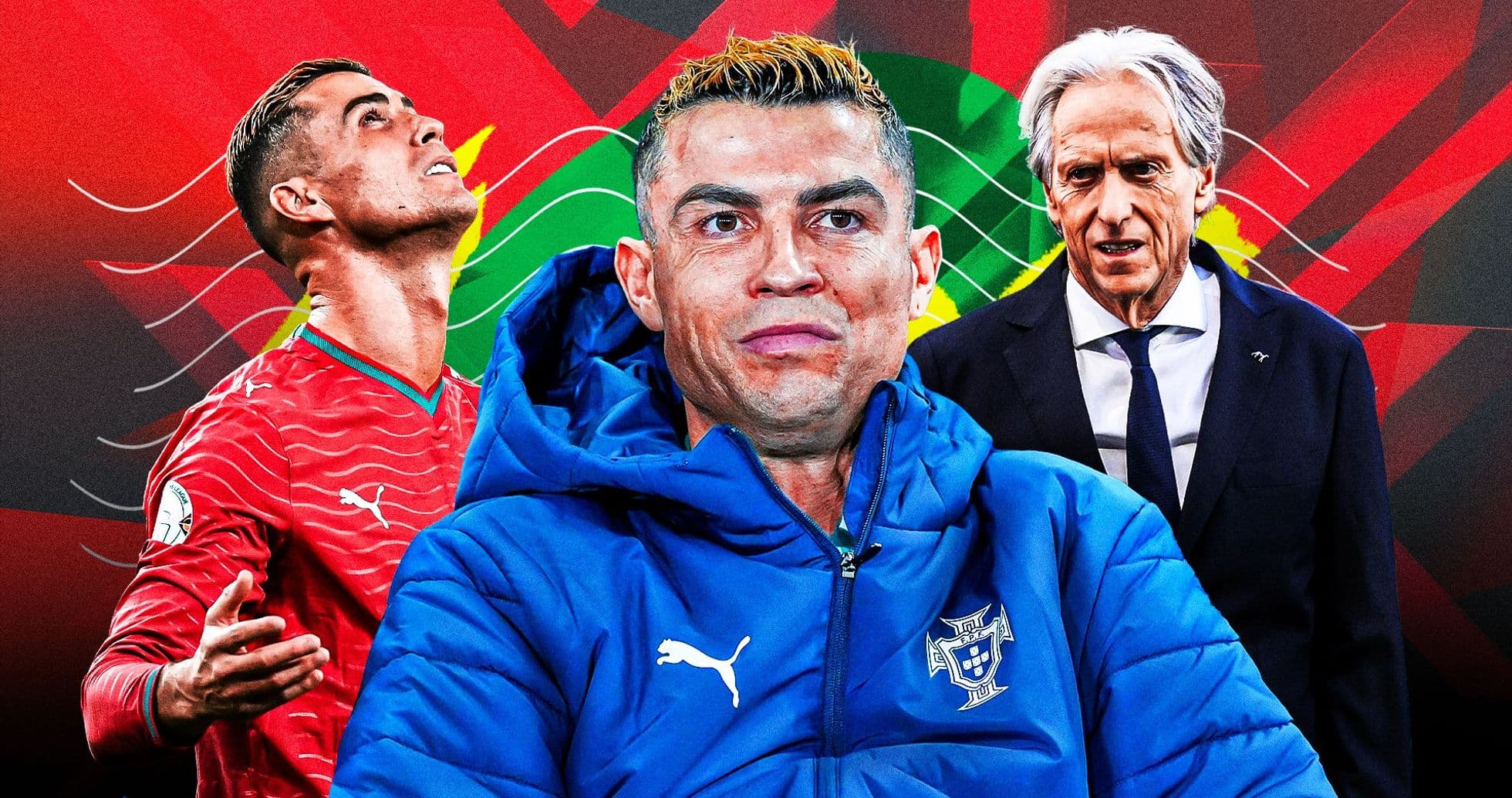
Cristiano Ronaldo Should Step Down from Portugal Role and Follow Messi’s Retirement Example
Before Portugal’s Nations League match against Wales, Cristiano Ronaldo was asked about retiring from international football after the 2026 World Cup. He admitted he had considered it but insisted he would continue as long as he felt useful to the team. "I still believe that I’m able to help the national team," Ronaldo said, emphasizing both his on-field contributions and leadership off it.
But the reality tells a different story. In recent major tournaments, Ronaldo has struggled to make an impact. At the 2022 World Cup, he scored just once in five games, and at Euro 2024, he failed to score in five matches. His three goals in the 2026 World Cup came against weaker opposition, with two against Uzbekistan and one penalty in a controversial win over Croatia. Against stronger teams like Morocco, France, and Spain, Ronaldo was largely ineffective.
The Changing Role Within the Team
Portugal’s approach has remained centered around Ronaldo, even as his effectiveness has diminished. Teammates often focus on feeding him chances, compensating for his reduced mobility and work rate. While Ronaldo boasts a stunning record of 146 goals in 234 appearances, his status as the most lethal striker faded after 2018. Watching a legend decline has been difficult, especially as he continues to hold onto his place at 41.
Luckily, the new Portugal coach Jorge Jesus, who previously worked with Ronaldo at Al-Nassr, appears less willing to indulge him. Jesus made it clear that Ronaldo won’t automatically start every game, a stance previous coaches rarely voiced publicly. Jesus said, "If he will play the games, it is up to the manager to decide." This shift reflects a growing recognition that the team needs players who can contribute more dynamically.
Recent Performances Highlight Decline
Ronaldo’s performance against Wales illustrated his struggles. Despite taking seven shots, only two were on target, and he missed a prime chance by volleying over the bar at close range. He did score a goal later in the match, but it was correctly disallowed for offside. After 68 minutes, Jesus substituted Ronaldo for Goncalo Ramos, pointing out that Ronaldo could no longer press defenders effectively or influence the attack as before.
In the following match against Norway, Ronaldo was left out of the squad entirely—the first time in over 18 years he didn’t appear in a competitive international fixture. Portugal won 2-1 without him, with Ramos scoring twice. Ronaldo appeared invested on the sidelines but left immediately after the final whistle without acknowledging the fans, actions that did not help his standing.
Goncalo Ramos Offers What Ronaldo Can No Longer Provide
At 25, Goncalo Ramos brings energy, pressing ability, and technical skill that Ronaldo no longer offers. His movement unsettles defenders, and he links play well while maintaining the pace required by Jesus’s style. Meanwhile, Ronaldo functions mostly as a poacher waiting for crosses, limiting Portugal’s tactical options.
Ramos’ contributions suggest that Portugal benefits more from fresh legs and mobility, especially in high-stakes games where Ronaldo’s limited off-ball work becomes a liability. Although Ronaldo could still be an impact substitute when the team needs a goal, the awkwardness of such a reduced role clashes with his legacy and ego.
Following Messi’s Example?
Lionel Messi recently retired from international football after a spectacular World Cup run, where he led Argentina with eight goals and four assists. Messi chose to step aside, allowing younger talent to rise, and preserved his legacy on a high note. Ronaldo, who lacks a World Cup winner’s medal but holds records as the highest scorer and most capped player internationally, could do the same for Portugal.
He has nothing left to prove statistically or historically, having helped Portugal win Euro 2016 and two Nations League titles. The younger generation already looks up to him as a role model, making it unnecessary for him to compete for playing time. Stepping back would allow Ronaldo to remain a symbol of Portuguese football without hampering the team’s progress.
Financial and Emotional Stakes
The Portuguese Football Federation (FPF) relies heavily on Ronaldo’s global appeal. His name drives sponsorships, broadcasting deals, and international attention. Experts warn that his retirement could cause a steep drop in revenue—estimated at 45% annually. Despite this, Ronaldo owes no financial obligation to the FPF after over two decades of elevating Portuguese football.
Ultimately, the decision rests with Ronaldo himself. He could continue excelling at club level with Al-Nassr without the pressures of international scrutiny. Staying might harm his legacy more than stepping down. When he does retire, many will celebrate him as one of the sport’s greatest, relieved that he chose to leave on his own terms.