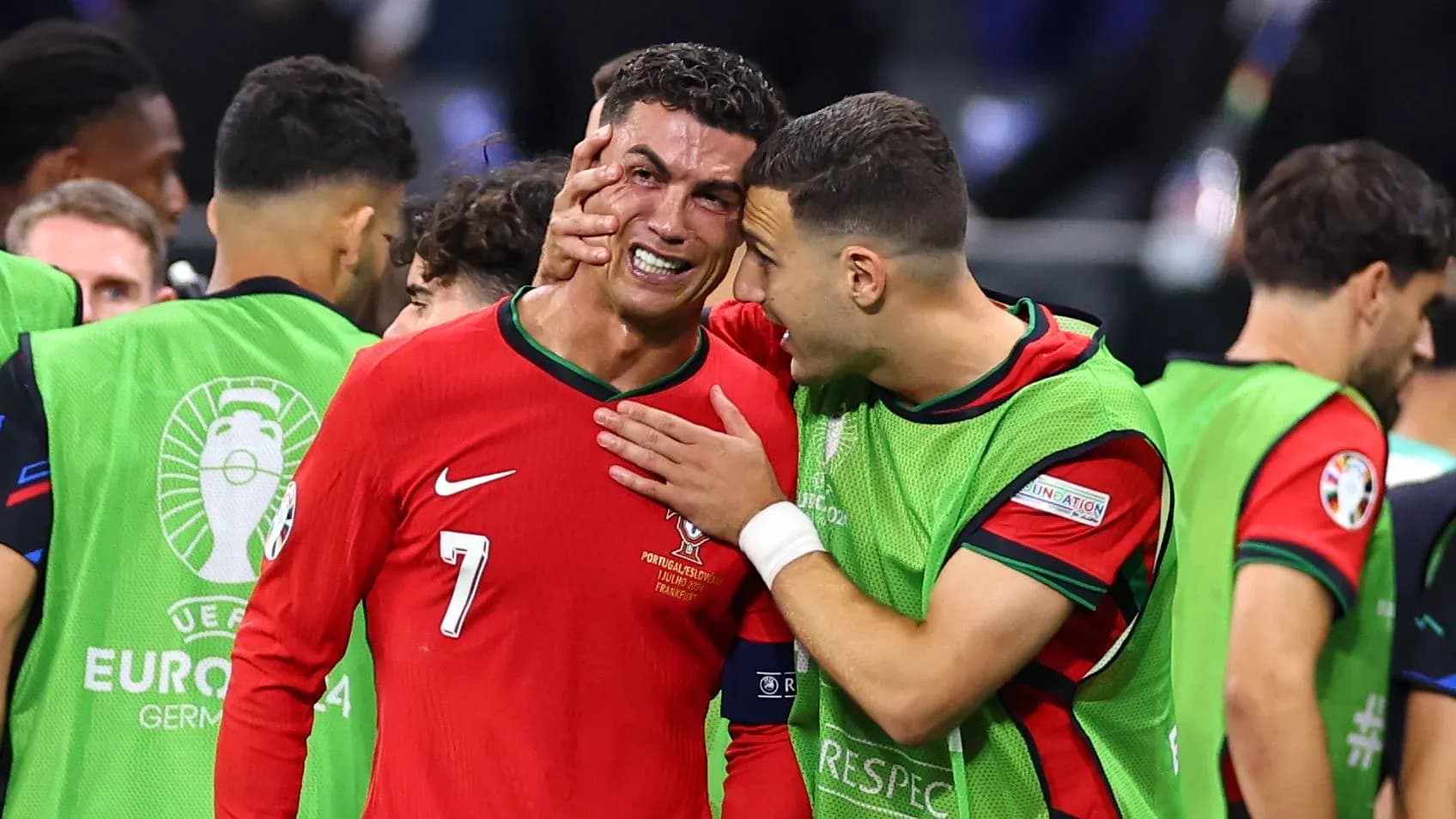
Cristiano Ronaldo’s Last World Cup Push: Portugal's Quest for Glory
Cristiano Ronaldo is heading for a sixth World Cup at 41, and Portugal can feel the clock ticking.
This isn’t just another tournament for the Al-Nassr forward. It is shaping into a farewell tour at the very edge of what a body, even his, can take. Inside the Portuguese setup, that reality is beginning to bite.
No one feels it more acutely than Godinho, the former national team director who spent half a century inside the Portuguese Football Federation and watched Ronaldo’s entire international story unfold from the first call-up to this looming final act.
He knows what is at stake: the only major trophy Ronaldo has never touched.
“We hope he’s in a position to retire… with a title of this magnitude,” Godinho told Lusa, before adding the one truth nobody around Ronaldo likes to say out loud: “The body isn’t eternal.”
A Brutal Last Mountain
If Ronaldo is to sign off as a world champion, he will have to do it in what many inside the game already view as one of the most punishing World Cups ever staged.
The 2026 edition stretches across the United States, Canada, and Mexico. Long flights. Time-zone shifts. Heat. Humidity. Hard pitches. For European teams coming off a full season in major club competitions, it is a physical trap waiting to be sprung.
“The World Cup will be difficult… because of the fatigue they will bring,” Godinho warned. The “continental change”, he stressed, is a genuine disadvantage for European sides, not a convenient excuse.
Players will arrive drained by domestic and European campaigns, then be thrown into a schedule that adds long journeys, jet lag, and unfamiliar climates. Those layers of strain, Godinho argued, will inevitably seep into performances.
“It’s much more difficult to play in the United States than in Germany,” he said, summing up the challenge in one stark comparison.
For Portugal, that means one thing: meticulous planning. The staff must manage minutes, travel, and recovery with ruthless precision. Any misstep, any overload, and the legs go. When the legs go, the dream goes with them.
From Figo’s Shadow to Portugal’s Standard
Godinho speaks about Ronaldo with the authority of someone who has seen every version of him: the skinny teenager, the explosive winger, the relentless goalscorer, the captain, the obsession.
He was there in 2003 when an 18-year-old from Madeira walked into a dressing room that belonged to Luis Figo, Rui Costa, and Fernando Couto. That room, filled with egos and medals, could have swallowed a youngster whole.
Instead, it shaped him.
“It wasn’t difficult to work with Cristiano,” Godinho recalled. Ronaldo’s debut came against Kazakhstan, but the real education happened off the pitch. He was surrounded by leaders who, in Godinho’s words, “helped him a lot to understand the dimension of where he was.”
The kid was “extraordinary” from the outset, quick to absorb advice, even when it came wrapped in “tough talk” from older teammates. Those early years forged the “winning mentality” that has defined his two decades at the summit of the sport.
From then on, every Portugal camp carried his imprint. Now, as he prepares for what is likely his final World Cup, the dynamic flips: the environment must protect him.
Group K and a Long Road Through America
Portugal’s route begins in Group K, and the margins are thin from the first whistle.
The opener comes against the Democratic Republic of Congo on June 17 in Houston, a city where the heat can sap energy as quickly as any opponent. Win there, and momentum builds. Slip, and the questions start.
“The first game is always very important,” Godinho said. Not decisive, but shaping. He knows from experience that a faltering start doesn’t automatically kill a campaign. Euro 2016 proved that. Portugal drew all three group matches in France and still ended up lifting the trophy in Paris.
That memory lingers as a warning and a comfort. Perfection in the group isn’t mandatory. Resilience is.
After Congo, Roberto Martínez’s side will meet Uzbekistan and Colombia, two opponents with very different profiles but the same capacity to punish a team that mismanages its energy or loses its focus in unfamiliar surroundings.
Godinho’s view is cautiously optimistic. “Everything depends on the state of mind, fatigue, and mentality,” he said. With the quality in the squad and the organisational strength around it, he is “convinced” Portugal can go deep. Yet he stops short of the easy headline.
“Saying we are going to win is premature.”
One Last Shot at Immortality
The dream, unspoken for years but now impossible to ignore, is simple: Ronaldo, in 2026, finally lifting the World Cup.
It would complete a career that already bends belief—European Championship, Nations League, club titles in three countries, records shattered at a pace no one imagined when he walked into that dressing room in 2003.
But Godinho’s words carry a sobering edge. The World Cup will not bend to sentiment. It will not slow down for a 41-year-old chasing one last miracle. The body will, eventually, say “enough”.
The question hanging over Portugal is whether they can get everything right—preparation, mentality, rotation, tactics—at the exact moment their greatest player approaches his final stage.
If they do, the image of Ronaldo’s goodbye may be written in gold.
If they don’t, his last World Cup might end with the one space on his honours list still, stubbornly, blank.