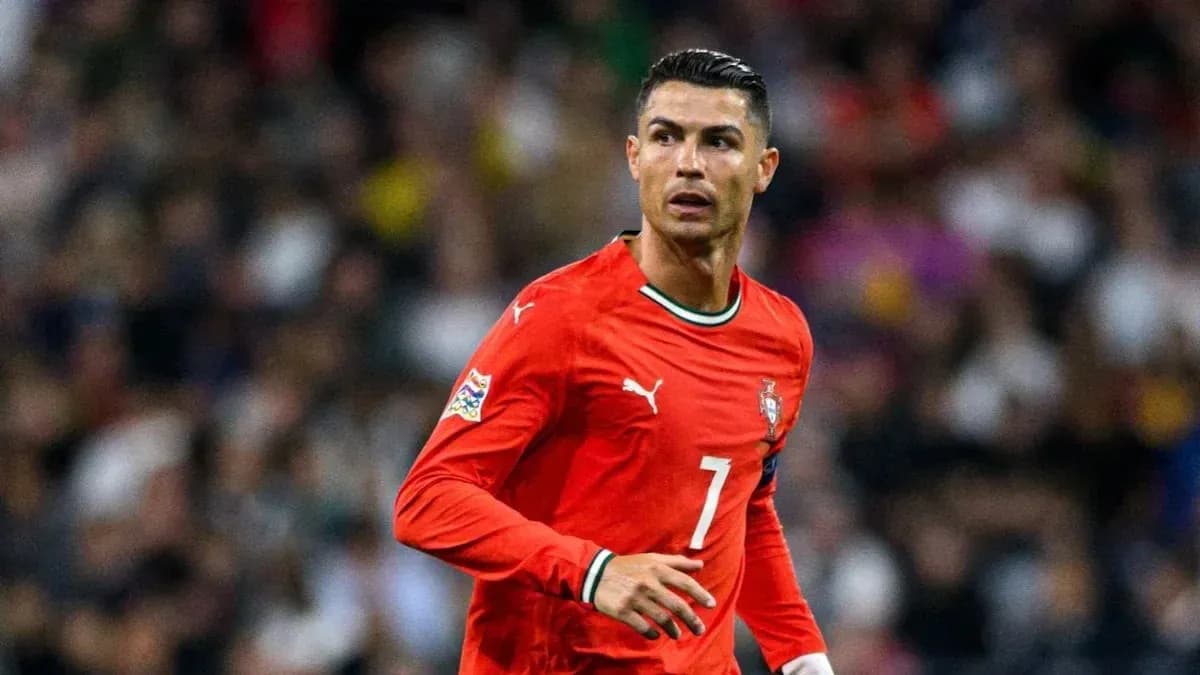
Cristiano Ronaldo Retires from Portugal After 23 Years of Glory
Cristiano Ronaldo has never done quiet. Not on the pitch, not in the spotlight, not in the way he has bent football to his will for more than two decades. So when the end finally came for his Portugal career, it arrived with the weight of history and the clarity of a man who has long decided his own fate.
In a video message released on November 5, the 41-year-old announced his retirement from the national team, closing a chapter that has stretched across 23 years, five European Championships and six World Cups. No more anthems in red, no more No. 7 leading Portugal out.
He leaves as international football’s most prolific male player: 234 caps, 146 goals. Records that sit in the official ledgers at FIFA and feel, even in this era of excess, untouchable.
His club career, though, rolls on. Ronaldo remains at Al Nassr in Saudi Arabia, still chasing the personal Everest he has set for himself — the mythical mark of 1,000 career goals across club and country. The international book is closed. The personal saga continues.
Passing On the No. 7
Ronaldo’s farewell message was as symbolic as it was emotional. Speaking about his Portugal shirt, he drew a line under the image that has defined a generation.
“Today the time has come to pass it on to the future,” he said, in FIFA’s English translation of his address. No grand stage, no stadium farewell. Just a direct appeal to the people who had followed him from Lisbon to Leipzig, from Johannesburg to Doha.
He called the decision “difficult,” shaped by emotion but also by the realities of age, competition, and what his body can still give. This was not the petulant exit of a fading star. It was the calculation of a veteran who knows what it takes to lead at the highest level, and when to step aside.
He made a point of looking beyond himself. He thanked his family for the years of sacrifice — the missed birthdays, the long trips, the constant scrutiny that comes with being the standard-bearer for a football-obsessed nation. He then widened the lens: teammates, coaches, medical staff, the unseen figures in the background whose names never make headlines but whose work underpinned his longevity.
Ronaldo also spoke to the diaspora, the Portuguese communities scattered across continents who found a piece of home every time the national team played. He recalled scanning the stands during the anthem, seeing families wrapped in flags, those few minutes when club loyalties and internal divisions dissolved into one shared identity. For 23 years, he stood at the center of that moment.
A Rift With Jorge Jesus That Never Quite Healed
The timing of the announcement was no coincidence. It landed one day before Portugal coach Jorge Jesus was due to name his next squad for the Nations League, with group fixtures against Denmark and Wales still to come. On paper, Ronaldo could have been there. In reality, the relationship between player and coach had already fractured.
The break began in September. On the 27th, Portugal beat Norway 2-1. Ronaldo stayed on the bench, an unused substitute, his name in the match record but not on the pitch. Three days later, on September 30, he left the national-team camp, a day before Portugal faced Denmark.
The storm followed a week later. On October 6, Ronaldo released a statement accusing Jesus of breaking promises about his role, including an assurance that he would play against Norway. Ronaldo had warmed up. He never got the call. Jesus, as reported by Sky Sports, denied making any agreement over playing time.
Ronaldo later apologized to his teammates and to Portuguese supporters for walking out, admitting he should not have left the camp. He stressed then that he was still available for selection. The federation responded with a 30-day suspension and a €255 fine. By the time he announced his retirement, that ban had already been served. The door was technically open. He chose to close it.
Jesus, speaking to Canal 11 on November 5, revealed he had tried to pull Ronaldo back from the brink, asking him to continue before naming his first Portugal squad because he wanted the forward alongside him. According to RTP, the coach said he now had to accept the decision. He also disclosed that a large photograph of Ronaldo had been installed in the national-team auditorium, a permanent reminder for the younger generation of what the No. 7 had represented.
The dispute may fade. The image will not.
From Figo’s Heir to Portugal’s Standard-Bearer
Ronaldo’s Portugal story began in August 2003, in a friendly against Kazakhstan. He was 18, still a wiry winger with a teenager’s haircut and a bag of tricks. He came on at halftime, replacing Luis Figo — a symbolic handover that, at the time, felt like a glimpse of the future. It became a prophecy.
From that night, he grew into the face of Portuguese football, then into its captain, then into its defining figure. The journey reached its emotional peak at Euro 2016, when he led Portugal to its first major international title. He left the final injured, barking instructions from the touchline, a captain who refused to watch passively as his teammates finished the job.
He added the Nations League crown in 2019, and again in 2025, extending Portugal’s trophy cabinet and his own legacy. These were not consolation prizes. They were proof that a nation long known for near-misses and heartbreak could finally convert talent into silverware.
On the World Cup stage, he became a constant presence. Ronaldo scored at six tournaments, an unprecedented run that spanned eras, systems, and teammates. He finished with 11 World Cup goals, three of them coming at this year’s competition. His last appearance on that stage ended in a 1-0 defeat to Spain in the round of 16 — a quiet exit for a player who had spent his life chasing the sport’s loudest stages.
A Legend Steps Aside, Portugal Looks Ahead
Portugal has promised a farewell tribute to its former captain. It will be more than a ceremonial wave and a framed shirt. It will be a reckoning with what his absence really means.
For 23 years, every Portugal squad list started in pencil with one name. Every tactical plan, every opponent’s fear, revolved around him. Now, the No. 7 goes to someone else. The armband belongs to another voice. The anthem line will have a gap where the country’s most recognizable figure once stood.
Ronaldo, still chasing goals in Saudi Arabia, will watch from afar as a new generation tries to step out from under his shadow without losing the standards he set. The question is no longer what he can still give Portugal.
It is whether Portugal, without him, can match the heights he dragged them to.