Dhananjaya de Silva Leads Sri Lanka's Fightback Against Pakistan
RAWALPINDI, Pakistan — Sri Lanka walked into Day 3 under pressure. It walked to lunch with a pulse, a plan, and Dhananjaya de Silva stubbornly in charge.
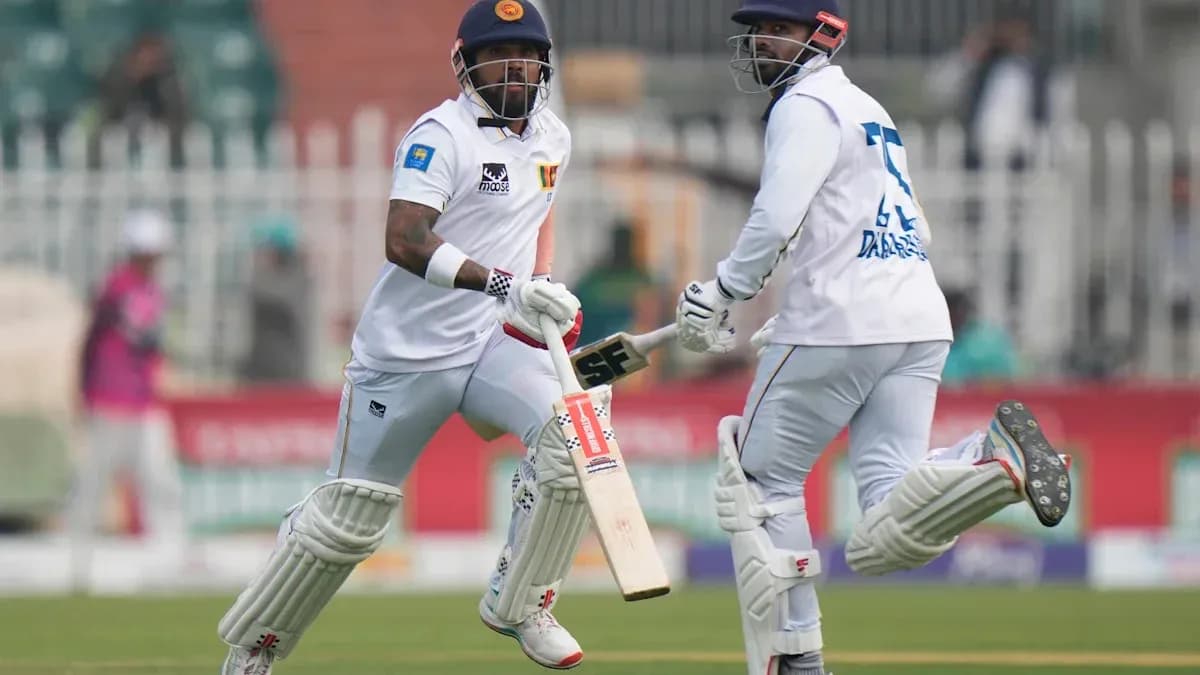
By the interval, the former captain had carved out a vital, unbeaten 87, dragging his side to 221-4 in reply to Pakistan’s 434-9 declared and hauling them to the brink of avoiding the follow-on. It was not pretty. It was exactly what Sri Lanka needed.
De Silva rides his luck, then takes control
On 38, de Silva offered Pakistan the opening they were hunting. A loose drive, a straightforward chance at first slip, and Saud Shakeel put it down. At 139-4, Sri Lanka could have been teetering again. Instead, the miss lit a fuse.
De Silva dug in, then pushed on, turning a scratchy start into a statement innings. He punished anything remotely loose, but more importantly, he refused to let the bowlers dictate. Every time Pakistan sensed a squeeze, he found a single, a clip off the pads, a firm push through the covers.
By lunch, he had batted through the entire session, still there, still unbroken, and very much the axis of Sri Lanka’s resistance.
At the other end, Kusal Mendis, the new captain who took over from de Silva in October, played the supporting role with calm assurance. He reached the break on 21 not out, content to let his senior partner set the tempo while he quietly accumulated and kept the board ticking.
Pakistan’s attack loses its bite
Pakistan had started the morning with a chance to ram home their dominance. Sri Lanka resumed on 114-3, still miles behind and one early wicket away from real trouble. The surface, though, had mellowed. The ball had gone soft. And the attack, stripped of experience, began to feel it.
Mohammad Abbas, the old hand in this group, once again showed why his name still carries weight. Relentless on a green-tinged pitch that offered just enough if you hit the right areas, he broke the fourth-wicket stand on 90 when Kamindu Mendis feathered a thin edge behind for 58. Wicketkeeper Ghazi Ghori, already tidy through the match, claimed his third catch of the innings.
That was the only breakthrough of the session.
Around Abbas, the support cast faded. Saqib Khan, so sharp with the new ball late on Day 2 when his line and length brought him two wickets, lost his edge as the ball aged. His pace dropped, his threat with it. Razaullah toiled without reward. The surface that had looked lively on the first day now seemed to be settling into a slow, demanding examination of patience and discipline.
Captain Babar Azam searched for a different angle, turning to debutant left-arm spinner Arafat Minhas in the latter part of the session. Minhas offered variation, but de Silva and Kusal Mendis met him with nimble footwork and clean intent. They stepped out, smothered the spin, milked the gaps. No risks, no panic, just quiet, calculated control.
By the break, the pair had stitched together an unbroken 66-run stand for the fifth wicket, turning what could have been a collapse into a platform.
Sri Lanka’s quiet fightback
This was not a session of blazing boundaries or dramatic collapses. It was a session defined by resolve.
De Silva’s partnership with Kamindu Mendis had first steadied the innings, their 90-run stand for the fourth wicket dragging Sri Lanka away from danger. Abbas finally broke that resistance, but Pakistan never managed to follow up with the surge they needed.
The drop by Shakeel loomed large. From that moment, Sri Lanka’s senior batter tightened his game and began to grind Pakistan down. Every over without a wicket chipped away at the hosts’ advantage. Every single stolen into the gaps reminded Babar that his young attack still has lessons to learn about finishing the job.
At lunch, Sri Lanka still trailed by a hefty margin, yet the mood had shifted. The follow-on no longer felt like a looming threat but a target they were closing in on. De Silva stood tall on 87, Kusal Mendis settled beside him, and Pakistan walked off knowing the morning had slipped away.
The next session will decide whether this becomes a mere delay to Pakistan’s push for victory, or the day Sri Lanka’s fightback truly began.