Diego Maradona and the Birth of the Champions League
On a warm night in September 1987, Diego Maradona walked into the old Estadio Santiago Bernabéu with Napoli and a continent’s curiosity at his back. It was the European Cup, first round, first leg, and they were up against La Quinta del Buitre’s Real Madrid – the aristocrats of the era facing the most compelling challenger in town.
Madrid won 2-0. Clinical, ruthless, familiar. The return at the San Paolo finished 1-1. And just like that, I Partenopei were out of Europe almost as soon as they had arrived, their adventure reduced to a footnote in someone else’s story.
Watching on, Silvio Berlusconi was furious. Not because Napoli had fallen – he had his own empire to worry about. He saw a competition that could jettison one of its main attractions in September and decided that would not happen to AC Milan, the club he owned and intended to turn into a global monument to his ambition.
So he pushed a different vision: a European super league, a closed shop for the elite, a guarantee that the biggest names would not vanish in the first chill of autumn. That specific plan never landed, but the pressure did. Uefa blinked. Five years later, the Champions League was born.
It still wasn’t enough. It never is.
First came the expansion. More than one team from the richest leagues. Then more again, until some countries could send five. The logic hardened: keep the heavyweights around, keep the money flowing, keep the fixtures glamorous and predictable.
Now we arrive at the Swiss model. No tidy little groups. No early jeopardy for the giants. Just a long, swollen league phase stuffed with lucrative meetings between the richest clubs, the Berlusconi doctrine taken to its logical conclusion. Gabriel Hanot, the French journalist who first imagined a pan-European competition, would look at this and weep for what he set in motion.
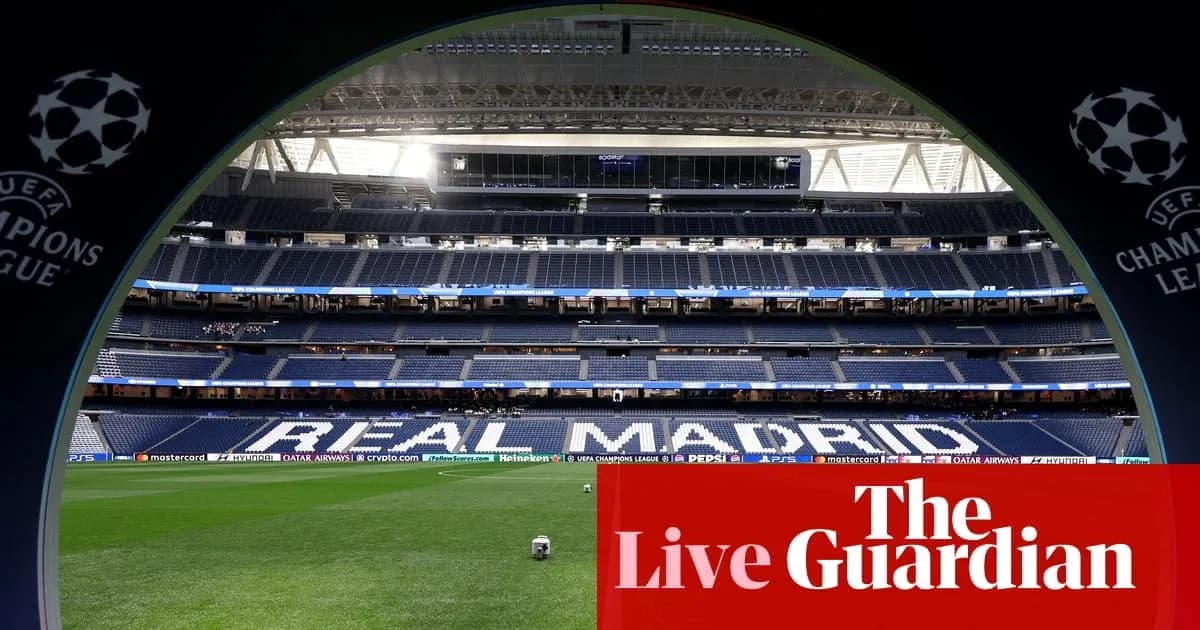
The rest of us? We grumble, then sit down and watch Real Madrid v Internazionale.
Because how can you not? Football is cursed by the quality of its own spectacle. Strip away the politics, and you still have the reigning kings of the Champions League facing a club that has spent the last two decades oscillating between chaos and glory.
There’s the Mourinho subplot, too. José Mourinho, back under the floodlights with yet another “last chance” pinned to his name, trying to prove there is still some of the old sorcery left. Across from him stands Cristian Chivu, once his loyal lieutenant, now in charge at Inter, attempting to revive the spirit of the side where his former boss arguably did his finest work.
That alone would carry a night. It doesn’t have to.
In Dortmund, an 18-year-old named Konstantinos Karetsas has started to bend games to his will at the Westfalen. Borussia Dortmund against Villarreal might not stir the same corporate imagination as Madrid v Inter, but it speaks to something older in the competition: the thrill of a new talent testing himself under the hardest lights.
Porto v Manchester City offers another angle: the champions of Europe’s new order visiting one of its grand old fortresses, a club that has been exporting brilliance for decades. Lille v Real Betis adds its own colour, a tie that might once have belonged on a quiet Thursday night but now lives inside this swollen, glittering ecosystem.
What does it all mean? In this format, in this era, the answer is hazy. The stakes blur when almost everyone survives the autumn. But meaning becomes secondary when millions of eyes lock on to the possibility of something outrageous happening in real time.
And while Europe’s elite trade blows, the domestic rhythm continues. The League Cup ticks into another round, kick-offs scattered at 7.45pm and 8pm BST, a parallel universe of rotated XIs, hungry youngsters and managers weighing risk against reward.
So the calendar fills. The games keep coming. The structure bends further towards the powerful, yet the pull of the pitch refuses to weaken.
You can argue with the format. You can’t argue with the sight of Madrid under the Bernabéu lights, Inter trying to spoil the party, Dortmund trusting a teenager, City chasing another statement.
This is the football we’ve been left with. The question now is whether anyone in power will ever dare to leave anything to chance again.