Dortmund vs Atalanta: A Tactical Showdown
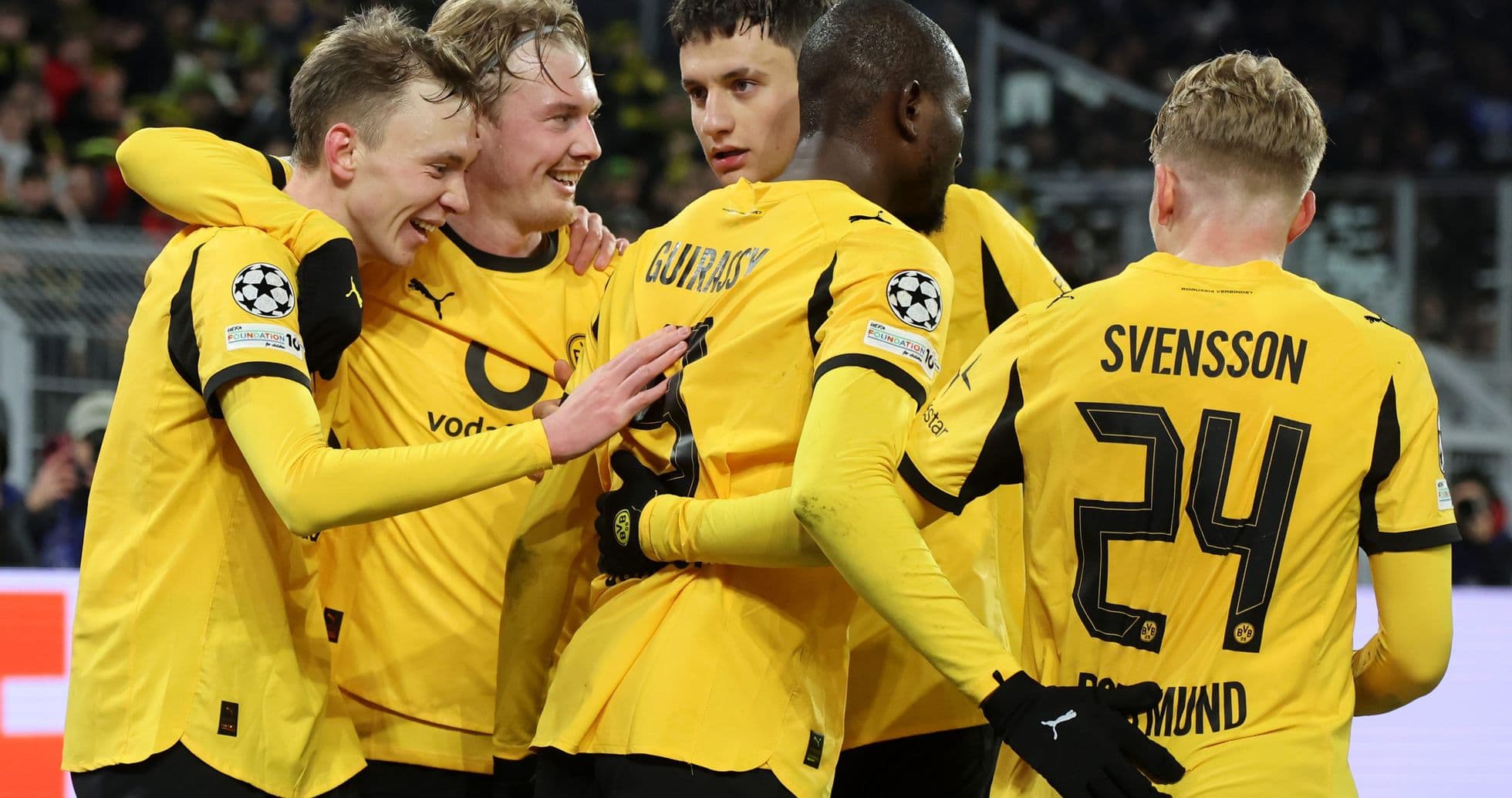
This tie at Signal Iduna Park was defined by a contrast between Atalanta’s ball dominance and Dortmund’s control of space and penalty-box moments. Atalanta saw more of the ball, with 56% possession and 521 total passes at an 87% accuracy rate, indicating a clear intent to build patiently and circulate in Dortmund’s half. Dortmund, with 44% possession and 419 passes at 83% accuracy, accepted longer spells without the ball but focused on verticality from their 3-4-2-1. The half-time scoreline of 2–0 to Dortmund shaped the flow: after striking early and then again before the break, they could drop into a compact mid-block, inviting Atalanta forward and looking to exploit transitions rather than chase sterile control of the ball.
Offensive Efficiency
Despite less possession, Dortmund produced the more dangerous attacking profile. They generated 9 total shots to Atalanta’s 7, with a higher expected goals figure of 2.09 versus just 0.46 for the Italians. That gap in xG underlines how Dortmund’s attacks were geared toward high-quality chances, especially inside the box (6 shots in the area compared to Atalanta’s 5, but with far better shot value). Dortmund’s 2 shots on target were few, yet both were clearly high-probability opportunities, reflecting a game plan of ruthless efficiency rather than volume shooting.
Atalanta’s 3 shots on goal from 7 attempts suggest they did eventually reach shooting positions but mostly from less threatening zones or under pressure. Their 2 corners compared with Dortmund’s 3 also show they struggled to sustain attacking waves or pin Dortmund back for long periods. The pattern points to Atalanta circulating possession in front of Dortmund’s structure, but lacking the incision to turn that 56% possession into clear-cut chances, while Dortmund used their front three and wing-backs to attack quickly and selectively.
Defensive Discipline & Intensity
Out of possession, Dortmund balanced aggression with control. They committed 11 fouls and received 2 yellow cards, enough to disrupt Atalanta’s rhythm without tipping into chaos. Atalanta were slightly more disruptive with 13 fouls and 3 yellow cards, reflecting their need to counter Dortmund’s transitions and to stop counters at source, especially after going 2–0 down.
Goalkeeping stats reinforce the tactical story. Dortmund’s keeper made 3 saves, indicating that while Atalanta did test the goal, most efforts aligned with their low xG of 0.46 – manageable shots rather than clear one‑v‑ones. Atalanta’s keeper registered 0 saves, which, combined with Dortmund’s 2 goals from 2 shots on target, underlines how clean and decisive Dortmund’s finishing was when they broke through.
Dortmund’s efficient, chance-focused approach and compact 3-4-2-1 structure outperformed Atalanta’s possession game. Atalanta controlled the ball, but Dortmund controlled the penalty areas; their 2.09 xG and perfect conversion of shots on target ensured that efficiency trumped sterile domination.