Dortmund Faces Hoffenheim: A Tactical Showdown
The noise of the transfer window has finally faded in Dortmund. No more rumours, no more medicals, no more last-minute calls. What’s left now is the thing that actually matters: football.
Borussia Dortmund have eased into the new campaign. Three points banked against Hamburg in the league, safe passage in the cup at HEBC. Clean, controlled, largely untroubled. Now comes the first real stress test of the season: Hoffenheim away.
Ilzer’s Hoffenheim: From Survival Scrap to European Push
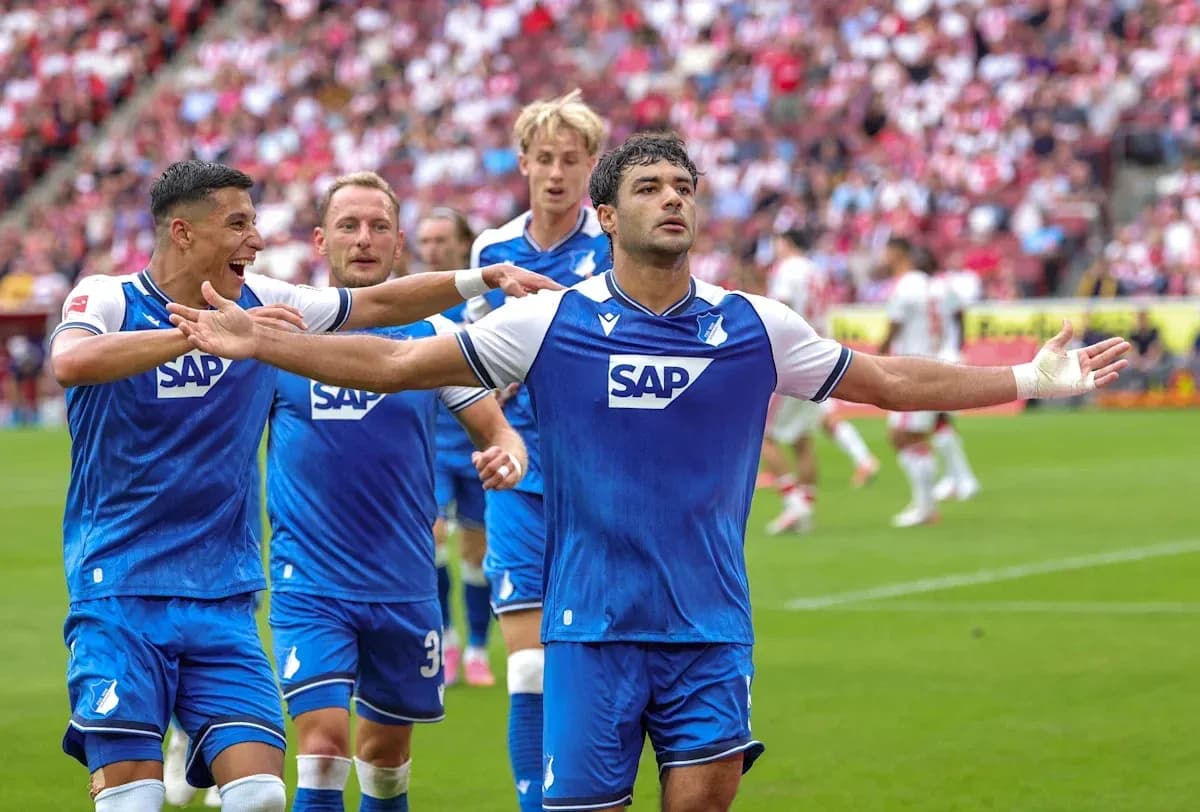
Hoffenheim arrive with scars and swagger. Two seasons ago, under Christian Ilzer, they were staring down relegation in 24/25. He dragged them out of that mess, then turned them into one of last season’s surprise packages, finishing just a single point short of Champions League qualification.
That turnaround has changed expectations in Sinsheim. This is no longer a team simply trying to stay afloat. It’s a side that wants the ball, wants control, and wants a seat at the European table.
The summer, though, bit hard. Bazoumana Toure, their electric winger, left. Fisnik Asllani’s move to RB Leipzig collapsed at the medical table, and he remains injured anyway. To fill the Toure-shaped hole, Hoffenheim moved for Patrick Wimmer from Wolfsburg, a direct, sharp wide player built to attack space. They also added two eye-catching youngsters with names as memorable as their potential: Mats Rots and Nathan De Cat.
De Cat, a dynamic two-way midfielder, is expected to slot in alongside Wouter Burger in the centre of the pitch. That pairing promises bite, legs, and a lot of running between the boxes. Only Wimmer started their opening 2–3 defeat to Köln, a game in which Hoffenheim still dominated the ball with 59% possession. Ilzer is almost certain to tinker with his XI for Dortmund. The structure is set; the personnel may not be.
Dortmund’s Dilemma: Who Plays, and How?
For Niko Kovac, this fixture raises two big questions.
First: who actually starts? The injury to Konstantelias (ACL) and the suspension of Samuele Inacio rip a hole in the attacking setup behind Serhou Guirassy. Someone has to step in alongside Karetsas in those pockets behind the striker.
There are options. Marcel Sabitzer brings experience and rhythm. Chukwuemeka offers drive and verticality. Newly-signed Ethan Nwaneri adds a flash of youthful unpredictability. The expectation, though, is that Kovac turns to Sabitzer, the safest pair of feet for a game that could be decided by small details.
Then comes the second, more intriguing question: how do Dortmund approach a team that wants the ball as much as they do?
Against both Hamburg clubs, Dortmund controlled everything. They out-shot their opponents 35–9 across those two games, including a barrage of 20 attempts in the Bundesliga opener alone. They dictated tempo, moved the ball with authority, and rarely looked stretched.
Hoffenheim will not let them stroll into that same rhythm. Last season, Ilzer’s side finished fourth in the league for possession, with Dortmund just behind in sixth. On the opening weekend, Hoffenheim again hogged the ball against Köln. They want to squeeze opponents, pin them back, and grind them down through control.
So Dortmund face a choice. Do they try to wrestle Hoffenheim for midfield dominance with Nmecha and Bellingham setting the platform? Or do they accept less of the ball, trust their structure, and turn sharp transitions into goals?
This is where Kovac’s Dortmund start to reveal their true identity.
Kramaric: The Dortmund Specialist
Every big match has a lurking danger. For Dortmund, his name is Andrej Kramaric.
Calling a 35-year-old super-sub the “Player to Watch” sounds odd on the surface. The numbers crush that doubt. Only five players in Borussia Dortmund’s history have scored more goals against die Schwarzgelben than Kramaric. Four of those sit inside the Bundesliga’s all-time top ten scorers. The other is 15th.
Kramaric has played 18 times against Dortmund. He has scored 11 goals. He hit two in this very fixture last season.
He might not start. That doesn’t matter. You can almost script it already: the Croatian stepping off the bench, the game tight, the spaces just opening up, and Dortmund’s back line suddenly feeling the weight of his history.
He doesn’t need long to change a match. He rarely does against this club.
Expected Dortmund XI: Back to the 3-4-2-1
Kovac experimented with a 4-3-3 against HEBC in the cup on Tuesday. That felt like a one-off. For Hoffenheim, the expectation is a return to the more familiar 3-4-2-1.
Gregor Kobel comes back in goal after Meyer’s cup outing. In front of him, a back three of Gadou, Anton, and Ryerson should provide the base. Out wide, Svensson and Beier are set to operate as wing-backs, asked to stretch Hoffenheim but also track their runners relentlessly.
In midfield, Nmecha and Bellingham remain the trusted core. They carry the responsibility of either matching Hoffenheim’s possession game or snapping into them and launching counters. Ahead of them, Sabitzer is tipped to join Karetsas in the two supporting roles behind Guirassy.
Guirassy, fresh from his goal last week, leads the line again. He will be the reference point, the out-ball, the finisher of moves that might be fewer but sharper than in the opening games.
A Narrow Path Through Sinsheim
So it comes down to this: Dortmund’s first heavyweight tactical duel of the season, away to a side that has grown into a genuine problem for the league’s elite.
Hoffenheim will want the ball. Dortmund usually do too. Something has to give.
The margins look thin. A 2–1 either way would not surprise anyone. The question is simple: will Dortmund’s evolving structure stand up to Ilzer’s polished machine, or will Kramaric’s favourite victims hand him another chapter for the scrapbook?