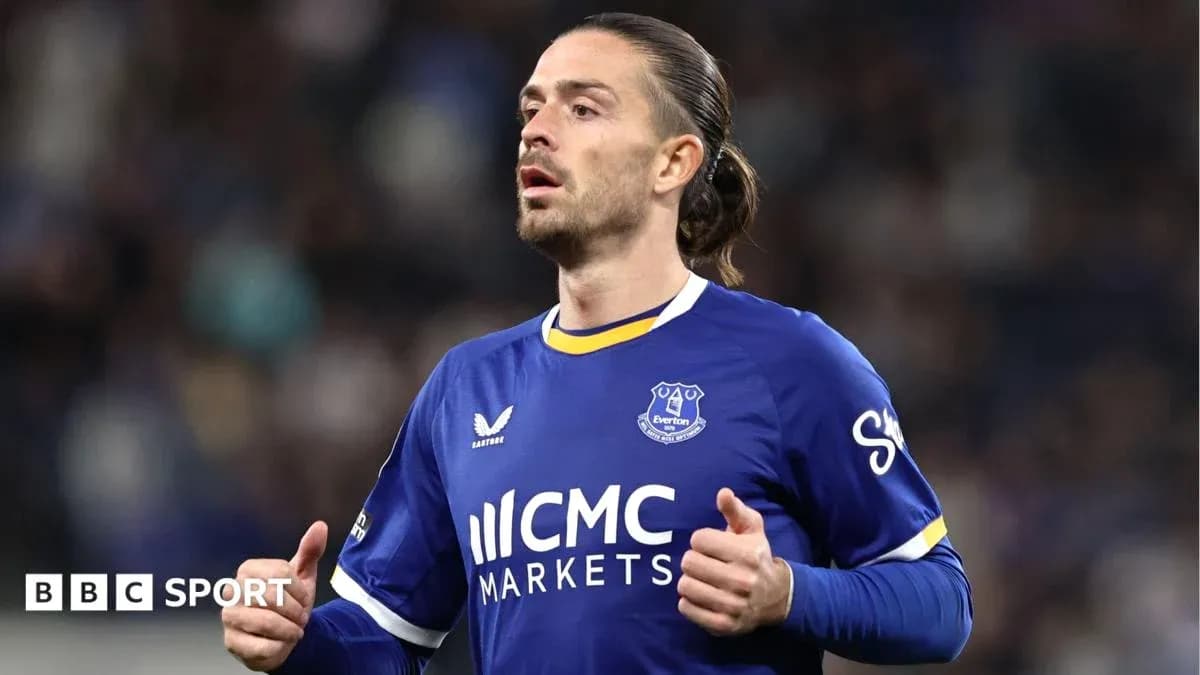
Jack Grealish's Homecoming: From Hero to Headache at Everton
Jack Grealish’s white Lamborghini rolled back into Finch Farm an hour before the transfer deadline closed and, for a fanbase numbed by a bleak summer, it felt like colour had suddenly been splashed across a grey canvas.
Here he was again. The maverick who had lit up Everton on loan before a serious foot injury cut short his stay. The £100m showman from Manchester City, back where he insisted he felt at home. Supporters lined up for autographs and selfies deep into the early hours. Grealish stayed for every one. It looked and sounded like a homecoming.
Now it feels like a reckoning.
From homecoming to headache
Everton’s decision to publicly confirm that Grealish was dropped for a “breach of club discipline” before the Carabao Cup tie against Newcastle United was not some throwaway line in a team news bulletin. It was a deliberate statement of intent.
The breach was simple and stark: he did not turn up for training on Monday.
For a 31-year-old whose exile from City at the start of the final year of his contract already underlined his slide from Pep Guardiola’s plans, this is no minor misstep. It is another point on a worrying trajectory for a player who once symbolised English football’s most expensive promise.
Inside Everton, the club’s hierarchy and David Moyes chose to go public. That alone showed how seriously they viewed it. They could have hidden behind “illness” or “knock”. They didn’t. They drew a line.
This is not, Everton insist, the mythical “Last Chance Saloon”. Moyes does not have that luxury. His senior squad is down to 18 players after a muddled window and owners The Friedkin Group easing away from serious investment as they prepare to sell. He cannot simply discard a potential match-winner.
But the pressure on Grealish has shifted. Sharply.
A team steps up without him
If the punishment stung, the timing of Everton’s performance without him cut even deeper.
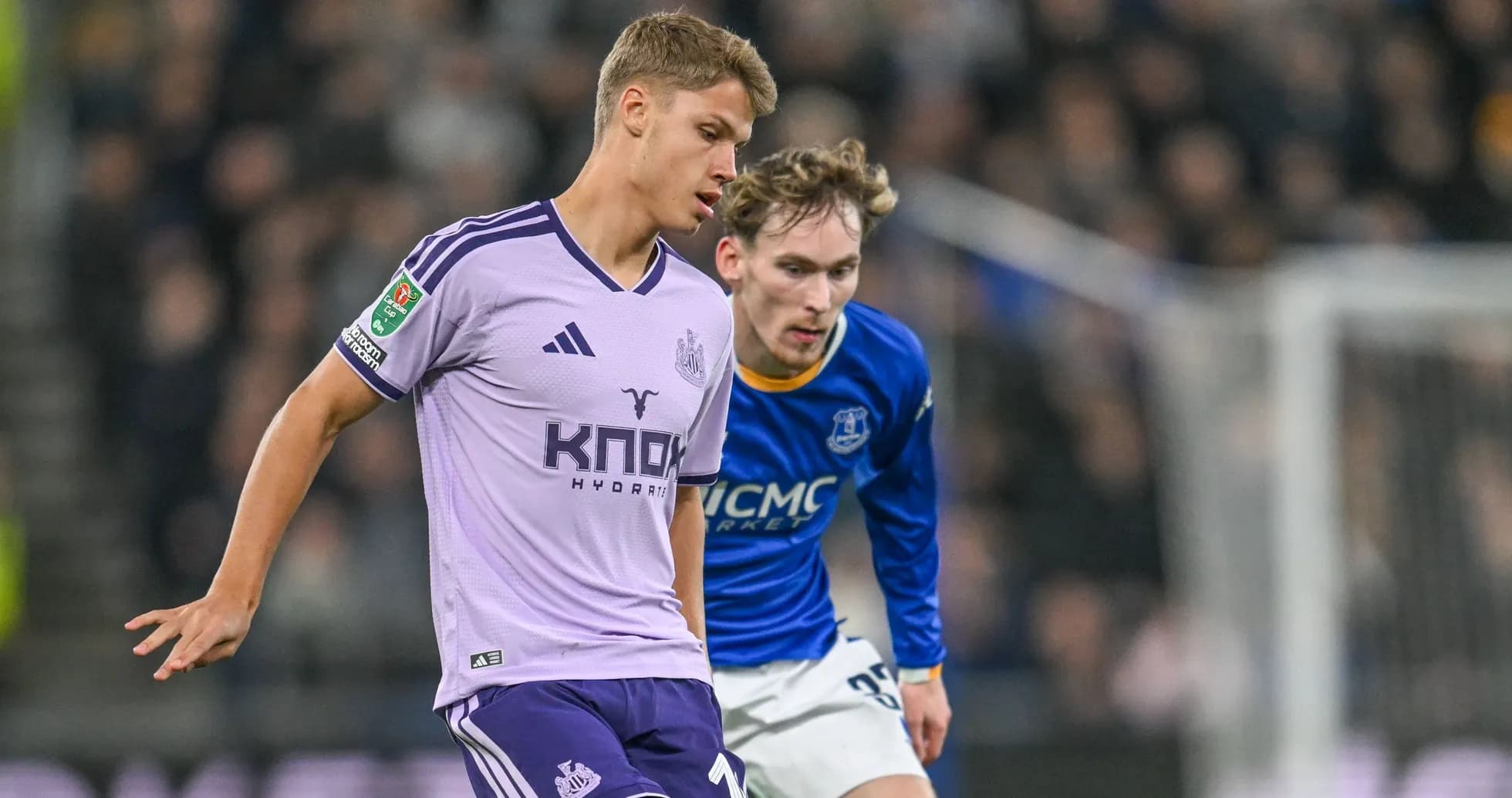
Newcastle were beaten 3-1 at Hill Dickinson Stadium, Everton’s most cohesive display of the season, and a quarter-final at League Two Fleetwood Town now beckons. Wembley, suddenly, is not a distant daydream. It’s a realistic target.
On the left flank, where Grealish would normally expect to operate, 20-year-old Tyrique George brought a different kind of threat. Direct. Lively. Dynamic. The sort of tempo Moyes demands and Grealish has struggled to match this season.
Eight appearances, no goals, no assists – two of those outings for City before he returned to Merseyside – have left Grealish looking like a man out of sync with the pace of his own team. His instinct to slow the game down jars with the manager’s insistence on speed and intensity.
So when Everton played with zip and purpose in his absence, the message was brutal: the team can move on without him.
Moyes did not name Grealish after the game. He did not need to.
“You probably know I’m not going to give any details. It’s a club decision and I support it,” he said. “The one thing about Everton is that they have got real good values. All the players stand behind it and accept the values, on the pitch and off the pitch.”
He praised the humility of his squad. He talked about a small group refusing excuses. Every sentence pointed in one direction.
Moyes, the disciplinarian, and the favourite pupil
This is what makes the situation so acute. Moyes and Grealish were close from the moment the forward first arrived in August 2025. Grealish himself admitted: “As soon as I spoke to the manager, I knew there was only one place that I wanted to go and that was Everton.”
Moyes backed him again this summer despite the risks. Everton weighed up his injury history, the finances, and, yes, his character. They still went back for him because Grealish insisted Merseyside was the only place he wanted to be, and because Moyes believed he could trust him in a thin squad.
This was not a gamble taken lightly. It was a calculated show of faith.
The Scot is a strict disciplinarian, though, and there are lines he will not allow to be crossed. BBC Sport understands there have been occasional time-keeping issues with Grealish before, but nothing on this scale. Inside Finch Farm, he is generally seen as a hard trainer, someone who keeps himself in good condition.
This time, the club’s leadership, with Moyes’ full backing, decided there had to be consequences. Grealish has held talks with senior figures at Everton. The message could not have been more blunt: there must be no repeat.
For Moyes, already furious that Grealish missed the weekend defeat at Arsenal through what was described as “illness”, the latest incident strips away any margin for indulgence. With a paper-thin squad, he cannot afford passengers. Still less players who rule themselves out.
The contradiction at the heart of Grealish
What complicates everything is that, away from these flashpoints, Grealish is adored inside Everton.
In the dressing room, around the training ground, with staff in every department, he is spoken about as “a lad with a heart of gold”. Kind. Charming. Engaged. He stayed at Finch Farm to complete his rehab rather than go back to Etihad Stadium, a decision that underlined how happy he was in these surroundings.
His gestures off the pitch back that up. Recently, he donated £10,000 to a GoFundMe page for Everton supporter Leon Skapars, a 36-year-old father of three diagnosed with cancer. Skapars’ wife Crystal said: “In that moment, Jack gave our whole family something we desperately needed, hope.”
He turned up at the Daily Mirror’s Pride Of Britain awards and insisted that the real heroes were the people being honoured, not the footballers presenting the trophies. He extended his role as principal ambassador for Special Olympics Great Britain in April, then surprised a group of their London Marathon runners with a VIP day at Hill Dickinson Stadium.
At Everton’s own community programmes, he is often among the first to volunteer. He meets the Everton in the Community Down Syndrome team, talks openly about the inspiration he draws from his sister Hollie, who has cerebral palsy, and throws himself into events that never make the back pages.
That is one side of Jack Grealish.
The other keeps dragging him back into trouble.
He has hit headlines for the wrong reasons before. In April, he was photographed asleep at a Manchester rooftop bar, surrounded by drinks while still in rehabilitation from injury. Not illegal, but reckless in a world where every camera is a potential front page.
In March 2020, he broke lockdown rules during the pandemic, left his home to visit a friend, and ended up apologising publicly and being fined by Aston Villa. Later that year, he admitted two counts of careless driving after incidents involving a Citroen van and a Mercedes.
None of these episodes destroyed his career. Yet each one chipped away at the patience of those around him.
Now or never
Inside Everton, the character references remain overwhelmingly positive. People talk about his warmth, his generosity, the way he makes time for supporters and staff. That is why this latest breach of discipline cuts so deeply. It feels like a self-inflicted wound from someone so many want to see succeed.
But football at this level is unforgiving. A player who was central to Manchester City’s Treble in 2023, who arrived on Merseyside as Britain’s first £100m footballer, now stands at a crossroads.
Failure at Everton will not just be a failed loan or a disappointing season. It will signal a slide away from the elite tier he once occupied, a downward spiral from the top of the Premier League that may be impossible to reverse at 31.
Moyes cannot simply walk away from him. The squad is too small, the season too demanding, the stakes too high. Wembley is suddenly within reach in the Carabao Cup. Everton need every ounce of talent they can muster.
But the next move is Grealish’s.
He has been warned. He has been punished. He has been reminded of the values the club expects him to uphold.
Now he has to decide whether this is the moment he finally matches the best of his character with the best of his football – or whether Everton becomes the place where the story of Jack Grealish at the very top quietly begins to close.