Drought Delays Anglian Combination Season Start
In Norfolk and Suffolk, the pitches sound different this summer. Studs don’t sink. They clatter.
The Anglian Combination League, home to 85 amateur clubs across the two counties, has taken the rare step of postponing the start of its 2026/27 season after weeks of relentless heat turned its grass pitches “rock hard” and unsafe.
The campaign was due to kick off next weekend. It will now wait until 29 August.
“Rock hard” pitches, real injuries
The decision followed an urgent board meeting on Friday, where league officials weighed up the growing evidence from pre-season. Friendlies had already been scrapped across the region. Those that did go ahead came at a cost, with “many injuries” reported on surfaces baked solid by the record drought.
In a statement to clubs, players and officials, league chair Dale Brown set out the stark reality.
The call, he said, was driven by one priority: the welfare of “players, officials and all associated with the match day” during what has been the driest and hottest July since records began in 1836. With almost all clubs playing on grass, the ground has turned “extremely dry” and the pitches, in Brown’s words, are now “rock hard”.
For some clubs, desperate to get going after the summer, the delay will sting. Brown admitted as much, describing it as “a very difficult decision to reach and one that will not please all clubs.”
But the pattern on the ground has been impossible to ignore. When every 50–50 tackle feels like a collision on concrete, risk starts to outweigh tradition.
Football at the mercy of the weather
This is not just a local quirk of the calendar. The Anglian Combination’s move is a direct consequence of a brutal sequence of heatwaves and record-low rainfall that has left much of England and Wales scorched and brittle underfoot.
Record temperatures hit in May and June. July then went one worse, becoming the driest on record. By last month, half of England was officially in drought, with water companies rolling out hosepipe bans in an attempt to protect dwindling supplies.
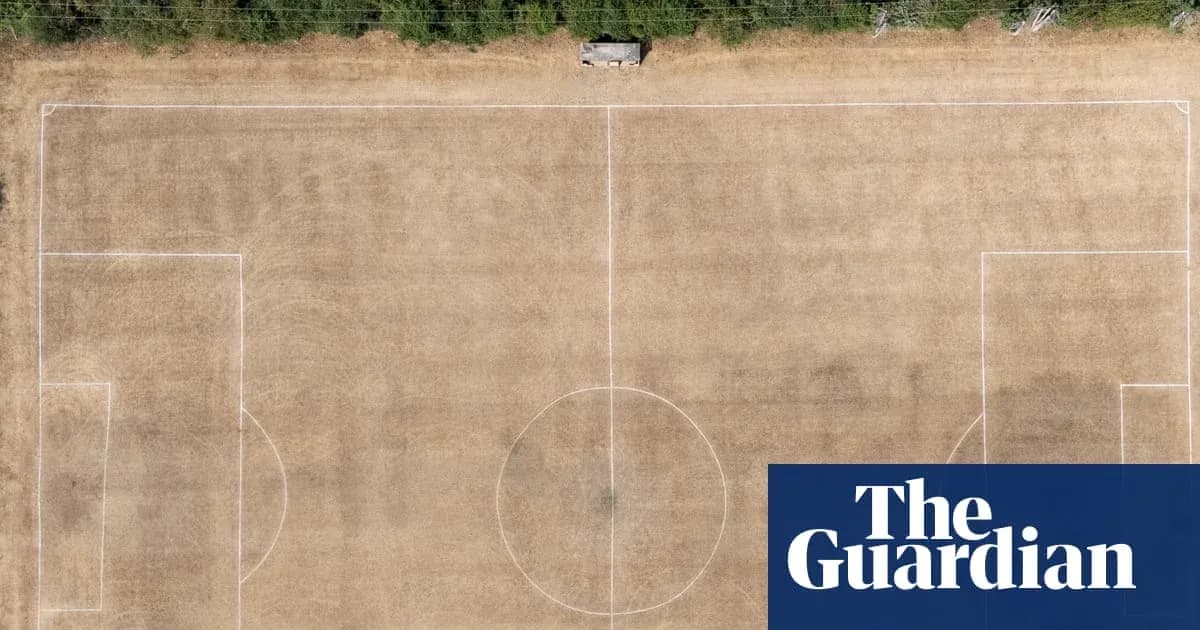
In Norfolk and Suffolk, Anglian Water’s ban has been in place since 11 July, stripping many community clubs of the chance to keep their pitches alive. Aerial images across the region tell the story: parks and sports fields bleached brown, the green of summer football replaced by the colour of dust.
Only a few oases remain. Golf clubs, some sports facilities and private schools have stayed lush thanks to controversial exemptions from the hosepipe restrictions, a contrast that will not be lost on grassroots players staring at cracked goalmouths and unforgiving centre circles.
No relief in sight
Any hope of a natural reset before the season was due to start has faded with the latest Met Office forecasts. Another heatwave is expected next week, with temperatures in parts of East Anglia and south-east England predicted to climb to 36C by Thursday.
Rain? There is “no sign” of the sustained downpours groundsmen crave. Humidity may rise, but that will do little for pitches that need soaking, not steaming.
Against that backdrop, the league’s delay begins to look less like an overreaction and more like a necessary pause.
A local call with national echoes
The Football Association has confirmed it does not hold figures on how many leagues have been forced to push back next season because of the drought. These are local calls, left to individual leagues and county FAs who know their pitches and their players.
In Norfolk and Suffolk, that call has been made. The Anglian Combination will wait.
The question now is whether this is a one-off born of an extreme summer, or a sign of what grassroots football must plan for as hot, dry starts to the season become less the exception and more the norm.