Eddie Howe's Newcastle Exit: A Jolt to the Premier League
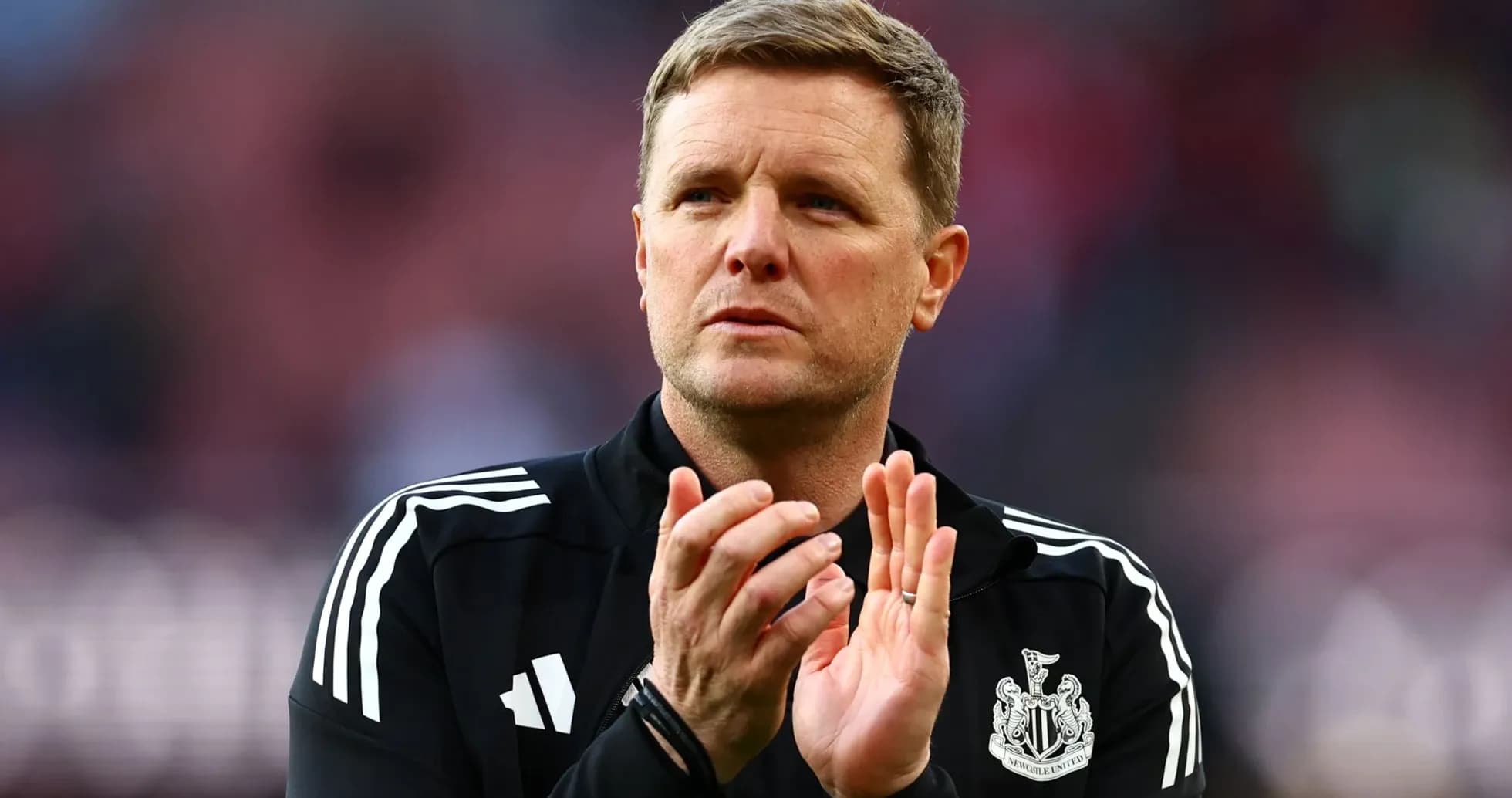
Eddie Howe’s Newcastle exit felt like a jolt. Not just to Tyneside, but to the wider game.
The man who dragged Newcastle out of crisis, pushed them into the Champions League and ended a 70–year wait for a domestic trophy walked away from St James’ Park on July 30, 2026. After 231 games in charge, a manager who had become one of the Premier League’s longest-serving fixtures simply decided he’d had enough.
The mood around the club explains why.
A project stripped back
The winds of change at Newcastle this summer have not been gentle. They’ve been brutal.
Anthony Gordon has gone to Barcelona. Sandro Tonali has joined Tottenham. Bruno Guimaraes is closing on a £75 million move to Arsenal. Three pillars of Howe’s side, ripped out in one window, with their replacements still filed under “unknown”.
For Chris Waddle, a Newcastle icon who knows the weight of the shirt and the mood of the stands, Howe’s decision makes sense. Speaking to GOAL in association with BetBrain, he didn’t dress it up.
“Eddie, he's built a good squad,” Waddle said. “Last year, the season, the signings he made didn't work. They struggled. The team struggled, let's be honest, week in, week out.”
The honesty cuts. Newcastle had ridden a surge of energy, smart recruitment and a ferocious, front-foot style into the elite. Last season, the air went out of the balloon. Injuries, misfires in the market, and the relentlessness of expectation dragged them back towards the pack.
Yet Howe still had credit in the bank. He had given the Geordies what they crave: attacking football, risk, emotion.
“Eddie, you know, popular, played a good system, what the Geordies wanted to see,” Waddle said. “They love attacking football on the front foot and he played that style, which won him the League Cup, got him in the Champions League twice. So, he's done a great job up there.”
The style, the success, the connection. All real. All undeniable.
So why walk?
A manager reading the room
Waddle believes Howe looked at the summer and saw a ceiling he could no longer break.
“I think losing Tonali, losing Gordon, bringing three unknown players in, let's be honest, young players and Guimaraes looks like he's going to go to Arsenal,” Waddle said. “He's probably thought, ‘I can't make this team a top four, top six team, which people want’. And he's probably thought, ‘I've done as much as I can here and it's time to move on’.”
That’s the crux. Newcastle’s ownership arrived talking about titles and long-term dominance. Supporters adjusted quickly. A top-four finish became a target, then an expectation. A cup win became a starting point, not a destination.
Strip away star names, replace them with prospects, and suddenly the project looks less like a charge to the summit and more like a reset. Managers with Howe’s stock rarely hang around for resets.
If this is a sinking ship, as some on Tyneside fear, Howe has chosen to step off while his reputation is still intact.
England talk can wait
Whenever a high-profile English manager becomes available, the conversation turns to one job: England.
Howe has been linked with the national team for years, his calm presence and detailed coaching seen as a natural fit. The timing looked intriguing. England had just stumbled to an uninspiring semi-final exit at the 2026 World Cup under Thomas Tuchel. The knives were out in some quarters.
Waddle, though, does not see an immediate threat to Tuchel.
“No, I think, he’ll be given time,” he said. “He's got a great record as a club manager. International football is different, we know that. You can't go and buy a centre-half, you can't buy players, you've got to work with what you've got.”
That last line matters. International football exposes a coach’s ability to blend, not buy. To polish, not replace.
Tuchel, Waddle argues, still has tools to work with.
“He's got a healthy squad there. They did okay. I didn't think they were ever going to win it, when the tournament started and watching it,” he admitted. “I thought they'd get to the latter stages, as they did, but I didn't fancy them ever to win it.”
England remain close, but not quite there. Dangerous, but incomplete.
“It's just finding that right blend and what we are short of is a good number 10 and a really, really top, top winger,” Waddle said. “And if we could find them two players, it would help his cause a lot more. But at the minute, I think we've got a strong squad. It will give anybody a game, we know that. But we're just missing something.”
So Howe, for now, is not being ushered towards Wembley. His moment with the Three Lions, if it comes, lies further down the road.
“Go abroad”
If not England, then what?
Waddle’s answer is clear: get out. Not out of football. Out of the comfort zone.
“I don't know Eddie as a person. I know he's quiet off the field. You don't really hear a lot about him. You don't see him around,” he said. “He's football, home, football, home, by all accounts.”
That monastic focus has driven Howe’s rise. It has also meant his entire coaching life has played out within the English system. Waddle believes the next step should change that.
“If I was Eddie Howe, I would go abroad now for a year or two and learn my trade a bit more abroad and come back,” he said. “And then I think he'd be ready for England in two years, after the next Euros.”
This is not a question of proving he can handle the Premier League. He’s done that. Twice. At Bournemouth and Newcastle, Howe showed he can organise, inspire and improve players at the top level.
“I think his next move is so important,” Waddle stressed. “It's always the case with the Premier League that jobs come up - there will be a few come up after six, 10 games, we know that is always the case. Getting Eddie Howe in, we know he can manage in the Premier League. He's done it well.”
The safer play would be obvious: wait, watch the early-season chaos, pick a club, rebuild again. Waddle wants more ambition than that.
“To go and learn more, you need to go abroad and find out what life's about and what coaching’s about,” he said. “Because when you go abroad, you're a coach. You're not a manager, you're a coach. And I think that would help Eddie a lot. And it would put us in good stead for England in the future.”
The distinction is telling. In England, the “manager” still carries the aura of control, of transfer power, of being the face of the club. On the continent, the job strips back to pure coaching: sessions, systems, detail. Less noise. More work.
For Howe, a coach obsessed with the training ground, that kind of immersion might be exactly what takes him from highly rated to truly elite.
Newcastle, meanwhile, must discover whether they have lost just a manager or the architect of their modern identity. And when the next major job opens up – be it at a European giant or in the national-team setup – the question will be simple: did Eddie Howe use this break to step sideways, or to step up?