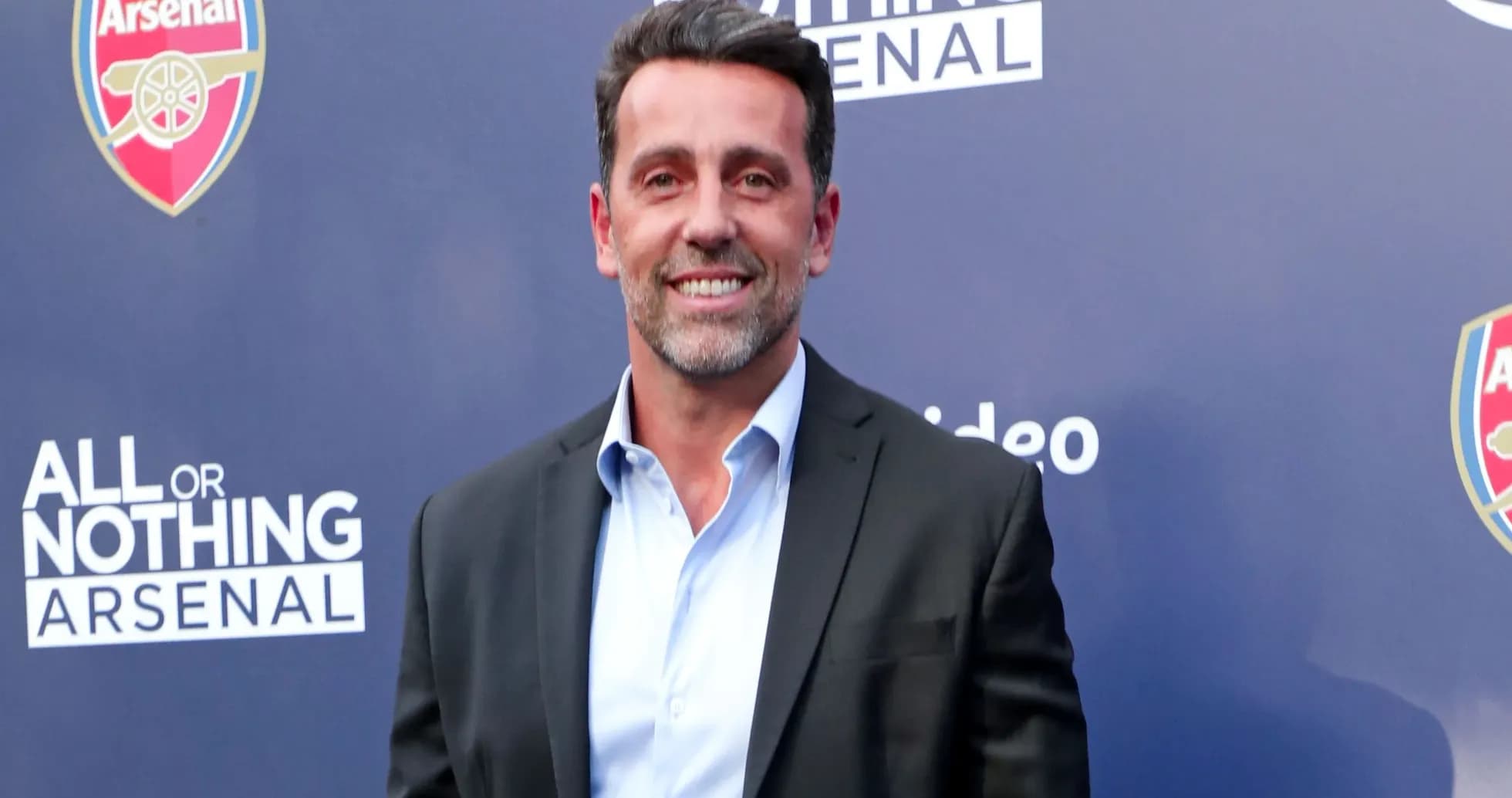
Edu's Departure from Nottingham Forest: A Silent Exit
Edu’s time at Nottingham Forest is over, and it ends not with a statement, but with silence.
The Brazilian executive has officially left the club just over a year after arriving as global head of football to front an ambitious multi-club project, according to The Athletic. In truth, his departure has been months in the making. He has not attended a Forest match since February, and has not been seen at the City Ground or the training ground since early March, when the first reports of his exit began to surface.
Forest are not expected to announce his departure publicly. There will be no farewell interview, no carefully worded thank-you. The club also do not intend to hire a like-for-like replacement. Instead, Chief Football Officer George Syrianos has already stepped into the vacuum, taking on a broader brief once Edu was effectively sidelined.
Syrianos’ expanded role also patches over another hole. When Ross Wilson left for Newcastle United in October last year, Forest lost a key figure in their football structure. Edu was supposed to be part of the answer to that. In the end, it is Syrianos who has emerged with greater authority as the club tries to steady itself after a chaotic season.
Chaos at the City Ground
Chaos is the word that hangs over Edu’s time at the City Ground.
Forest began the campaign with talk of pushing towards European places under Nuno Espirito Santo, having previously flirted with a Champions League challenge. Those ambitions evaporated in a blur of internal friction. A breakdown in the relationship between Nuno and Edu triggered the manager’s departure and sent the club into a spiral.
What followed was a carousel in the dugout that stripped Forest of any sense of continuity. Ange Postecoglou lasted just 39 days before being removed. Sean Dyche came next and was gone by February. Vitor Pereira stepped in briefly, only to make way for former Crystal Palace manager Oliver Glasner. Each change was billed as a reset. None brought lasting stability.
The instability on the touchline was matched by turmoil in the transfer market.
Edu’s recruitment strategy drew fierce criticism from fans and pundits alike. Forest spent heavily and boldly, but the big names did not deliver. Omari Hutchinson, Douglas Luiz and Oleksandr Zinchenko arrived with strong reputations and high expectations. None made a meaningful impact in a Forest shirt. The squad grew more expensive, not necessarily better.
For those who followed Edu’s rise in North London, the contrast was stark.
He joined Arsenal in 2019 as the club’s first technical director and quickly stamped his authority on the project, appointing former teammate Mikel Arteta as manager later that year. The pair became the architects of Arsenal’s revival, reshaping the squad and pushing the club back into the Premier League title conversation. Edu was promoted to sporting director in November 2022 and held that position until his surprise resignation in November 2024.
At Forest, the same executive who had helped build a modern contender at Arsenal presided over a season defined by misfires and mistrust. The difference in outcomes could hardly be sharper.
It marks a rare low point in a career that has largely moved upwards.
As a player, Edu was part of Arsenal’s iconic 2003-04 ‘Invincibles’ side, a midfielder trusted by Arsène Wenger in one of the greatest teams English football has seen. Off the pitch, he built his administrative credentials long before stepping back into Europe’s elite.
He spent five years as director of football at Corinthians, one of Brazil’s giants. He then took on a short-term advisory role with the Iran national team in 2014, before spending three years as general coordinator for the Brazil national side, operating at the heart of one of the most scrutinised footballing operations in the world.
That body of work is why his move to Nottingham Forest felt significant. It is also why his departure, barely a year later and without ceremony, feels so jarring.
Forest now move forward with Syrianos carrying greater responsibility and Glasner trying to bring calm to a restless club. Edu, meanwhile, leaves England with his reputation dented but not destroyed.
The question is simple: which version of Edu will define his next move — the architect of Arsenal’s resurgence, or the figurehead of Forest’s failed experiment?