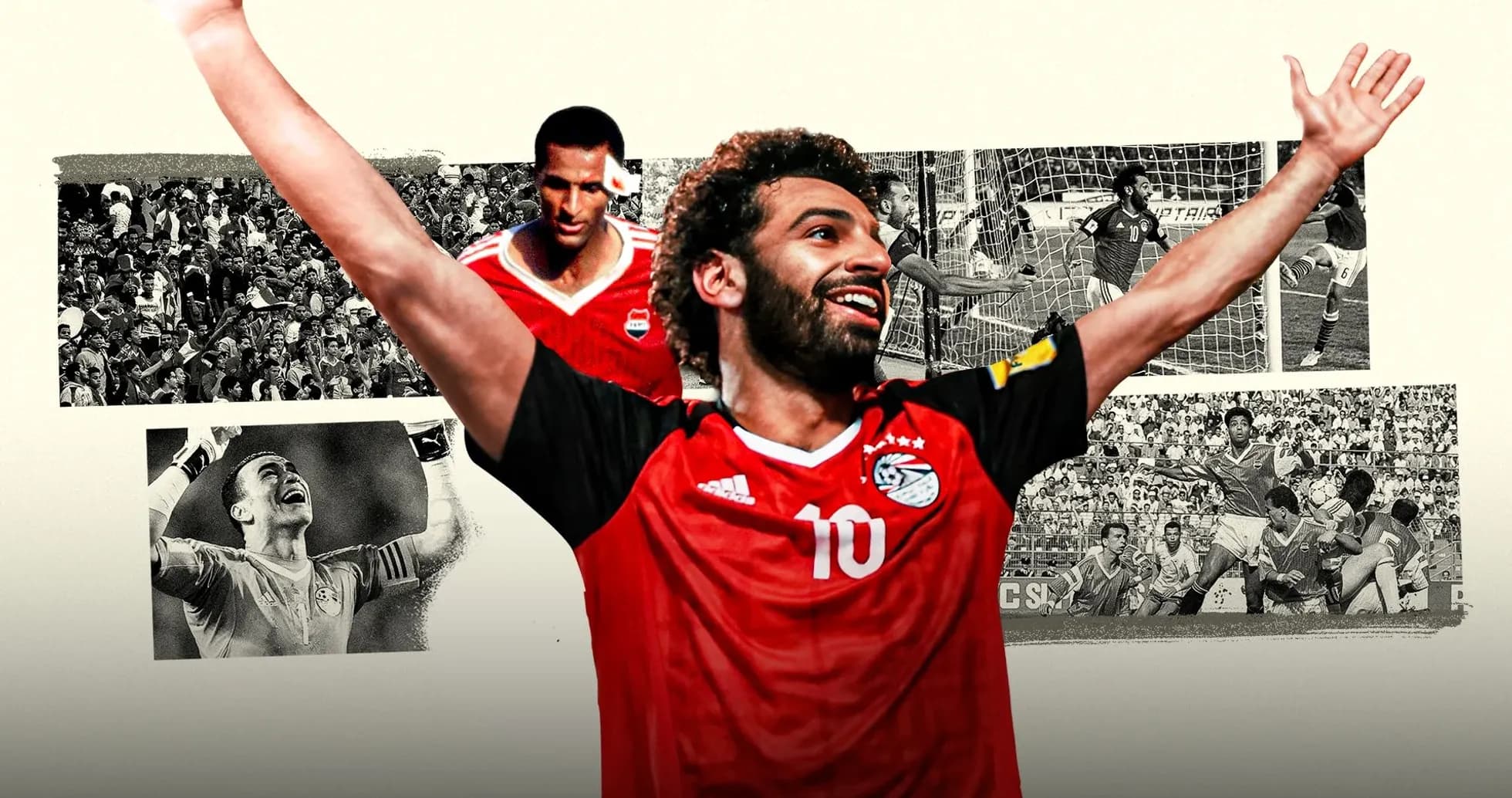
Egypt's World Cup Journey: From 1934 to Hope for 2026
It starts in 1934, in another lifetime. No television glare, no camera flashes. Just a battered radio spitting static into Cairo’s night and 11 Egyptians chasing a distant echo called the World Cup.
Egypt’s national team sailed to Italy as pioneers: the first Arab and African side to reach football’s biggest stage. The voyage was long, the ship old, but the mood on board ran hot. They had beaten Palestine to get here. Fatigue didn’t stand a chance against that kind of anticipation.
In Rome, they met Hungary, one of Europe’s heavyweights. The scoreline – 4-2 to the Hungarians – went into the record books as a defeat. History remembered something else. Abdelrahman Fawzi scored twice, becoming the first African to find the net at a World Cup. In Cairo’s tight alleys, people huddled around radios, clapping, cheering, eyes lit with a pride they had never felt before. A nation’s football dream had its first heartbeat.
Then, silence.
War tore through continents. The noise of guns drowned out the noise of games. Egypt rebuilt itself brick by brick, and the World Cup shrank back into newspaper columns and grainy black-and-white photos. The dream stayed, but far away – like a bright star you could see, never touch.
Generations came and went. Saleh Selim, Taha Ismail, Hassan Shehata, Mahmoud El Khatib – giants of the African game. On their own continent, Egypt ruled. Africa knew the Pharaohs as champions. The World Cup, though, remained that unreachable star.
Until 1990.
After 56 years in the wilderness, Egypt came back. Mahmoud El Gohary wore the captain’s armband of a new era, and the team clawed through brutal qualifiers. The breakthrough came in a single, searing moment: Hossam Hassan’s goal against Algeria. One strike to smash the glass ceiling.
That November night, the country exploded. Streets overflowed. Flags draped from balconies. Horns, drums, chants – Cairo didn’t sleep. Egypt were going to the World Cup again.
Italy awaited once more. This time, Palermo. The European champions, the Netherlands, stood in their path. Egypt held their ground in a tense, goalless first half. Then, in the 58th minute, Marco van Basten swung in a cross and Wim Jonk buried it. The favourites had finally broken through.
But the story was not finished.
In the 83rd minute, Hossam Hassan burst into the box and went down. The referee pointed straight to the spot. A nation held its breath. Magdy Abdelghany walked forward, paused, inhaled, and drove the ball home.
Goal.
“Goal for Egypt!” the commentator roared, a call that would echo across decades. Abdelghany would later joke about that moment relentlessly, retelling it until it became both a badge of honour and a running gag among fans. But on that night, it was no joke. It was a bridge, stretching from Fawzi in 1934 to Abdelghany in 1990, from one generation’s hope to another’s.
The match finished 1-1. On paper, a draw. In Egyptian hearts, a victory.
Ireland came next. Ninety minutes of tension, sweat and shouts. Egypt’s defence refused to budge. Ahmed Shobeir turned into a one-man wall, clutching every ball like his life depended on it.
The match would live on for a different reason. Shobeir’s time-wasting – deliberate, theatrical, infuriating – became infamous. Many fans around the world later linked his antics to FIFA’s decision to introduce the back-pass rule. Whatever the truth, the game ended 0-0. For Egypt, it felt like another win.
The world took notice. “Who are these Africans fighting like lions?” people asked. The media gave them a name: “The solid Egyptian team.”
Then came England. Pressure from the first whistle to the last. Egypt fought, resisted, then finally slipped to a narrow 1-0 defeat. El Gohary refused to see it as an ending. “We’ve planted the seed today… Someone will harvest it tomorrow,” he said.
That “someone” grew up in a small village called Nagrig.
Mohamed Salah’s journey – from Al Mokawloon to Basel, Chelsea to Fiorentina, Roma to Liverpool – turned into a modern football epic. Every transfer, every goal, another chapter. For Egyptians, he wasn’t just a forward. He was the embodiment of that old dream, sprinting down the wing in red.
During the 2018 World Cup qualifiers, Salah became more than a star. He became the hero. His goals dragged belief back from the shadows. His form electrified a country that had waited 28 long years.
The defining night came at Borg El Arab Stadium.
Egypt needed a win against Congo. The score stood at 1-1 heading into stoppage time. Commentator Medhat Shalaby’s voice climbed with every attack: “Give us something, ya akhi!” The tension was suffocating. Then, in the 94th minute, Trezeguet went down in the box.
Penalty.
“Allahu Akbar!” Shalaby screamed as the referee pointed to the spot.
Salah picked up the ball. Placed it carefully. A faint smile. One stride, one strike. Goal. The stadium detonated. Noise shook Alexandria’s night sky. Streets filled instantly. Children cried from sheer joy. After 28 years, Egypt were going back to the World Cup.
One month before Russia 2018, another stage beckoned: Kyiv, host of the Champions League final. Real Madrid vs Liverpool. All eyes on Salah. His “Egyptian King” chant rolled around the city. Cameras stalked his every step. Commentators showered him with praise for his record-breaking Premier League season.
It was supposed to be his coronation.
Then came Sergio Ramos, a tangle of limbs, a fall. Salah hit the turf clutching his shoulder, face twisted in pain. He tried to rise. He couldn’t. Tears replaced grimaces as he walked off.
In Cairo, the noise died. Cafes fell silent, screens frozen on Salah’s broken expression. Children who had been dancing minutes earlier sat motionless. It felt like an entire country had gone down with him.
Weeks later, he came back. Still injured, but unbroken. He spoke for millions with one line: “Bodies may fall… But dreams never do.”
Russia 2018 should have been a celebration. Instead, it became a test of resilience.
Egypt opened against Uruguay without Salah in the starting XI. His shoulder still ached; he watched from the bench. On the pitch, his teammates defended with everything they had, repelling wave after wave. For 88 minutes, they stood firm. In the 89th, they finally cracked and conceded. Cruel. Yet the spirit they showed promised more.
“Wait until Salah returns,” people said. “Everything will change.”
He did return, for the second match against hosts Russia in Saint Petersburg. Salah lined up from the start, smiling, but his body told another story. He moved, he tried, he fought. He scored from the penalty spot. By then, Egypt were already three goals down. The dream had slipped away before he could rescue it.
In the final group game against Saudi Arabia, Salah scored again. Egypt still lost. Three games, three defeats. The Pharaohs went home without a single point.
The next chapter was darker.
Back on home soil for AFCON 2019, Egypt were expected to conquer. Same generation, same heroes, a full nation behind them. Instead, they crashed out in the last 16 to South Africa. The exit stunned millions. A tournament built up as a coronation turned into a wound.
Two years later, in Cameroon at AFCON 2021, the story changed tone. Conditions were tough, performances uneven, but the spirit hardened. Egypt lost their opener to Nigeria, then dug in. Salah led a side that bled for every ball. They knocked out Ivory Coast. Then Morocco. Then hosts Cameroon. Three giants, three battles survived, and suddenly they were in the final against Senegal.
Once again, penalties decided everything. For the third time in that tournament, Egypt faced the spot. This time, the shootout ended before Salah’s turn came. Senegal lifted the trophy. Egypt were left with the familiar taste of “almost”.
Weeks later, the same opponents, the same stakes – but this time, a World Cup ticket to Qatar on the line. Again, it went to penalties. Again, the spotlight found Salah.
He walked to the spot under a storm of green lasers. Beams flickered across his face, his shirt, the ball. He looked calm. He struck. The ball sailed over the bar and disappeared into the night.
Egypt froze. The dream evaporated in a single, brutal heartbeat. No World Cup. No redemption. Yet the belief did not die. Dreams built over nearly a century do not collapse in one missed kick.
Then came the 2026 qualifiers.
This time, Salah was not carrying the weight alone. Around him stood a new generation – players who had grown up watching him rise, fall, and rise again. To them, he was less a distant superstar and more an older brother leading the way.
From the very first qualifier against Djibouti, something felt different. Egypt played with clarity and purpose. Organised. Hungry. United. Salah still scored, but now Omar Marmoush and Ahmed Sayed “Zizo” lit up games alongside him, adding pace, flair and fearlessness.
On the touchline, Hossam Hassan prowled. He didn’t just coach; he burned. “Press! Don’t back down!” he shouted, living every tackle, every run. Under him, Egypt rediscovered a lost identity. The fear that had crept in over the years vanished. Young players who once watched Salah on television were now exchanging passes with him under the stadium lights.
The results told their own story. Ten qualifiers. Eight wins. Two draws. Unbeaten, and top of their group with a calm, assured swagger. When the final whistle blew on the last qualifier, there were no wild laps of honour. Hossam Hassan simply smiled on the sideline. A quiet, knowing smile. Mission one: complete.
The players celebrated, but lightly. No excess. Their body language said it all: the real journey starts now.
And so Egypt stands on the brink again, eyes fixed on another World Cup. Hassan is already sketching plans. Salah has made his promise to the fans: “This time, it won’t just be about taking part.”
The dream that began with a crackling radio in 1934 is still alive. The question now is simple: are the Pharaohs finally ready to turn a century of longing into a lasting legacy?