Eichhorn's Future: Dortmund's Key Target in the Bundesliga
In Dortmund, the debate over the future runs through one name: Eichhorn.
Inside the club, the 16-year-old defensive midfielder has already split opinion. According to Sport Bild, former sporting director Sebastian Kehl viewed a move for the Berlin talent with scepticism. His successor does not.
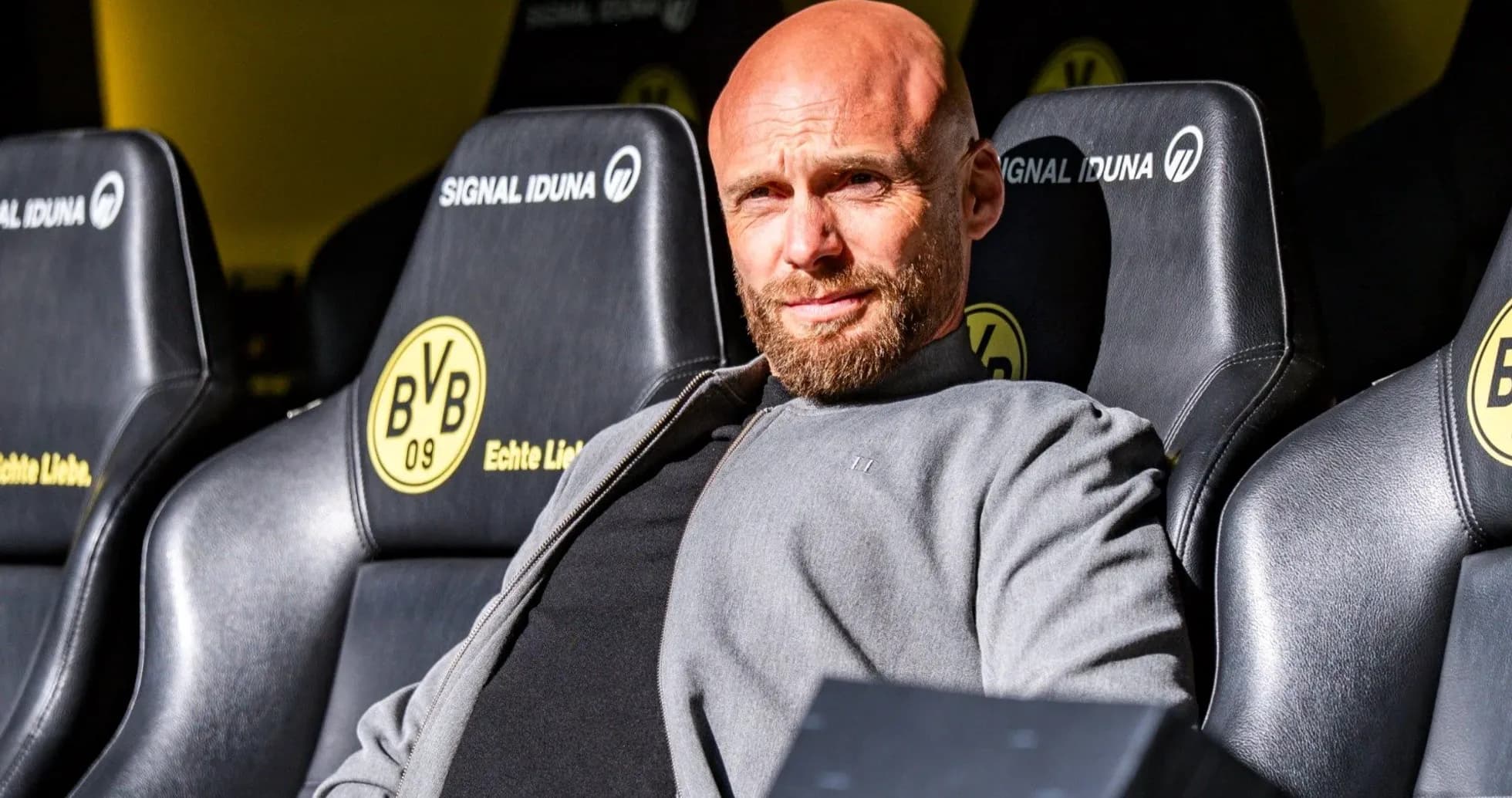
For Ole Book, Eichhorn is the priority for next summer. Not one of several options. The option.
Book’s personal pitch
Book has thrown himself into the chase. He met Eichhorn face-to-face in April, a deliberate move to shift the dynamics of the race for one of Germany’s most coveted prospects. Those talks, by all accounts, changed things.
Before that meeting, Bild reported that Eichhorn was unconvinced by BVB’s football under Niko Kovac – too results-driven, too little creativity, not the kind of environment a technically gifted midfielder dreams of. After the conversation with Book, the picture looks different. The teenager now sees Dortmund as an attractive destination.
That encounter was about more than charm. It was also Book’s chance to fix what many inside the club regard as a costly misstep from Kehl’s tenure.
The Fabio Silva warning
Sport Bild highlights one example that still stings. Fabio Silva joined from Wolverhampton Wanderers last summer for nearly €23 million, a significant outlay. Yet Kehl never met the forward in person before the deal was done.
When Silva arrived for his medical, he turned up with a recently operated adductor muscle. BVB staff were stunned, but the transfer went through anyway.
Silva has since offered flashes of quality, moments that hint at why Dortmund gambled on him. But they remain only that – flashes. He is still little more than a super-sub, unable to turn sporadic opportunities into a regular starting role. Behind Serhou Guirassy in the pecking order, his minutes have been limited, and rumours have circulated that he considered leaving after only a few months.
For Book, Eichhorn cannot become another cautionary tale. Hence the personal touch, the clear sporting plan, the attempt to build trust early.
Berlin’s anchor, not a stopgap
Eichhorn’s season in Berlin tells a different story to Silva’s. There, he is no fringe figure.
The U17 national team captain missed almost three months with a serious syndesmotic ligament injury and then served a red-card suspension. Whenever he was available to Stefan Leitl, though, he anchored the midfield, a rare constant in a side that once again fell short of promotion.
He did not disappear into the background. He stood out.
His contract runs until 2029, but the key line sits in the small print: a release clause. For a fixed fee of €12 million, he can walk away from the capital this summer. It is widely expected he will trigger it.
The way he and his family are handling the decision has impressed observers. There is no appetite for a stepping-stone club, no interest in a short-term platform move followed by a loan. Any transfer must be straight into a team that plays Champions League football regularly and can offer immediate, meaningful minutes.
A loan back to Berlin? A year learning the ropes at a mid-table side? Both scenarios are considered unlikely.
Brexit barrier and a narrowed field
Normally, English money would be hovering over a talent like this. Not this time.
Brexit regulations block Premier League clubs from signing players under 18, and Eichhorn will not reach that age until July 2027. Financially powerful English sides are effectively out of the race before it even starts.
That leaves the Bundesliga’s heavyweights circling. Bayern, BVB, Leipzig and Leverkusen are locked in a fierce contest for his signature. Eintracht Frankfurt, once viewed as a possible dark horse, has now drifted out of contention.
Leverkusen’s early edge
For much of the window, Bayer Leverkusen appeared to be in pole position. One name explains a lot of that: Ibrahim Maza.
The former Hertha player moved to Leverkusen last summer, and his development has followed the club’s plan almost to the letter. Eichhorn and Maza are in close contact, and that relationship matters.
So does the football. The 16-year-old is said to be impressed by the Werkself’s dominant, possession-heavy style. For a young midfielder who wants the ball, wants to dictate, Leverkusen offers a clear, attractive blueprint.
Bayern’s heavyweight pull
Bayern Munich, though, always change the equation. The club’s status as a European giant gives it a natural advantage, but right now there is more to the pitch than reputation.
Under Vincent Kompany, Bayern have shown over the past two years that the old criticism – that young talents struggle to break through on the banks of the Isar – no longer really applies. The team’s fluidity with the Belgian on the touchline is higher than it has been for some time, and the pathway for young players looks far less blocked than in previous eras.
Recent reports confirm that Eichhorn remains “on Bayern’s list” of targets for the coming campaign. Inside the club, the message is clear: they “definitely” want him and regard him as “a player for the future”.
Dortmund’s gamble on a new approach
Against that backdrop, Dortmund’s margin for error is slim. Book’s personal intervention, his attempt to correct the perceived mistakes of the Kehl era, is both a recruitment strategy and a statement.
If BVB can convince a 16-year-old captain, with his pick of Germany’s elite, that Dortmund is the place to grow and to play now, not later, it would say a lot about where the club is heading under its new sporting leadership.
If they cannot, Eichhorn’s choice will still reshape the Bundesliga’s next decade.
The question is simple, and it will not wait forever: whose midfield will he be commanding when he finally steps onto the Champions League stage?